

When X open sourced the code behind its feed algorithm this week, I started reading it. I wanted to understand what was actually happening beyond the familiar advice about posting more, using a hook, or chasing engagement.
What I found was a system that retrieves possible posts, reads a sequence of user behavior, and ranks what someone is likely to do next. That sent me into a deeper look at Instagram, TikTok, and Substack. I wanted to share what I learned because it matters from both sides. If you are a creator, it changes what meaningful engagement looks like. If you are a developer, it reveals how to think about search and recommendation.
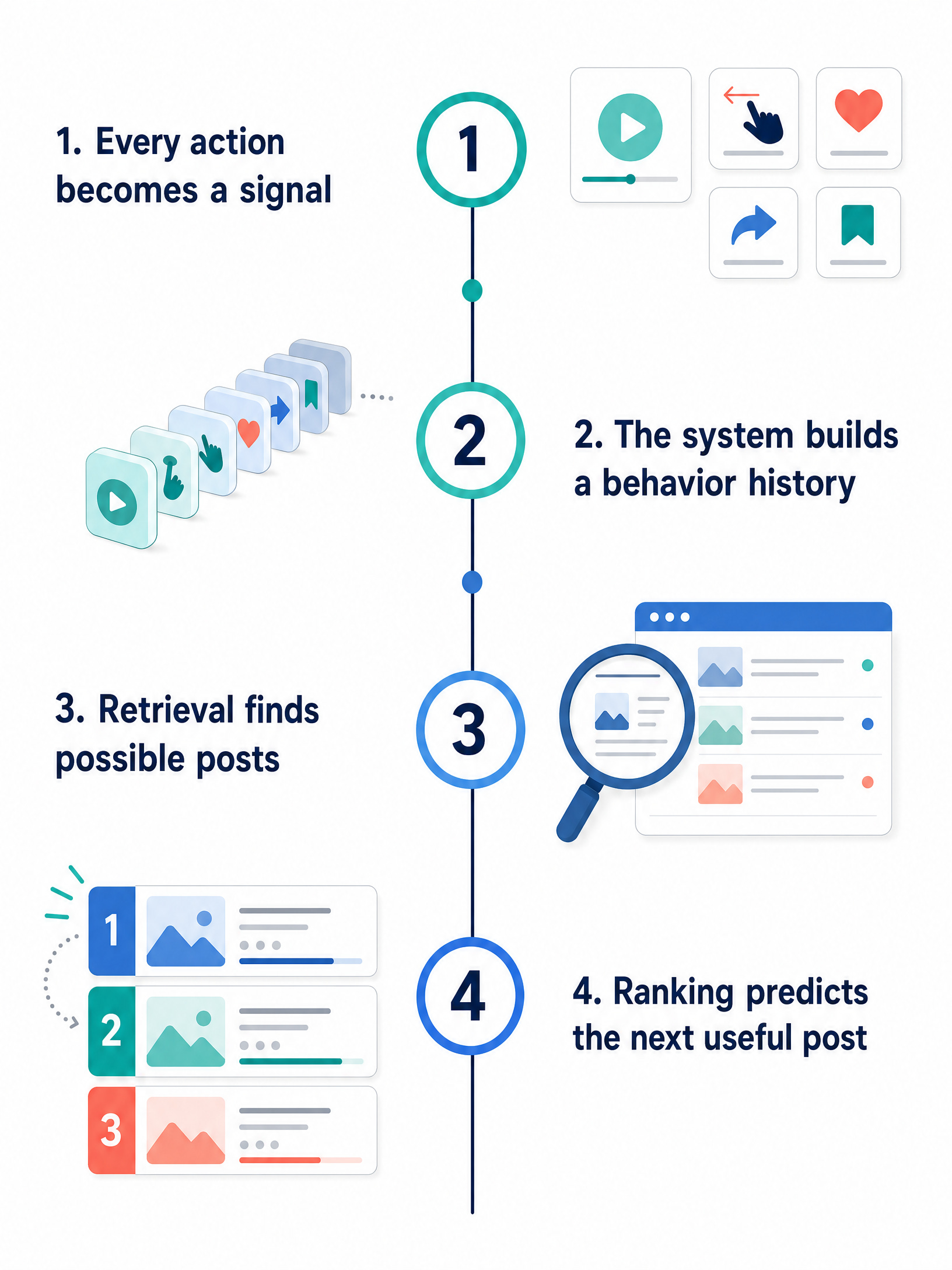
One conclusion arrived quickly. Your social feed is not determined only by who you follow or what you say in your profile. What increasingly determines what you receive is what you do: what you watch, skip, share, save, reply to, follow, and return to. The modern feed is a prediction system that reads a history of actions and asks: what should this person see next?
X shows why high value reactions matter
X’s public repository exposes default For You weights. A copy link share is 20. Replies, quotes, and direct message shares are each 5. A favorite is 0.5. [1]
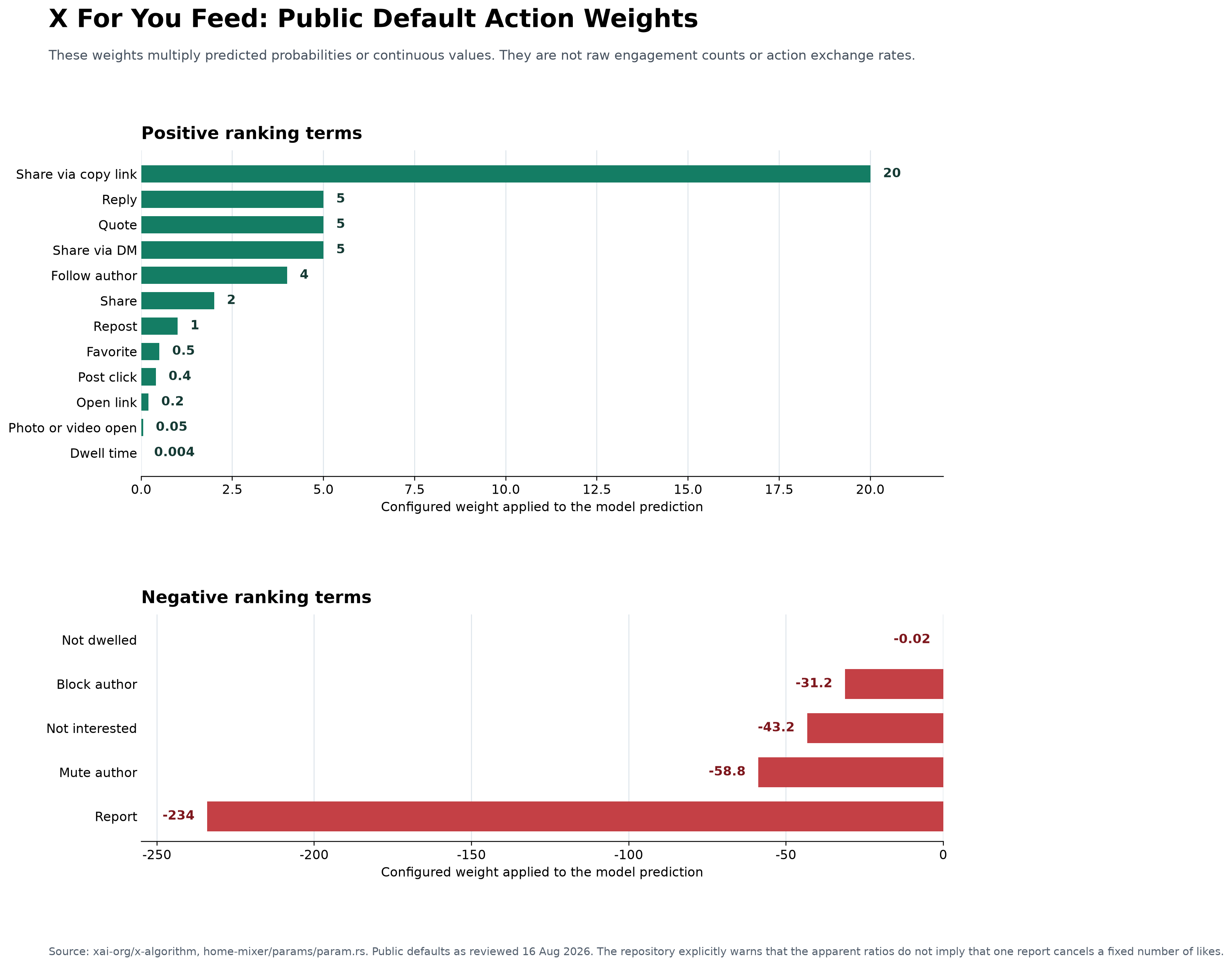
The chart does not mean that one action mechanically equals another. X explicitly warns that the weights multiply a model’s predicted probability for each viewer. They are not raw engagement counts. One report does not cancel a fixed number of likes. [1]
On X, I would post for high value reactions, not superficial activity. Make something useful enough to be copied into a group chat, quoted with a point of view, or answered with substance. Give someone a reason to carry the idea into another conversation.
Phoenix, X’s disclosed production recommendation system, uses a transformer to encode engagement history for retrieval and ranking. It predicts actions and dwell signals from the viewer, history, and candidate post. [2]
Every feed has a different definition of value
The key question is not whether an algorithm exists. It is what outcome the algorithm is trying to predict.
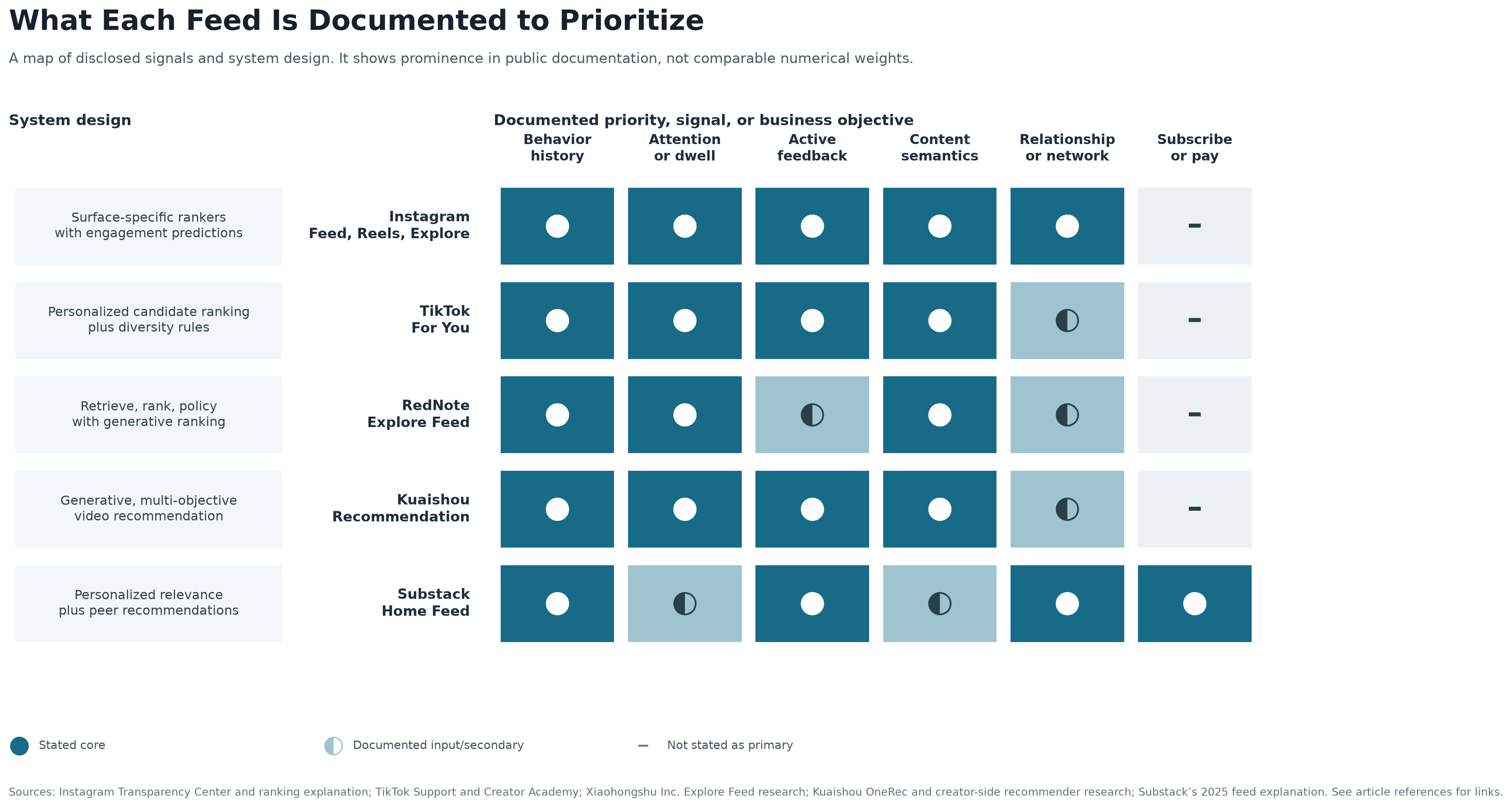
Instagram has separate Feed, Stories, Reels, and Explore systems. Reels and Explore prioritize attention, shares, saves, follows, and content relevance. Relationship history matters more in Feed and Stories. [3]
TikTok’s For You feed uses watches, skips, likes, shares, comments, and saves. For most users, TikTok says interaction signals generally matter more than content or device information. [4]
Substack’s home feed seeks work readers will engage with, subscribe to, and ideally pay for. Clear value, Notes, and trusted writer recommendations matter. [5]
For creators, format follows the feed. On Instagram, make discovery content that strangers save or share. On TikTok, earn the next second of attention without breaking trust. On Substack, turn discovery into a reason to subscribe.
The developer lesson is bigger than social media
The shift now is toward sequence models that take past actions as input and predict the next relevant item or action.
I believe this is one of the most important changes in search and recommendation. It is not a replacement of every index or ranker with one giant model. X still retrieves candidates before transformer ranking. Meta, Xiaohongshu, and Kuaishou have described generative or sequence based systems. [2] [6] [7] [8]
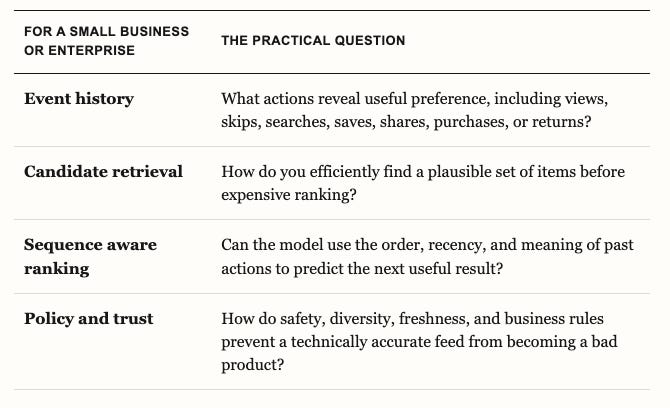
The opportunity is not to keep people hooked at any cost. It is to make a feed, search result, or recommendation more relevant and useful.
Social media will still exist in the era of AI. People will still want to be entertained, educated, and engaged with a community. Where people, and eventually agents, gather around interesting ideas, social media will matter. The question is whether these systems only capture attention or create better connections.
Till next time, Cheers!
Previous column articles can be found here:
https://newsletter.ownlyagent.com/t/teacolumn