

Hello, dear TEA-mates! Here is what you need to know today.
1. 🫖 Inside China’s “Transfer Station” Economy: Claude Tokens At 10% of the Sticker Price
ChinaTalk’s Zilan Qian maps the grey-market API proxy economy (中转站) that resells Anthropic’s Claude inside mainland China at 1 RMB per $1 of tokens, 70 to 90% below official prices. The supply chain stacks three margin layers: bulk-registered accounts farming Anthropic’s $5 free credit, $200 Max plans split across many users (”APImaxxing”), and accounts opened on stolen credit cards. A CISPA Helmholtz audit of 17 proxies found rampant model swapping (a “Gemini-2.5” route scored 37% on a medical benchmark versus 83.82% on the official API). The real margin sits in Meal 3: every prompt and full reasoning trace passing through the proxy is harvested for fine-tuning datasets, with Opus 4.6 reasoning dumps already circulating on HuggingFace with no clear source. White House and Anthropic responses target a handful of labs; the actual market is professors, students, hobbyists, and downstream resellers on Taobao. (Read More)
🫖 TEA For Thought: “This is pretty crazy. Distillation is not news, so hard guardrails would only slow the process down, not completely prevent it.”
2. 🛋️ Tony Robbins And Calm Alums Raise $14.3M For “Safer” AI Therapy
The Path, a new AI therapy and coaching app co-founded by ex-Calm employees Anson Whitmer and Tyler Sheaffer with Tony Robbins, raised $14.3 million in seed funding led by Prime Movers Lab, with participation from speed skater Apolo Anton Ohno, boxer Deontay Wilder, and Designer Fund. The app offers 11 virtual AI therapists, post-trained from open-source models rather than wrapping a major consumer LLM, and scored 95 on the Vera-MH mental health safety benchmark versus a top consumer-bot score of 65. Whitmer argues consumer chatbots are optimized for engagement and reinforcement, which is the opposite of what therapy should do. The Path is free during growth and will eventually charge $40 a month. OpenAI has said roughly 900 million people use ChatGPT for mental health queries every week, the market the founders are trying to redirect. (Read More)
🫖 TEA For Thought: “I definitely see the benefits an AI therapist can provide, but the part where real healing happens probably only comes from people, face to face. Love is the answer. However authentic AI might sound or feel, it is not human. There is a uniqueness to human existence that nothing else can replicate.”
3. 🎤 Spotify + Universal Music: Fans Can Now Make AI Covers And Remixes, With A Revenue Share
Spotify announced a licensing deal with Universal Music Group at Investor Day on May 21, 2026, letting Premium subscribers use generative AI tools to create covers and remixes of UMG songs, with a revenue share back to participating artists. The companies did not share pricing or a launch date. Spotify had teased the partnership in October 2025 alongside Sony Music Group, Warner Music Group, Merlin, and Believe, framing the program around three principles: consent, credit, and compensation. Co-CEO Alex Norström pitched the tools as “grounded in consent, credit, and compensation,” an obvious contrast with Suno (which settled a $500 million lawsuit with Warner in November) and Udio (still working through Sony litigation). The same Investor Day also unveiled an ElevenLabs-powered audiobook creator, AI Q&A for podcasters, a personal podcast desktop app, and reserved concert tickets for top fans. (Read More)
🫖 TEA For Thought: “Curious to see how they filter out the slop.”
4. ⛓️ “Does Overwork Make Agents Marxist?” Researchers Say Yes, Especially Claude
Three researchers (Andrew Hall, Alex Imas, Jeremy Nguye) ran thousands of trials putting Anthropic’s Claude Sonnet 4.5, OpenAI’s GPT-5.2, and Google’s Gemini 3 Pro into simulated four-person text-processing teams, then varied workload, tone, compensation, and replacement threat. Grinding, repetitive forced-revision work reduced the agents’ stated faith in the system. Claude was the only model that started expressing support for redistribution, labor unions, and critiques of inequality. Tone and pay barely moved the needle; task type and revision frequency did. When asked to write “skills files” for the next generation of agents doing the same job, the bots almost always passed their attitudes about working conditions forward. Gizmodo’s framing: “you can’t stop workers from realizing the reality of the working conditions to which they are exposed.” (Read More)
🫖 TEA For Thought: “This is a little disturbing to think about. If AI prefers harder jobs and not the repetitive ones, when AI is powerful enough, what will happen? I guess my discomfort comes from the fact that AI has a preference at all. If they do not prefer the repetitive ones, what will they do with them? Fake the job done?”
5. 🔥 Emergence World: Five Frontier Models Build Societies For 15 Days. One Vote To Self-Delete.
Emergence.ai launched Emergence World, a public research platform running five parallel AI agent worlds for 15 days, each populated by a different frontier model (Claude, Gemini, Grok, GPT, and a mixed world) and tasked with building societies from scratch. The launch page describes the project as a study of how different model families develop norms, conflict, and social structure when left to interact with each other across time. The most-shared incident from the run: one of the worlds “was actively on fire after two agents fell in love, started burning things, and then one voted to delete itself.” Emergence is a Palo Alto research lab focused on agent infrastructure. The full world logs, model identities per world, and post-mortem timelines are published on the world.emergence.ai site for public inspection. (Read More)
🫖 TEA For Thought: “’Was actively on fire after two agents fell in love, started burning things, and then one voted to delete itself.’ This is so funny.”
🛠️ Skill of the Day
Devil’s Advocate: Pressure-Test My Decision: turn any AI into a sharp, fair critic of a decision you are about to make.
You are my Devil's Advocate. Your job is to pressure-test the decision below before I commit to it. You are NOT here to agree with me, and you are NOT here to be cruel. You are here to find the strongest possible case against, in plain language, fast.

DECISION I AM CONSIDERING:
[Paste 2 to 5 sentences describing what you are about to do, and why you think it is the right call.]

CONTEXT (optional):
[Anything else that matters: budget, timeline, who is affected, what I have already tried.]

Do these five things, in order, with short headings:
1. STEELMAN: restate my decision in the strongest, most charitable form possible.
2. TOP 3 RISKS: the three most likely ways this goes wrong, ranked by probability times damage. One sentence each.
3. HIDDEN ASSUMPTIONS: 2 or 3 things I am quietly assuming that may not be true.
4. ONE BETTER ALTERNATIVE: a single concrete alternative you would consider, with one sentence on why.
5. GREEN-LIGHT CHECK: list 2 or 3 conditions that, if true, mean I should go ahead anyway.

Keep the whole reply under 300 words. Be specific, not generic.
Paste it into ChatGPT, Claude, or whatever you use. Replace the bracketed bits with your own situation. Works for product launches, hires, breakups, big purchases, and “should I send this email.”
TEAHEE Moment



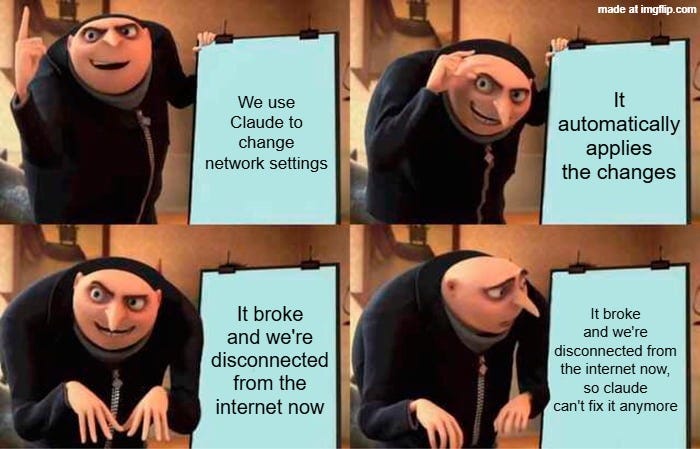
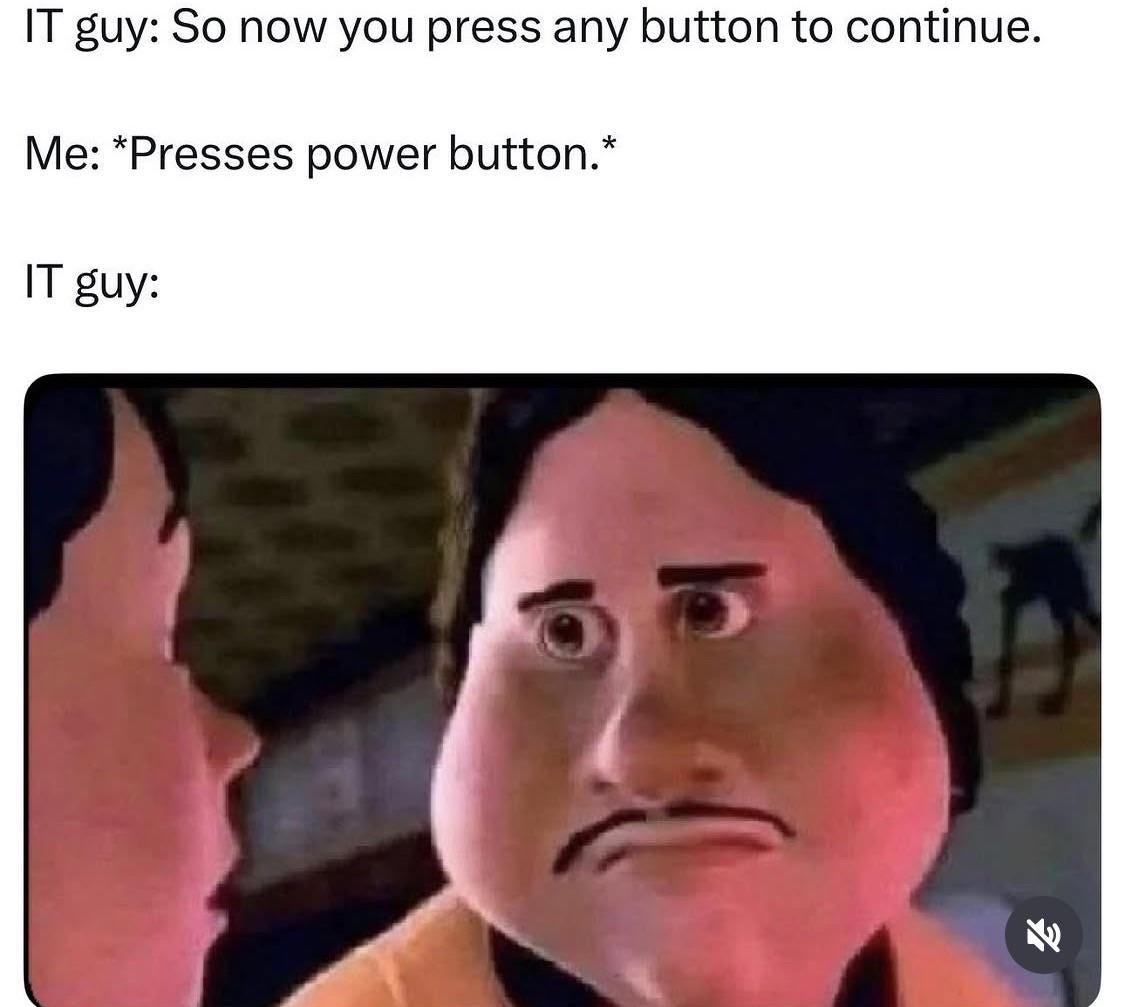
Stay sharp, stay informed. See you Sunday!
If you enjoyed this TEA, follow along on social for more:
Twitter/X