

Last week, we explored the definition of money and what makes "good money."
Today's money market tells a stark story: fiat currencies are losing value, with everyday items like eggs costing three times more than last year. Meanwhile, memecoins are proliferating wildly—bringing waves of pump-and-dump schemes and rug pulls that leave people confused and frightened when faced with so many new monetary options.
This volatile landscape makes it crucial to understand the fundamental nature of money and what makes it "good." Such understanding helps us avoid scams, make wise investment choices, and protect our wealth.
In today's edition, we'll examine the current money market and evaluate different forms of money using our good money checklist: usability, stability, and trust.
A quick review of the definition of Money:
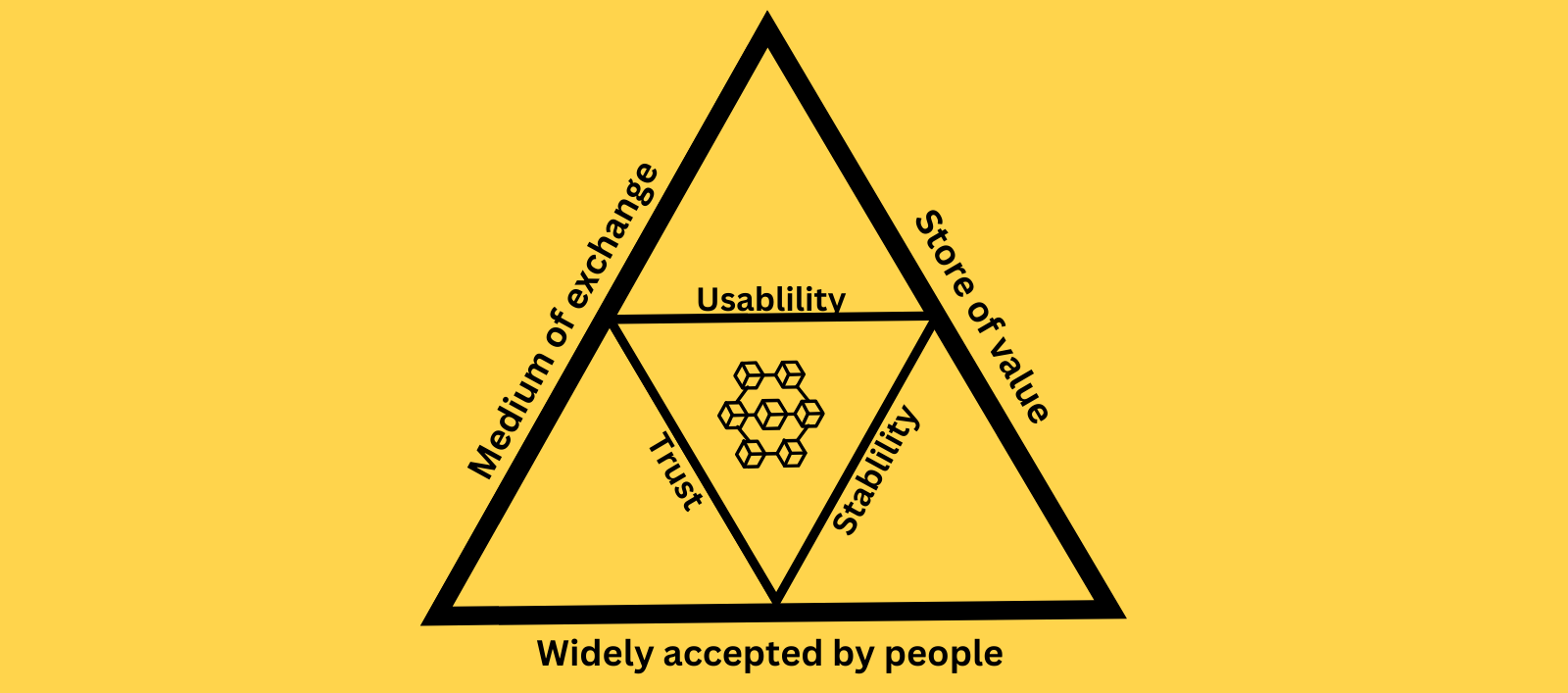
and Good Money Checklist:
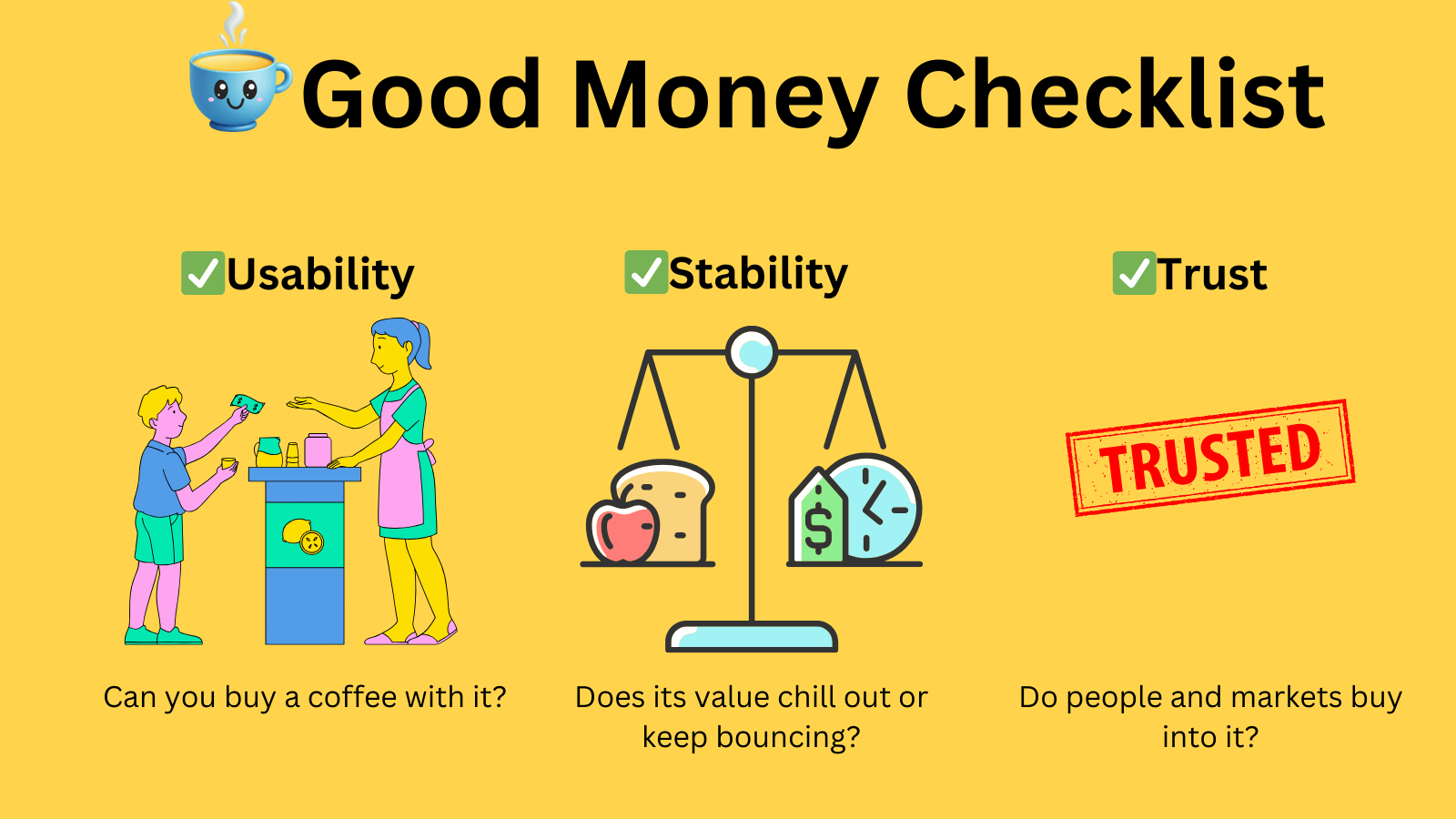
We will start with Fiat.
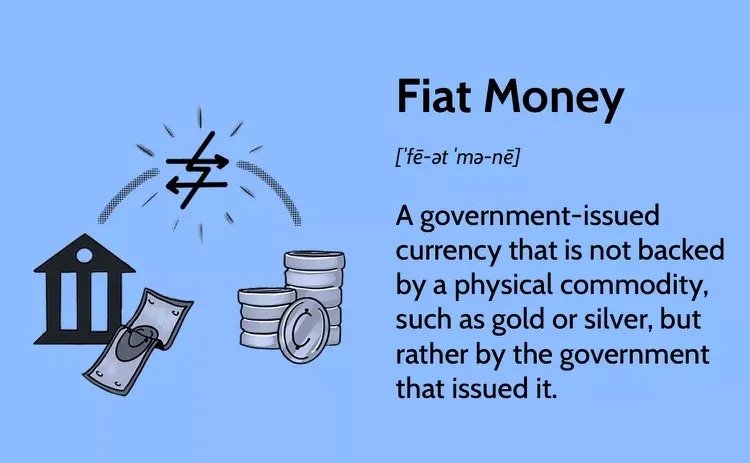
To start off, what is Fiat? According to Investopedia:
Fiat money is a government-issued currency that's not backed by a physical commodity such as gold or silver.
It's backed by the government that issues it.
The value of fiat money is derived from the relationship between supply and demand and the stability of the issuing government rather than the worth of a commodity backing it.
So, is fiat money qualified as Good Money?
Usability? Yes and No.
Outdated: Fiat relies on traditional banking systems with high transaction costs—particularly for international transfers via SWIFT—and operates on outdated infrastructure: expensive and inefficient.
Going Digital: The shift to digital payments is revolutionizing fiat's usability: consumers have largely abandoned cash in favor of mobile payments. (Zelle's transaction value surpassed $1 trillion in 2024, a 27% YoY jump, per a press release)
Stability? Not really.
Since abandoning the Bretton Woods system in 1971, the U.S. has operated on a pure fiat system, allowing the government unrestricted money printing capabilities. For perspective, the U.S. printed approximately $1.13 trillion in the last five years (2020–2024)—nearly matching the $1.5 trillion printed over the previous two decades (2000–2019), according to available data.
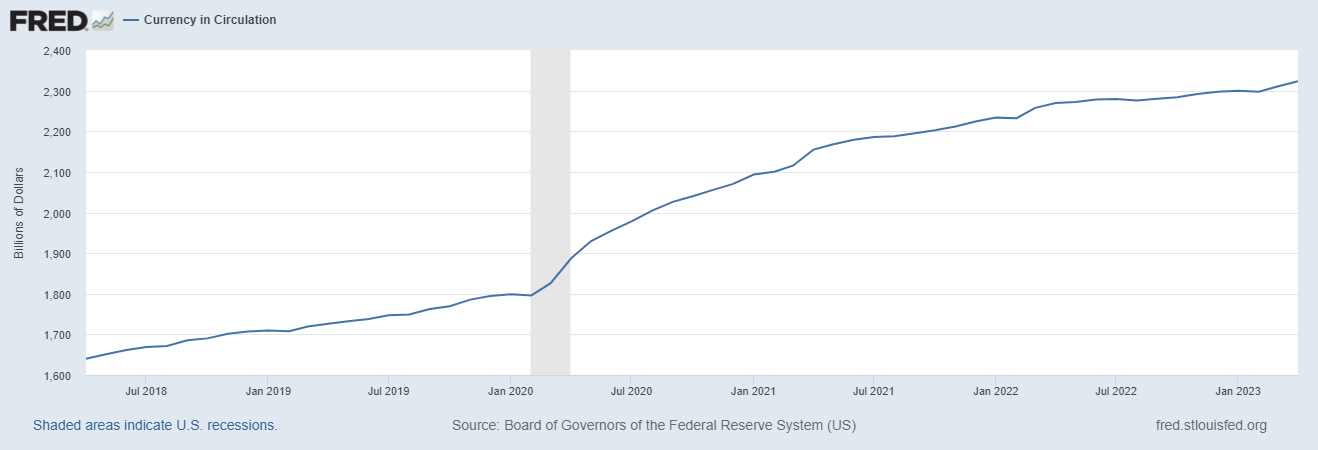
Imagine last year you could buy a loaf of bread for $1, but now, thanks to inflation from all that money printing, the same loaf costs $4—and even with $2 in your pocket, you’re still short and can’t afford it.

(Credit to Grok 3)
Trust? No.
When governments can print money at will and our hard-earned savings steadily lose value, how can we trust them? As Hayek noted in our previous discussions, "History is largely a history of inflation, and usually of inflations engineered by governments and for the gain of governments." He argued that
"a good money, like good law, must operate without regard to the effects that decisions of the issuer will have on known groups or individuals...no democratic government dependent on a number of special interests can possibly do so."
Fiat money has clearly failed our good money checklist. This failure isn't new—it has been ongoing for decades. But now, with escalating fiat hyperinflation and the emergence of blockchain technology, people have reached their breaking point.
What about the crypto market? To keep this weekly edition focused, we'll examine Bitcoin, stablecoins, Ethereum, and memecoins in the coming weeks.
Until then, cheers! 🍵