Welcome back, dear TEA-mates!
While temperatures plummet on the East Coast in this third week of the new year, the headlines are running super hot—from the U.S. presidential inauguration and Israel-Hamas ceasefire to Blue Origin's New Glenn rocket success, SpaceX's Starship explosion, the TikTok ban, and Trump/Melania Meme Coin…
Like the Starks would say, "Winter is coming. Winter has come." Yet as a poet Shelley asks, if Winter comes, can Spring be far behind?
All I know is that I'd love a cup of hot TEA 🤓 This week’s cups of TEA covers:
From TikTok to RedNote, and the Role of Humanity in Technology
Entrepreneurship in the Age of AI
Is Mastodon Redefining Connection in the Decentralized Age?
Read Time: 5 minutes
🍵Your Weekly Cup of TEA:
1. From TikTok to RedNote, and the Role of Humanity in Technology
Amid the U.S. TikTok ban, many users are migrating to the Chinese app RedNote (Xiaohongshu), sparking a 216% surge in Americans learning Mandarin on Duolingo compared to last year.

RedNote, on the other hand, is urgently hiring English-speaking moderators to manage content under China’s strict censorship laws. In the "TikTokCringe" subreddit, a tearful RedNote user expressed concern that Americans migrating to the platform could impact Chinese Americans who use it to stay connected with Chinese culture.

According to the user, RedNote is implementing IP-based restrictions in the greater China region, potentially limiting access for Chinese Americans who rely on the app for cultural connection. Some Reddit users suggested this could be a Chinese Communist Party (CCP) measure to limit American influence - similar to how CCP has historically blocked Western social media platforms, and ironically parallel to the US TikTok ban.
🍵Brewed Thoughts:
Politics, at its core, is about people—about building and maintaining a society where individuals can pursue life, liberty, and happiness. We can't simply separate technology from politics because both of them fundamentally involve human beings and their interactions.
It’s fair to say that cross-border collaborations between technical and academic organizations often result in greater innovation and significant breakthroughs. Take applied AI research as an example: promising AI tools often fail when moved even slightly outside the context of their original lab or society. These failures can happen quickly and unpredictably, which is probably why cross-border collaborations are vital—they allow testing in diverse contexts to ensure broader applicability.
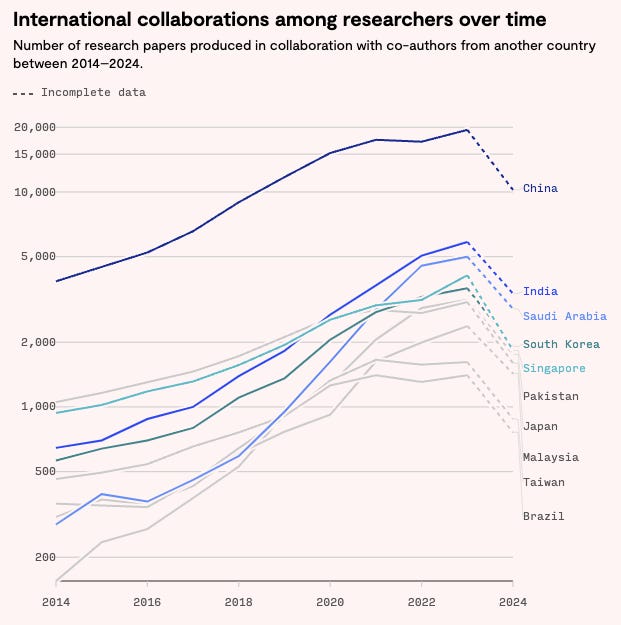
Yet how can we be sure that our international collaborators won't become adversaries? While Western nations, like the US, focus on creating regulations and governance frameworks, authoritarian regimes and kleptocrats, the CCP, are leveraging their state power to advance their technological capabilities and gain competitive advantages.
Consider DeepSeek, a CCP-led Chinese AI company. They just released DeepSeek-R1:
It matches (and sometimes beats) OpenAI's o1 across math, code, and reasoning tasks.
Their smallest model outperforms GPT-4o and Claude 3.5 Sonnet on math benchmarks.
Plus, it's *completely open source—*MIT license and available via API.


And DeepSeek isn't alone. CCP-led Chinese AI models are dominating the open-source space:
Alibaba's Qwen models are the most downloaded on Hugging Face.
These models frequently outperform Meta's Llama while being more cost-effective.
The leading video models are developed CCP-led Chinese companies, including Hunyuan (the next best video model after Google's Veo 2—which is remarkably capable.
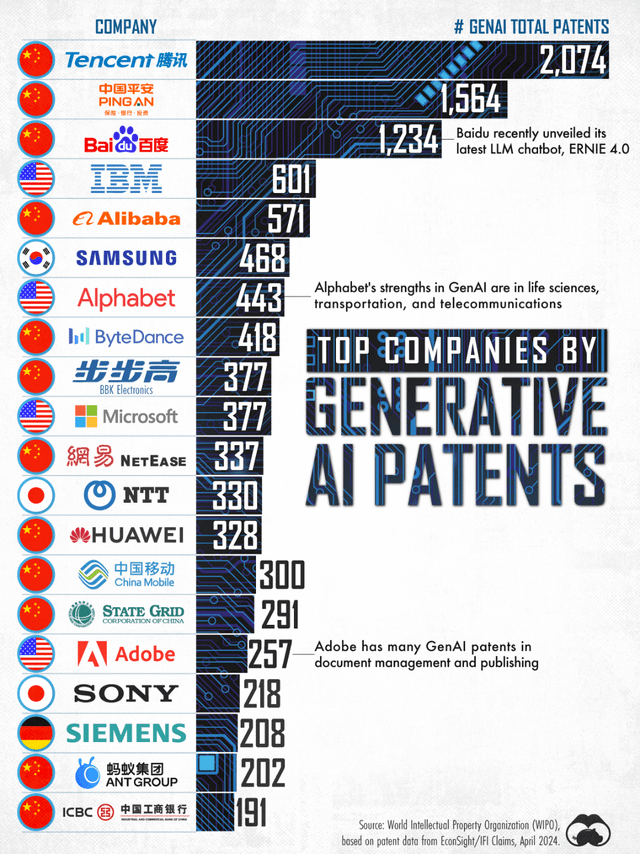
With all of this, can we still maintain optimism about technology's future impact? Can we embrace the Techno-optimist mindset and believe that "Technology is a lever on the world" and that "no material problem exists that more technology cannot solve"?
What is technology's role in our lives today, and what will it become in the future?
I am always amazed by the Great Seal of the United States. The eagle holds both an olive branch and arrows, symbolizing readiness to defend liberty. The eagle's head faces the olive branch, showing that peace is always preferred, honored, and pursued. Yet the arrows remind us of our strength to defend our freedom when needed.
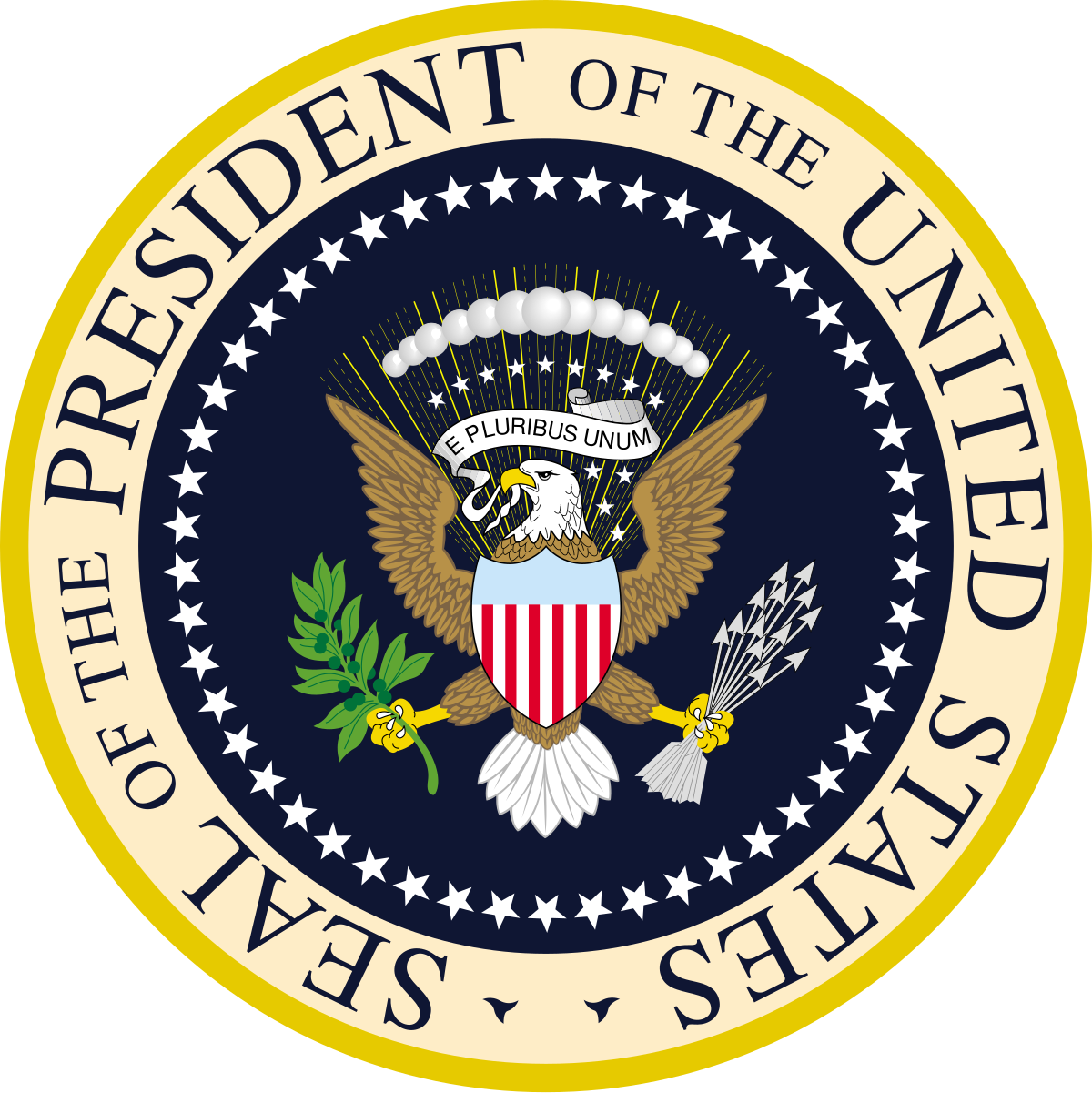
This symbolism applies to technology—if hostile actors are advancing their technological capabilities and could harm humanity, we must accelerate our own technological development to defend ourselves. Better yet, we should be proactive and develop superior capabilities that deter any potential threats.
Perhaps technology is like a double-edged sword—capable of both good and bad.
Perhaps we must also trust in humanity's better nature, acknowledging that while technological progress is inevitable, justice and good will always prevail.
Just in time.
2. Entrepreneurship in the Age of AI
A decade ago, startup founders typically needed CS degrees from Stanford or MIT. Today, nurses create healthcare scheduling platforms, teachers develop education technology companies, and construction managers build project management tools—all without writing a single line of code.
Journeyman, a Wildfire Labs graduate in Wildland fire management, saw firsthand how inefficient crew management was costing agencies time and money. Instead of starting with technology, they started with their understanding of fire management protocols. Within months, they had over 1,000 users - not because of superior technology, but because they understood the problem. Wildfire's recent cohort numbers tell a compelling story:

This isn't just about cost savings - it's about making entrepreneurship accessible to anyone with deep industry knowledge.
"What's happening now is unprecedented," Mike reflects. "Industry experts who understand problems can build solutions faster and cheaper than ever. The obstacles to building companies are gone.”
NVIDIA founder and CEO Jensen Huang believes that in the near future, there will be no need to learn coding. He stated in one of the most recent interviews that “the application of Artificial Intelligence is even more important. How do you apply AI to art creation? How do you apply AI to engineering? How to apply AI to marketing, finance or research?” (See full interview below.)
Huang thinks that people ought to learn all kinds of skills. However, “programming is not going to be essential for you to be a successful person." Generative AI, Huang said, is "closing the technology divide. You don't have to be a C++ programmer to be successful," he said. "You just have to be a prompt engineer. And who can't be a prompt engineer? When my wife talks to me, she's prompt engineering me. We all need to learn how to prompt AI, but that's no different than learning how to prompt teammates."
🍵Brewed Thoughts:
I just think this is super cool and remarkable. This is the democratization of technology. It has never been this easy for anyone to learn, explore, create, innovate, build and develop. As long as you have an idea, you can almost immediately test it out with AI. Every human is augmented by the assistance of AI. Freer and faster. What a great time to be alive! ❤️
Among all skills, literacy, critical thinking, and precise writing have never been more crucial. While AI can handle the technical implementation, the key question remains: do you truly understand what you're building? Can you articulate your business logic and requirements with precision? In AI, there's a fundamental principle: "Garbage in, Garbage out." What you prompt is what you get.
Isn’t it the same for us humans as well? What you see is what you get. What you read is what you become. Behold what you are. May we become what we receive.

3. Is Mastodon Redefining Connection in the Decentralized Age?
The decentralized social network Mastodon announced plans to establish a European nonprofit organization and transfer ownership of key platform components to it. This restructuring will eliminate single-person control over the project, distinguishing Mastodon from social networks run by individual CEOs like Elon Musk and Mark Zuckerberg.
What exactly is Mastodon, and how does it differ from major social media platforms like X and Facebook?
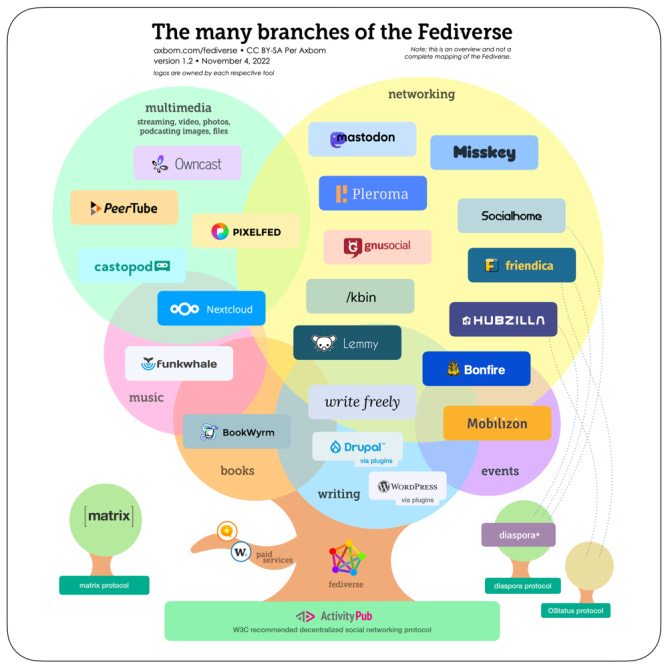
Perplexity answered:
Mastodon is a decentralized, open-source social media platform that operates as part of the Fediverse, a network of interconnected but independently hosted servers that communicate using protocols like ActivityPub. Unlike centralized platforms such as Twitter or Facebook, Mastodon allows users to join or create their own servers (called "instances"), each with its own rules and moderation, while still enabling interaction across the broader network.
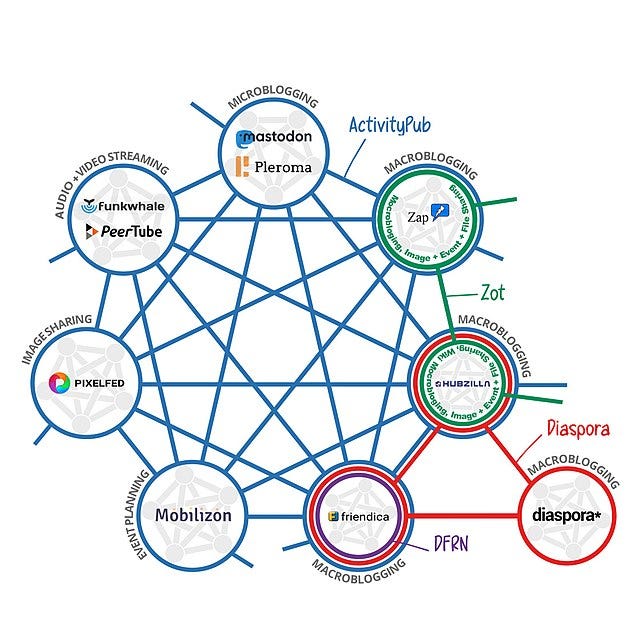
The Fediverse itself is a decentralized ecosystem of interoperable platforms, offering alternatives to traditional social media—such as Mastodon for microblogging, PeerTube for video sharing, and Pixelfed for photo sharing—emphasizing user privacy, control, and an ad-free experience.
What's happening now is that Mastodon isn't just decentralizing its servers—it's also restructuring its legal framework to become a nonprofit without a single controlling entity.
Could Mastodon evolve into a true Decentralized Autonomous Organization within the Fediverse? Perhaps. We shall see.
🍵Brewed Thoughts:
I'm just fascinated by humanity's intelligence and our digital evolution over the years. We started with Web 1 in the 90s, where we could only consume online content, then progressed to Web 2 where we could read, write, and interact on platforms. Now we're in the Web 3 era, where we're finally becoming the owners of our own data.
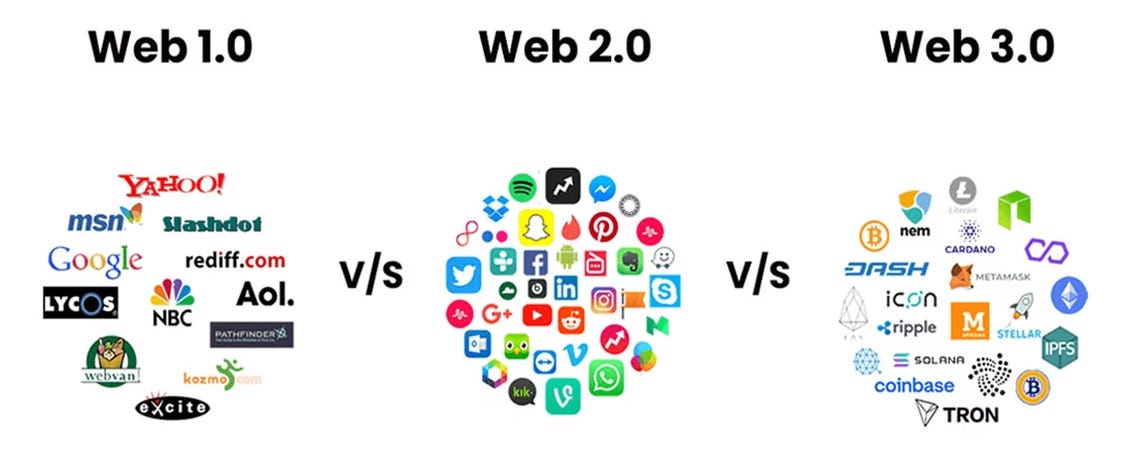
In essence, AI emerged from Web 2.0, where massive data collection in centralized locations enabled the development of algorithms and AI models, signifying humanity's shift from small, disconnected groups to a centrally connected world through tech companies.
Now, with blockchain technology offering decentralization and immutability, we can record data permanently and unalterably. The combination of AI and blockchain—storing big data in decentralized, immutable ledgers—marks humanity's return to decentralization, self-autonomy, and self-governance.
Unlike ancient times, when isolated groups couldn't communicate, we're achieving a new form of decentralization where we remain interconnected. We're simultaneously many and one, returning to nature's fundamental pattern.
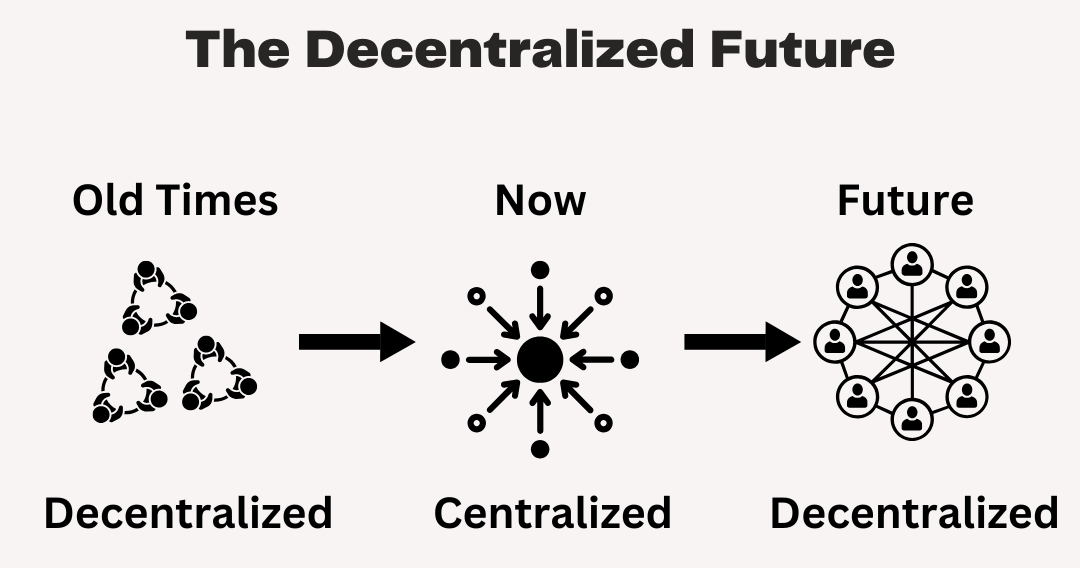
AI and blockchain are like yin and yang, like day and night—complementary forces working in harmony. As computing power and quantum computing advance, they will serve as the engine of this digital transformation.
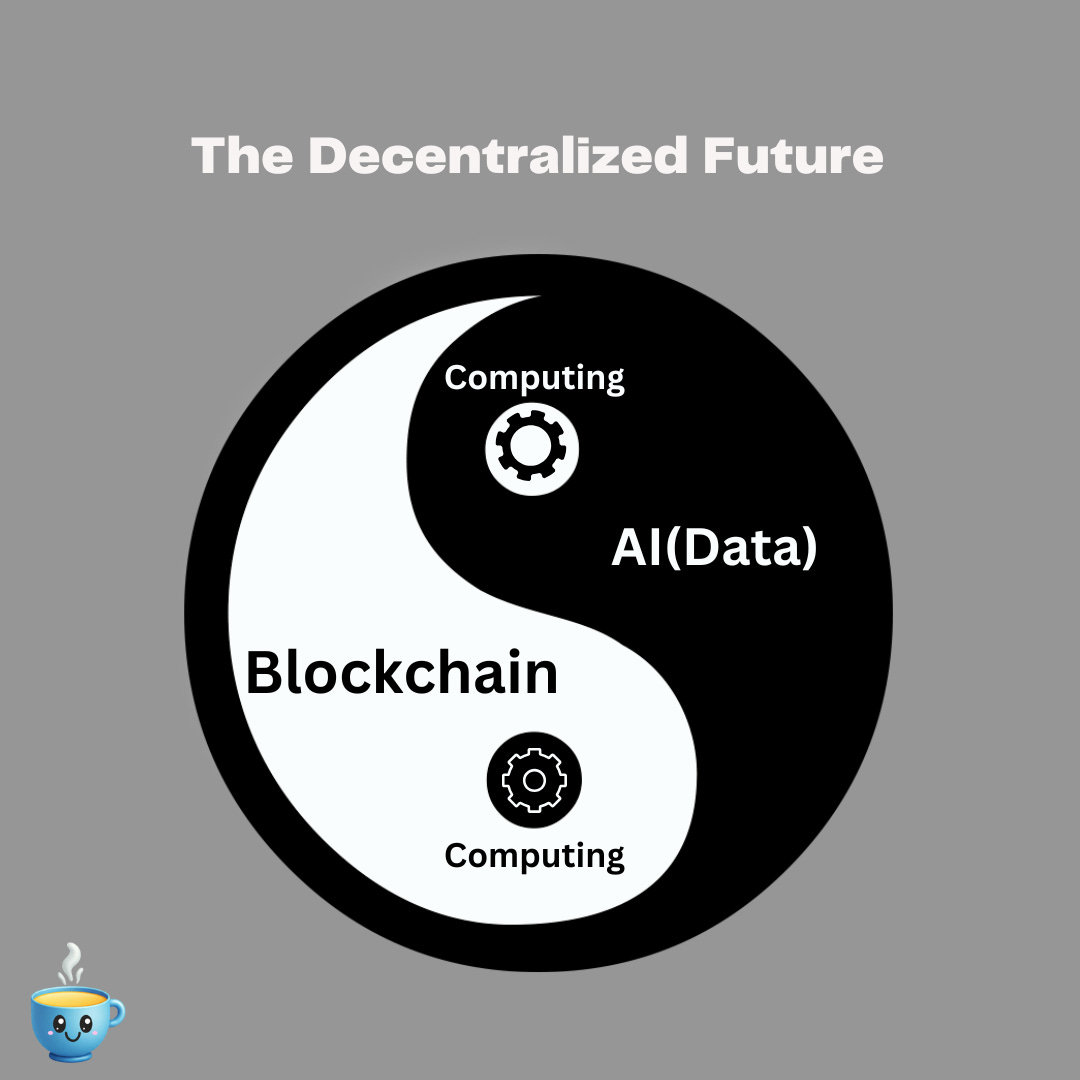
In this vision, traditional country borders, banks, and government agencies would become obsolete as humanity unifies under a single banner—one nation of all humans.
Or as some might say, one nation under God. And ultimately, we would embody "E Pluribus Unum"—out of many, one.
📝TEAkit to Try
Clemta helps you run your entire US business from formation to accounting to taxes (paid service FYI)
Simplify Copilot: Get personalized job recommendations, craft tailored resumes, autofill and track your job applications.
Job Interview Hack with NotebookLM: Research the company you are applying to in 5 minutes
🤪TEAHEE Moments
Elon Musk tweets so much, people bet over $1M weekly to guess how many posts

The 2025 Pinterest Palette: This year’s trending colours

🌱TEA Shots
1. Coinbase Launches Bitcoin-Backed Lending

2. City Comparison in total venture funding, 2024
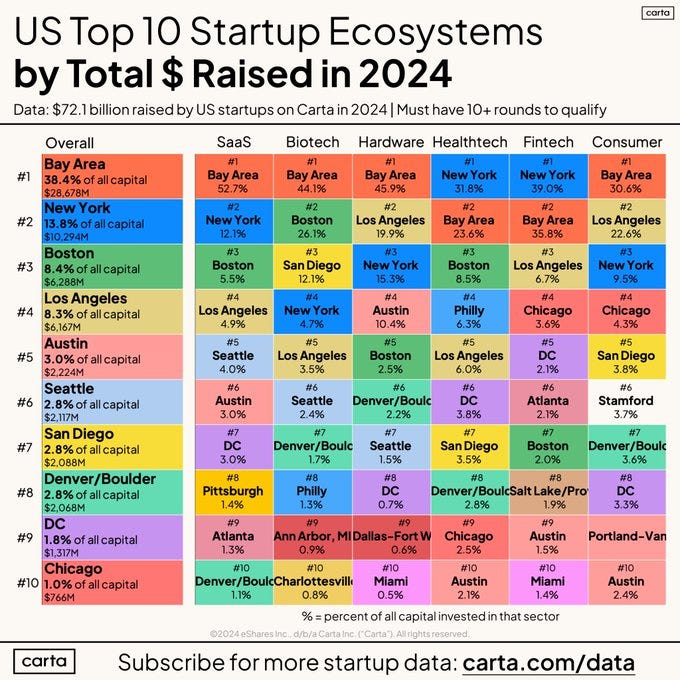
Quick TEA Shots
Bitcoin vs. the quantum computer threat: Timeline and solutions (2025–2035)
Journalism, media, and technology trends and predictions 2025