

This week I’ve been thinking about the Agentic OS. It’s the software layer that turns a raw language model into a system that actually gets work done for you.
When you think about it, an Agentic OS isn’t so different from the operating systems we grew up with in the Web 2.0 era. The core job is exactly the same: get work done for people. What has changed are the building blocks. Instead of managing a CPU and hard drives with predictable code, an Agentic OS manages LLM calls, context windows, and tools in an environment where the same input doesn’t always produce the same output.
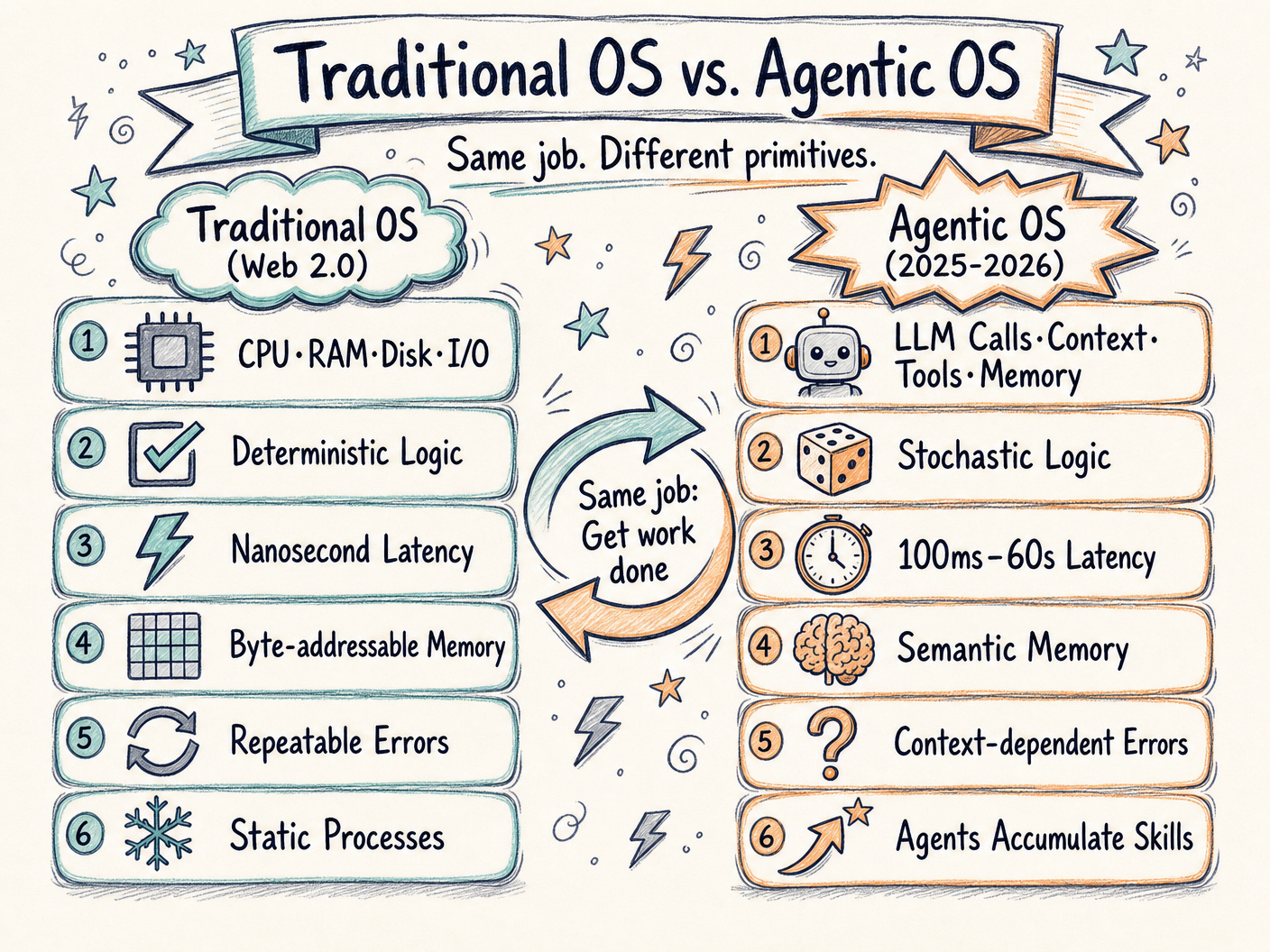
The Enterprise Reality: Verification and Control
Looking at how enterprise AI is rolling out right now, the biggest challenge isn’t intelligence. It’s verification and reliability. How do we make sure data is secure? How do we make sure the output is reliable enough to actually scale?
This is why we’re seeing a shift toward managed agents and specialized SDKs like Claude Code. Companies are breaking down agentic elements to get more customization and control. You can’t just trust a raw model to behave safely. You need a structured environment, an OS kernel, to handle tool permissions, state management, and orchestration properly.
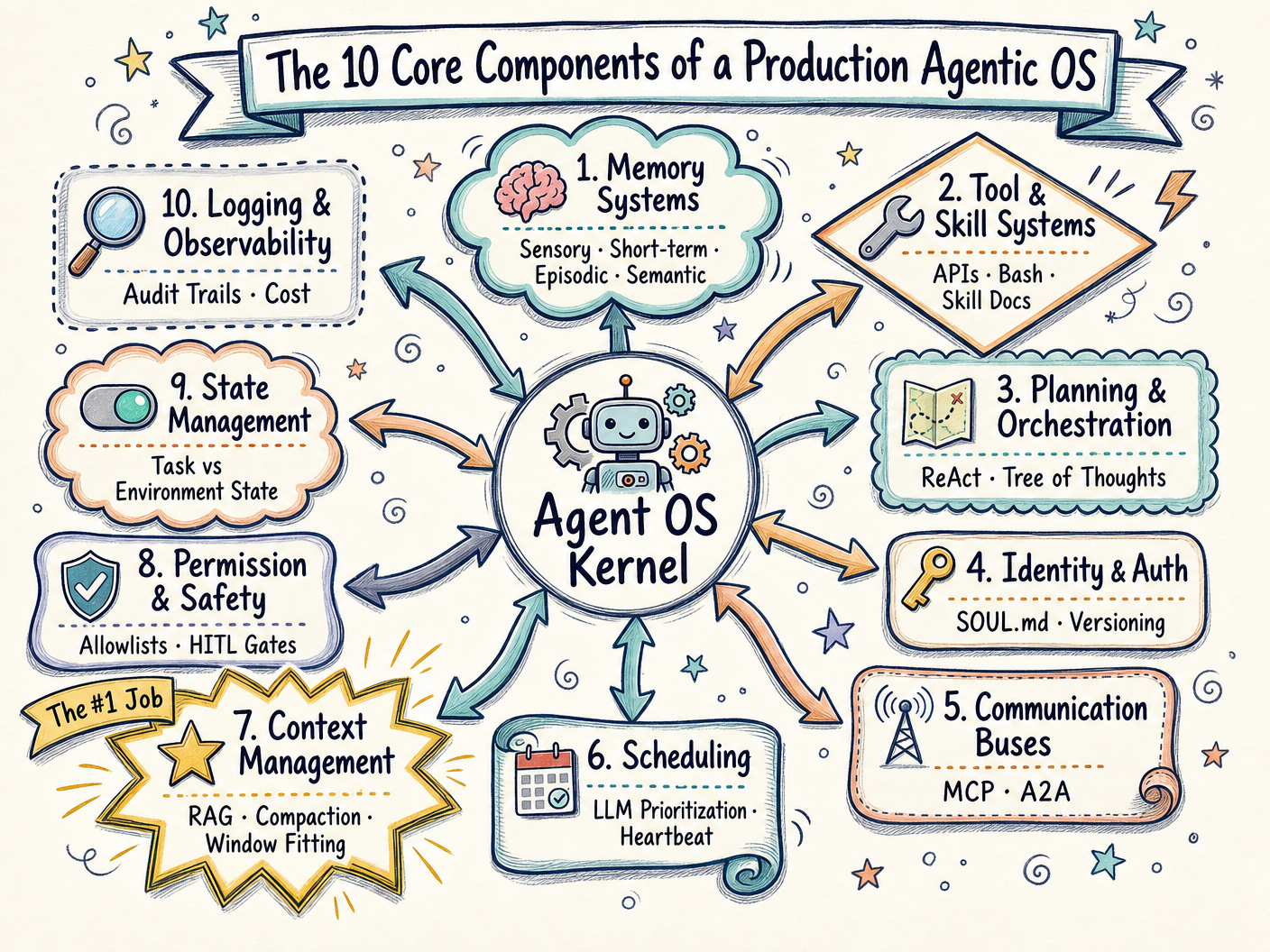
The Harness Lock-In Problem
This shift toward managed environments comes with a real trade-off that I keep thinking about: harness lock-in.
Once a business locks in a model, it’s very hard to swap it out. The friction doesn’t come from the model itself. It comes from the harness, which is the specific tools, skills, and memory structures built around it. Different models are like horses that prefer different harnesses. That’s fine. But you don’t want to lose everything you’ve built just because you decided to switch horses.
When I set up my systems, I want them to be portable. The harness might be tied to a specific model, but the identity layer has to be transferable. Your user habits, the skills built from past projects, your must-dos and don’ts, those things need to move with you. The goal is to design systems where you can swap the brain without losing the operational memory.
Coming Next: Memory Consolidation and Dreaming
On the topic of memory, one of the most interesting things happening right now is memory consolidation. Claude recently released a dreaming function, and it maps closely to something I set up myself two months ago.
I built a three-layer memory system in Obsidian with routines for reflection, peer auditing, and expert research. I’m testing those routines this week to see how performance has held up. Next week I’ll write a full piece on how the dream management system works and what I’ve found. More to come.
Till then, Cheers!
Previous column articles can be found here: