

The crypto landscape is rapidly evolving: Trump's inauguration brought TRUMP and MELANIA meme coins along with his ties to World Liberty Finance coin and CBDC ban; Elon Musk's father released MUSK IT coin; there's a new SEC regulation body and Crypto Czar Sacks; OG alt-coins like XRP and Litecoin are making comebacks; stablecoins are reaching huge market values; and Stripe is acquiring Bridge to dominate the stablecoin market. The list goes on—it's hard to keep up with the crypto world's constant changes.
That said, I'd like to invite you to join me on a journey exploring fundamental concepts: What is currency? Who can issue it? What does cryptocurrency mean in web3 era? What might future currency look like? I'll try to break these topics down using Friedrich Hayek's brilliant book "Denationalisation of Money" as my guide.
Published nearly 60 years ago, Hayek presented a revolutionary vision: money could be denationalized, creating a free market of currencies issued by individuals for people to choose from. Now, thanks to blockchain technology (decentralized ledger technology, or DLT), Hayek's dream of denationalized money is closer to reality than ever before.
Phew, that's a long intro. Let's get right into it.
#1 You Don't Need to Be a Government to Create Money
"Much of contemporary politics is based on the assumption that government has the power to create and make people accept any amount of additional money it wishes."
For centuries, we've been conditioned to believe that only governments can print and control money. Governments around the world have consistently claimed to their people that they alone should have this power—that they'll protect our hard-earned money, maintain its value, and act in our best interests. Meanwhile, any non-government entities creating money or money-like products are treated with suspicion as potential "bad actors" who might be trying to scam us—and therefore might face legal punishment. But is this really true? Or is it simply what governments want us to believe?
Quite the opposite—everything governments say or do should be under extreme scrutiny and treated with suspicion, especially when our hard-earned money is involved. As Lord Farrer noted, "any Law of Legal Tender is in its own nature 'suspect.'" While I'd like to believe that everything government does is for our own good, this so-called "mercy" or "ultimate altruism" contradicts human nature. Human nature, at its core, is self-interested. This isn't about judging whether self-interest is right or wrong—it's simply reality. After all, one must secure their own position before helping others.
As Hayek well put it, "The important truth to keep in mind is that we cannot count on intelligence or understanding but only on sheer self-interest to give us the institutions we need".
Consider two identical products with different marketing stories: one claims to be purely for my benefit—a gift of mercy and grace—while the other honestly acknowledges mutual benefit. I'm more inclined to trust the self-interest narrative. It's straightforward and practical. If the product owner benefits from my usage, they'll strive to keep me as a customer by continuously improving their product. This benefits both of us.
So what is money? Who can create money?
According to the International Monetary Fund (IMF), "Money is anything that is widely accepted as a means of payment for goods and services or for settling debts. It serves as a medium of exchange, a unit of account, and a store of value."
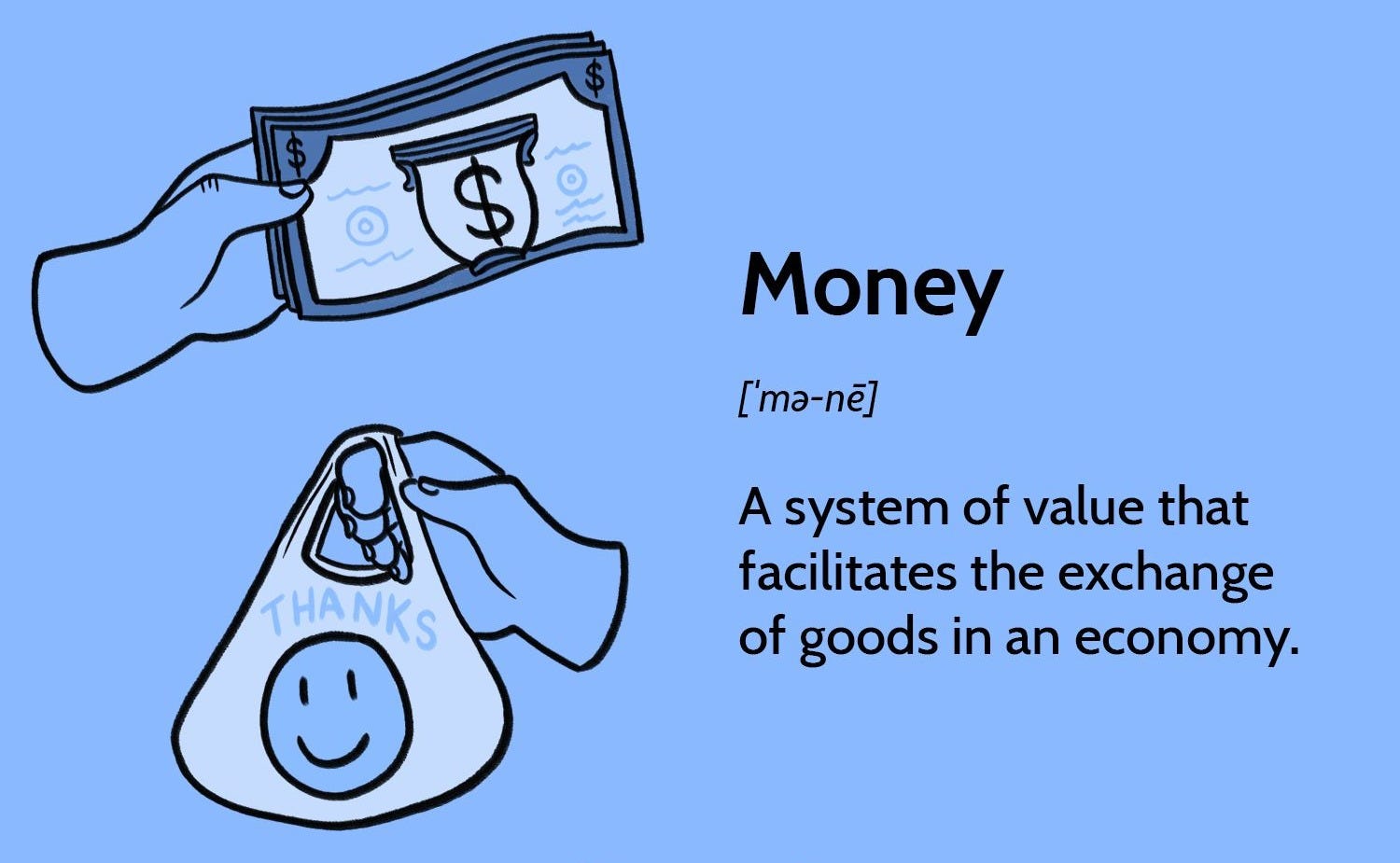
Consider this: if people widely accept seashells as payment for bread and gas, and if others are willing to accept these seashells as valuable—then seashells become money. This simple example shows that money is just like any other product.
As Hayek noted, "Money is no different from other commodities and that it would be better supplied by competition between private issuers than by a monopoly of government". He further argued that "we have always had bad money because private enterprise was not permitted to give us a better one." Indeed, "Once people have a choice they will become very much aware of the different changes of the value of the different currencies accessible to them".
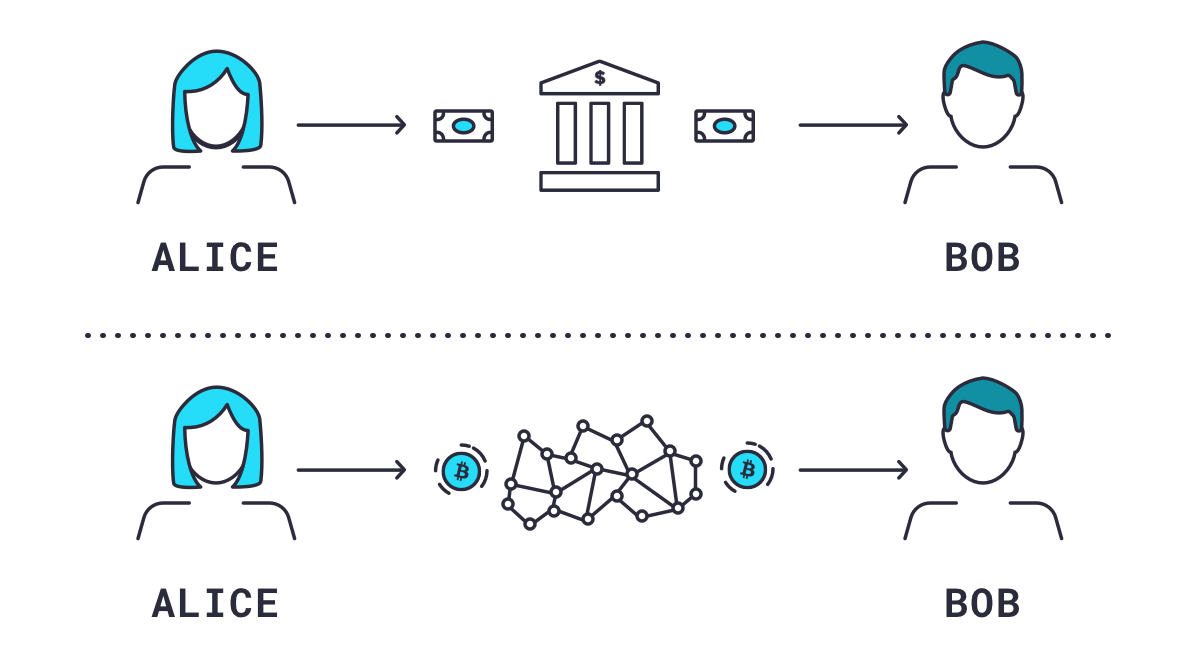
This realization is powerful: not only can anyone create money—not just governments—but people have the right to choose their currencies. This understanding sets the stage for the decentralization of money. Knowledge is power, and this knowledge will transform into real power.
Luckily for us, we're witnessing this transformation unfold in the age of social media, AI, and blockchain technology.
What an exciting time to be alive! More to come next week, stay tuned!