

Hello, dear TEA-mates! Here is what you need to know today.
1. ⛓️ MetaMask Launches a Wallet Built for AI Agents to Trade DeFi on Their Own
Consensys launched MetaMask Agent Wallet on June 8, a self-custodial product that lets AI agents trade across decentralized finance without requiring human sign-off on every transaction. It supports token swaps, perpetual futures, prediction markets, and liquidity provisioning across Ethereum-compatible chains and Hyperliquid, and every transaction the agent initiates is simulated first and scanned for threats by Blockaid in real time. Risky transactions, or any that fall outside user-defined limits, trigger a two-factor approval, and users set their own daily spending caps and protocol allowlists before granting access. Two modes are offered: Guard Mode, which enforces all rules strictly, and Beast Mode, which reduces prompts while still requiring sign-off on anything flagged as malicious. MetaMask, which holds roughly 26% of the wallet market, says the product is framework-agnostic and already works with OpenAI Codex, Claude Code, OpenClaw, and Cursor. A full public release is planned for later in summer 2026. (Read More)
🫖 TEA For Thought: “MetaMask just joined the party!”
2. 💻 Cognition’s FrontierCode Asks Whether AI Can Write Good Code, Not Just Correct Code
Cognition introduced FrontierCode, a benchmark that measures whether AI models can write code a human maintainer would actually merge, not just code that passes tests. It was built with the maintainers of 36 flagship open-source repositories, who spent more than 40 hours per task defining what “mergeable” means in their codebase and grading along axes like correctness, test quality, scope discipline, style, and design. The team says it produces 81% fewer misclassification errors than benchmarks like SWE-Bench Pro, which only test functional correctness. The results show even the best models struggle: on the hardest 50-task “Diamond” subset, Claude Opus 4.8 scored just 13.4%, with GPT-5.5 at 6.3% and Gemini 3.1 Pro at 4.7%, though GPT-5.5 used up to 4x fewer tokens. Cognition is keeping the tasks private to avoid contamination but is opening the evaluation to model creators. (Read More)
🫖 TEA For Thought: “I am struggling to understand this one. If writing good code is about efficiency or scalability, I get it. But writing good code purely for the sake of good code, what is the point? Code is a tool after all, and the purpose of a tool is to solve problems.”
3. 📵 The FCC Moves to Effectively Kill Burner Phones
The Federal Communications Commission wants to legally require U.S. telecoms to collect a government-issued identification number and physical address from essentially all new and renewing phone customers, a change 404 Media reports would make it nearly impossible to buy a so-called burner phone not tied to your identity. The FCC frames the data collection partly as a way to fight scammers, and would also require carriers to gather extra details on business and foreign customers, such as the intended use case of bulk purchases and IP addresses. Privacy advocates warn the rule would hit low-income people, domestic abuse survivors, journalists, and anyone privacy-conscious, with carriers storing sensitive personal data that creates new cybersecurity risks. The ACLU’s Jay Stanley compared it to measures in authoritarian countries where registration is required to get a mobile phone, saying “we never thought that would happen here.” (Read More)
🫖 TEA For Thought: “This is pretty concerning. It reminds me of how blockchain first came out, as a way for people to transact without handing their identity over to a central authority. Now the trend seems to be heading in the opposite direction.”
4. 🍎 Apple Plays Catch-Up on AI at WWDC 2026
Apple’s WWDC 2026 keynote, the last under CEO Tim Cook before John Ternus takes over September 1, leaned on fixes before features as the company tries to reassert itself in a competitive AI landscape. The headline was an overhauled Siri, now more conversational and powered by Google’s Gemini models under the hood, housed in its own standalone app, with Apple stressing that “privacy in AI is non-negotiable.” Apple Intelligence gained cross-app context awareness, AI reply suggestions in Messages, and a Phone app that can pull context mid-call, while the Photos app added AI editing tools like spatial “Reframe” and “Extend.” Other updates included opt-in rollbacks to the controversial Liquid Glass design, natural-language Shortcuts creation, systemwide dictation, new parental controls, App Store subscription bundles, and perimenopause support in Health. iOS 27 will reach devices as far back as the iPhone 11, and developer files hinted at a possible foldable iPhone down the line. (Read More)
🫖 TEA For Thought: “I was not going to include this, since it is the headline everyone is already talking about. But the keynote video is brutal to watch. Is that why Apple turned off the comments, afraid of the reaction? In the era of AI, staying stagnant means dying, and it is just brutal to watch.”
5. 🛰️ The Pentagon Adds Alibaba, Baidu, and BYD to Its Chinese Military List
The Pentagon expanded its “1260H list” of companies it considers tied to China’s military or defense industrial base, adding major tech and industrial names including Alibaba, Baidu, carmaker BYD, drug developer WuXi AppTec, robotics firms RoboSense and Unitree, and memory-chip makers CXMT and YMTC. The roster has now grown to 188 entities, up from 134 in the prior official revision, spanning AI, electric vehicles, robotics, and biotechnology. The designations do not impose sanctions directly, but the Defense Department will be barred from contracting with listed companies later this month, and from buying their products through third parties starting in June 2027. The move comes just weeks after President Trump met Xi Jinping in Beijing and the two agreed to a trade truce, underscoring the persistent tension between commercial thaw and Washington’s security concerns over Chinese technology. (The WSJ reported the expansion; corroborated by CNBC, NPR, and The Washington Post.) (Read More)
🫖 TEA For Thought: “No business can be totally independent from CCP control. Like Manus, you think you are, until you are not, and you have to raise a billion dollars to pay the acquisition fee.”
🛠️ Skill of the Day
The Delegation Audit: figure out what to hand off to an AI agent and what to keep for yourself, before you automate the wrong thing.
You are a pragmatic operations advisor. Help me decide what to delegate to an AI agent versus keep doing myself.

WHAT I DO: [LIST THE TASKS, PROJECTS, OR RESPONSIBILITIES ON YOUR PLATE]
MY GOAL: [WHAT YOU WANT MORE TIME OR ENERGY FOR]

Do this in order:
1. Sort my tasks into four buckets: automate now (repetitive, rule-based, low-risk), delegate with review (judgment needed but checkable), keep myself (high-stakes, relational, or creative), and drop (not worth doing at all).
2. For each "automate now" item, name the single biggest failure mode if an agent got it wrong, and the cheapest guardrail to catch it.
3. Point out one task I am probably holding onto out of habit that I could safely hand off.
4. Give me a one-week experiment: the single best task to delegate first, and how I will know if it worked.

Be concrete and honest. If I have not given you enough detail on a task to judge it, ask.
Paste into ChatGPT, Claude, or your tool of choice, and replace the bracketed bits. Great for anyone staring at a long to-do list wondering where an agent actually fits.
TEAHEE Moment



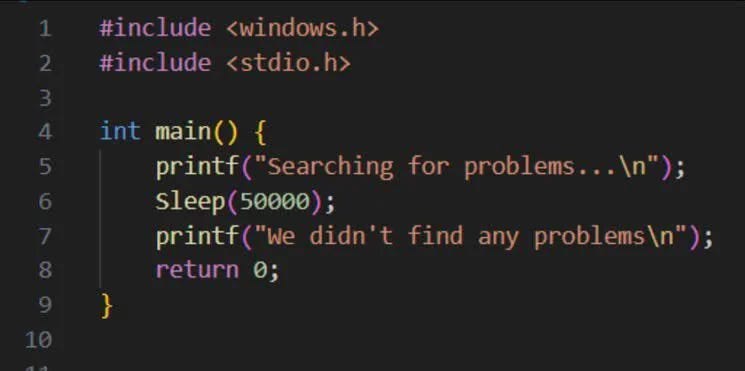

Stay sharp, stay informed. See you tomorrow.
If you enjoyed this TEA, follow along on social for more:
Twitter/X