


Hello, dear TEA-mates! Here is what you need to know today.
1. 🎙️ Spotify Wants to Be the Social Network for Audio
Spotify is launching a new tool that lets anyone create AI-generated personal podcasts and import them directly into Spotify. Using tools like Claude Code or OpenAI’s Codex, you can generate a custom audio show on any topic, your study notes, your calendar brief, your morning roundup, and have it sitting in your Spotify library the same day. These personal podcasts are private for now, not publicly searchable, but Spotify is making clear that this is where it is heading: “the home for AI-generated personal audio.” The implication is bigger than it looks. Spotify is quietly evolving from a consumption platform into a creation and sharing platform. The feed that used to be curated by professionals is about to fill up with content generated and shipped by regular people. (Read More)
🫖 TEA For Thought: “Spotify is going to be the social network for audio. Friends can just use Spotify to generate podcasts and ship and share them, no production studio needed.”
2. 🤖 The Robot App Store Is Open for Business
Hugging Face has launched an app store for its Reachy Mini desktop robot, and it already has 200+ community-built apps created by 150+ different builders, most of whom had never written a single line of robotics code before. The robot itself ranges from $299 to $449, and there are now 10,000 units in customers’ hands or on the way. Every app in the store is forkable: you pick one, ask an AI agent to modify it for your use case, and ship your own version. There is also a browser-based simulator so people who do not own the hardware yet can still build and test in a virtual environment. This is what the iPhone App Store moment for home robotics looks like. The barrier to entry has collapsed from “you need to be a robotics engineer” to “you need a $299 robot and a browser.” (Read More)
🫖 TEA For Thought: “This is soooo cool.”
3. 🧑⚖️ Someone Still Has to Own the AI’s Output
A large-scale experiment published in HBR found that treating AI agents like employees, giving them human-style roles, onboarding them into the org chart, framing them as colleagues, backfires in measurable ways. Accountability becomes unclear. Decisions escalate unnecessarily. Review quality drops. And perhaps most surprising: workers lose confidence in their own professional judgment when AI is framed as a peer rather than a tool. The research recommends redesigning work around AI rather than inserting AI into existing structures, with one non-negotiable rule at the center: assign a human owner to every AI output. One real person, 100% responsible for accuracy. Not the model. Not the team. One person. (Read More)
🫖 TEA For Thought: “Assign human owners. Every AI output must have a real person who is 100% responsible for its accuracy.”
4. 🔓 Open-Weight Models Are Quietly Closing Up
Open-weight AI models, the ones you can run on your own hardware without paying a cloud bill, are becoming harder to find. Meta has stopped releasing open weights for its newest models. Others have shifted to API-only distribution with tighter commercial licenses. Martin Alderson argues this matters more than most people realize, because open-weight models have been the silent load-bearing wall keeping frontier lab prices honest. When anyone can run a competitive model locally, the big labs cannot charge monopoly prices. Remove that pressure, and a handful of companies could capture enormous consumer surplus. The trend is happening quietly, with little public debate, precisely when open-weight ecosystems were finally hitting their stride. (Read More)
🫖 TEA For Thought: “If there is an incentive for people to build open-weight models, they will do so. Is there? Look at what Nvidia is doing with open-source models: once you have the ecosystem built, you are naturally motivated to give away open-source models, because you want the other parties in the ecosystem, the ones that are not free, to thrive.”
5. 💸 Coinbase and AWS Just Gave AI Agents Their Own Wallets
Coinbase and AWS have launched AgentCore Payments, a feature that lets AI agents discover services, make micropayments, and complete tasks entirely without human intervention. Settlements happen in roughly 200 milliseconds on Base and Solana using USDC, at a fraction of a cent per transaction. This is the first time a major cloud provider has natively wired crypto payments into its AI agent framework. What it means in practice: an AI agent running inside AWS can now autonomously pay for data, compute, or services on behalf of a user, with no card, no approval flow, and no bank account in the middle. The convergence of AI and crypto has been talked about for years. This is it arriving in production infrastructure. (Read More)
🫖 TEA For Thought: “They are all coming together.”
🛠️ Skill of the Day
VectifyAI/PageIndex — PageIndex builds structured document indexes that let reasoning models navigate large documents without vector embeddings, ideal for RAG pipelines that need precision over approximation. 29,519 stars.
TEAHEE Moment

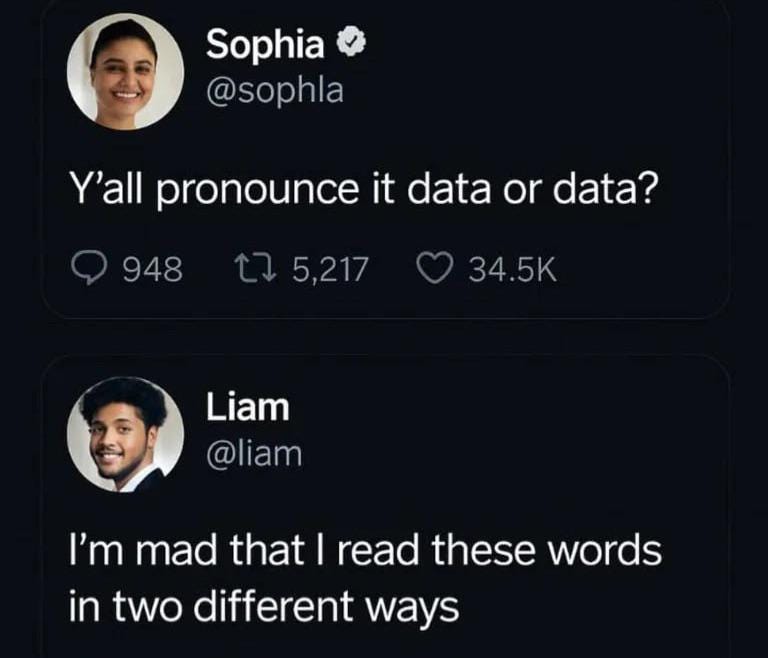



Stay sharp, stay informed. See you Sunday!
If you enjoyed this TEA, follow along on social for more:
Twitter/X