


Hello, dear TEA-mates! Here is what you need to know today.
1. 💸 5% GPU Utilization Is the $401B AI Infrastructure Problem
VentureBeat reports that enterprise AI infrastructure is facing a massive productivity crisis, with average GPU utilization stuck at a mere 5% despite a $401 billion surge in spending this year. As the initial panic to secure hardware subsides, organizations are pivoting from "securing the stack" to "squeezing the stack," shifting their focus toward total cost of ownership (TCO), integration, and measurable token output. This transition is driving a move toward specialized AI clouds (like Coreweave and Lambda) and managed inference services to mitigate the technical and financial burdens of idle silicon. Ultimately, the next era of enterprise AI will be defined by architectural efficiency—leveraging tools like shared KV caches and RDMA networking—and a commitment to data sovereignty as AI moves from experimental chatbots to autonomous, production-grade agents.(Read More)
🫖 TEA For Thought: “The data is a huge business, but also a higher bar for entry.”
2. ⛪ Anthropic Brings More Religions Into the Quest to Give Claude Morals
Gizmodo reports that Anthropic and OpenAI attended a New York “Faith-AI Covenant” roundtable convened by the Swiss-based Interfaith Alliance for Safer Communities, with leaders from the New York Board of Rabbis, the Hindu Temple Society of North America, the Church of Jesus Christ of Latter-day Saints, the U.S. Sikh Coalition, and the Greek Orthodox Archdiocese of America. The meeting follows last month’s separate Anthropic summit with 15 Christian leaders. Anthropic’s “Claude constitution” frames the work as an attempt to get the model to make the decision “of a person with perfect values” in cases where no rule fits, conceding that its own ethical-values work could fail. Humane Intelligence CEO Rumman Chowdhury told the AP that Silicon Valley’s earlier belief in arriving at “universal principles of ethics” has collapsed, and labs are now leaning on religious traditions to handle moral ambiguity. Future events are planned in China, Kenya, and the UAE, with Baroness Joanna Shields cited as a key partner. (Read More)
🫖 TEA For Thought: “Post-modernism’s ‘no absolute truth’ might just get knocked off here without anyone having to say it out loud. There is absolute truth: the universal principles, the ethical truths that most people agree on.”
3. 🏛️ FINRA Sets Human-Checkpoint Bar for Agentic AI in Finance
AI CERTS reports that FINRA’s new GenAI guidance reframes compliance expectations for agentic systems in broker-dealer workflows, signaling its next examination priorities. The agency lists scope creep, hallucinations, bias, data leakage, and lost auditability as the top dangers when multi-step agent reasoning vanishes after execution. Firms are told to map every agent workflow, flag decision points where human judgment determines legality or suitability, require written approvals before high-risk actions, and sample low-risk outputs to catch drift. FINRA also recommends storing every prompt, parameter, and output per model version, indexed to user identifiers and timestamps, so investigators can reconstruct why an agent acted. Vendor contracts must grant sampling rights and clarify data permissions, with diversification expected to limit concentration risk on any single LLM provider. Industry data underscores the urgency: a Temenos survey found 43% of 400 banks are implementing GenAI, while PwC reports most financial executives now prioritize generative and agentic AI investments for 2026. (Read More)
🫖 TEA For Thought: “This makes the Forward Deployed Engineer more popular, I think, because of this.”
4. 🦊 Vitalik: AI Replaces Wallets and Front Ends, Not Users
CoinMarketCap reports that Ethereum co-founder Vitalik Buterin argues AI will take over the role of wallets, interfaces, and front-end applications across blockchain networks, while humans remain the underlying principals. “I personally still think of people as being the users,” Buterin said. “I think of AI as being the replacement for UI.” He frames Ethereum as continuing to serve two core functions in an AI-driven environment: a public data layer where anyone can post information on-chain, and a computation layer that supports decentralized applications. The mechanics of interaction change substantially, with AI agents managing simultaneous operations across wallets, protocols, and external services on behalf of users. The post was published May 10, 2026. (Read More)
🫖 TEA For Thought: “Every interface right now should be rethought and built to face agents. The agent-facing web is not ready for agents.”
5. 🏦 Augustus Wins Conditional OCC Approval for the First AI-Era Clearing Bank
Cointelegraph reports that Peter Thiel-backed Augustus received conditional approval from the U.S. Office of the Comptroller of the Currency to establish a national bank built around AI and stablecoin-based payments. The startup describes Augustus National Bank as “the first clearing bank for the AI era,” built on an AI and stablecoin-native core designed to interact directly with machine agents at “the speed of compute,” rather than through batch processes and human clerks. Augustus already operates under European banking licences and says it processes billions of dollars for institutional clients including Kraken. Backed by Valar Ventures, Creandum, and founders of Ramp and Deel, the company has raised about $40 million. At 25, CEO Dabitz would be the youngest chief executive of a federally chartered U.S. bank in over a century. The approval lands inside the GENIUS Act framework, which lets banks and trust companies issue fully reserved dollar tokens, and follows live tokenized-deposit services from Citi and HSBC plus Circle’s stablecoin settlement integration with Finastra. (Read More)
🫖 TEA For Thought: “Banks for AI agents will be the new norm.”
🛠️ Skill of the Day
docusealco/docuseal — Open-source document signing platform with a WYSIWYG PDF form builder, 12 field types, mobile-optimized signing in 14 languages, and an API + webhooks layer for embedding e-signature into any product. Self-hostable via Docker, Heroku, Railway, DigitalOcean, or Render.
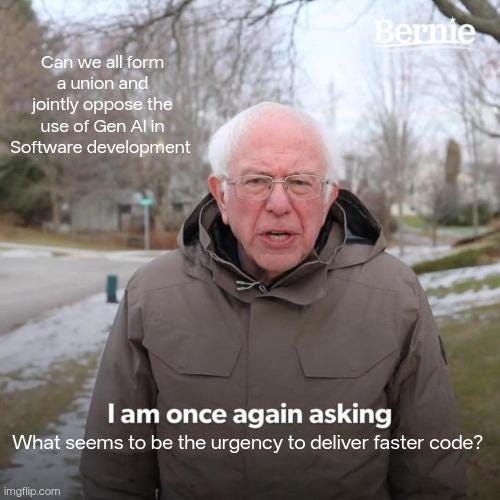
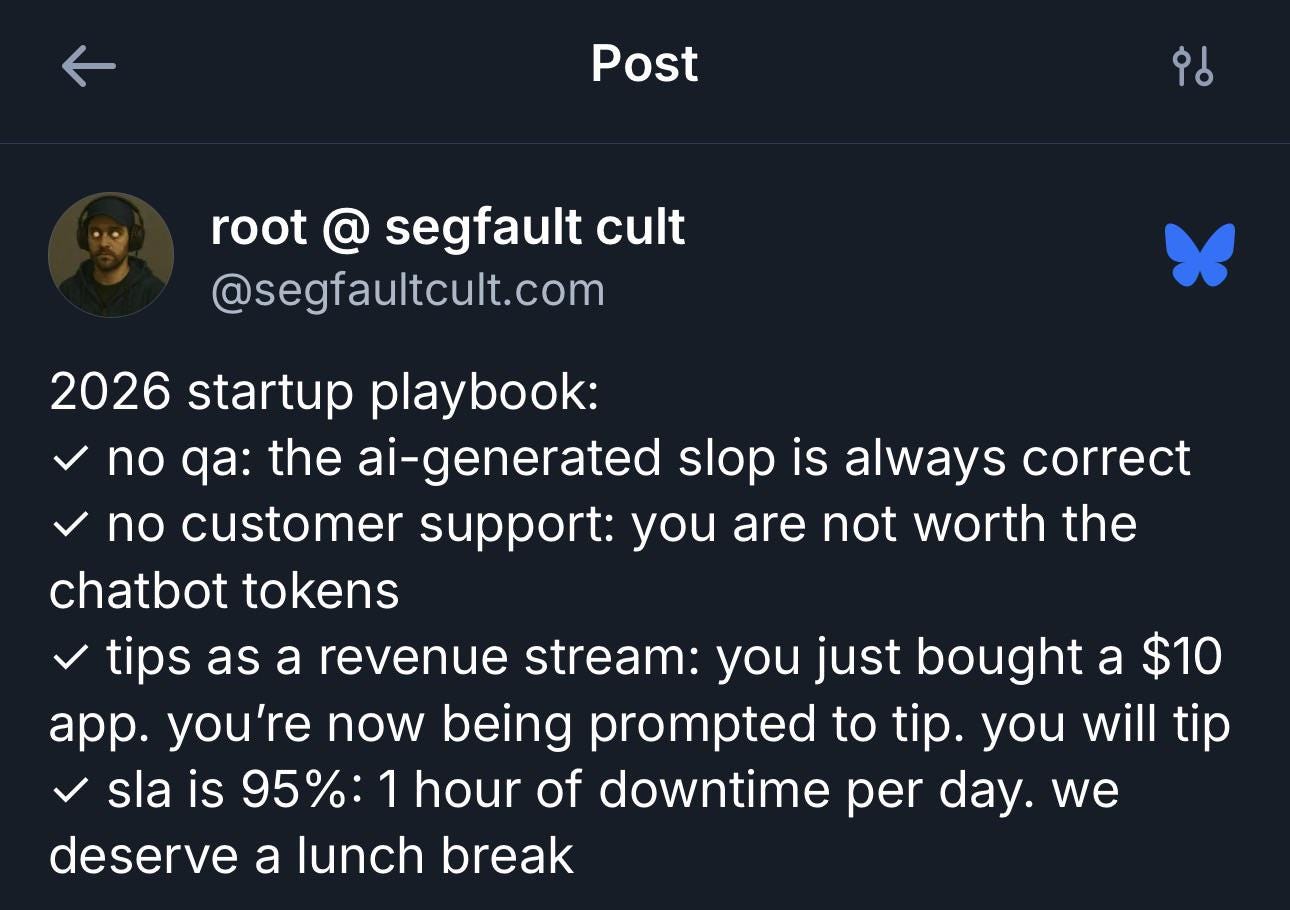
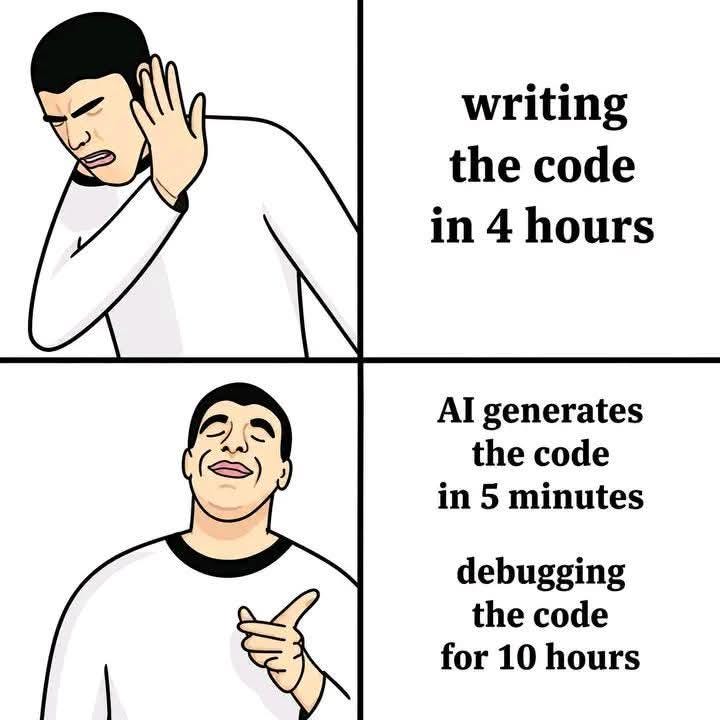
TEAHEE Moment


Stay sharp, stay informed. See you tomorrow.
If you enjoyed this TEA, follow along on social for more:
Twitter/X