


Hello, dear TEA-mates! Here is what you need to know today.
1. 💸 Microsoft Moves GitHub Copilot to Token-Based Billing
Leaked internal documents reported by Where’s Your Ed At reveal that Microsoft plans to pause new signups for the student and paid individual tiers of GitHub Copilot, tighten rate limits, and eventually shift users to token-based billing. The weekly cost of running Copilot has nearly doubled since January, which the documents frame as the reason the transition became urgent. Today, Pro users ($10/month) get 300 “requests” and Pro+ users ($39/month) get 1,500, with pricier models costing more requests. Under token-based billing, users would instead pay for actual token consumption, where Claude Opus 4.7 alone costs $5 per million input tokens and $25 per million output tokens. Microsoft has now confirmed parts of the plan in an April 20 GitHub blog post, and the shift follows similar moves by Anthropic, OpenAI, and Cursor as the era of subsidized AI pricing ends. (Read More)
🫖 TEA For Thought: “Well, everyone is using it.”
2. 🎵 Deezer: 44% of Daily Uploads Are AI-Generated
Deezer announced on Monday that AI-generated tracks now make up 44% of all new music uploaded to its platform, with the service receiving almost 75,000 AI tracks per day and over 2 million per month. The ramp has been steep: 10,000 per day in January 2025, 30,000 in September, 50,000 in November, 60,000 in January 2026, and 75,000 now. Actual consumption remains low at 1-3% of total streams, and Deezer says 85% of those streams are flagged as fraudulent and demonetized. The platform will also stop storing hi-res versions of AI tracks. The numbers land the same week an AI-generated song topped the iTunes charts in the US, UK, France, Canada, and New Zealand, and on the back of a November Deezer/Ipsos survey in which 97% of participants could not distinguish fully AI-generated music from human-made music. (Read More)
🫖 TEA For Thought: “The thing is, when there is so much AI-generated art but no consumer to appreciate it...”
3. 🗣️ Iowa State Study: News Writers Rarely Anthropomorphize AI
An Iowa State University study published in Technical Communication Quarterly analyzed the News on the Web (NOW) corpus of over 20 billion words from English-language news across 20 countries and found that journalists pair AI terms with mental verbs like “think,” “know,” and “understand” far less often than everyday speech does. The most common pairing, “AI needs,” appeared 661 times, while “ChatGPT knows” appeared only 32 times. Researchers Jo Mackiewicz, Jeanine Aune, Matthew J. Baker, and Jordan Smith argue that AP editorial guidelines, which discourage attributing human emotions to AI, likely shape this restraint. They also find anthropomorphism exists on a spectrum: “AI needs data” is mechanical, while “AI needs to understand the real world” edges closer to implying human reasoning. The team warns that even subtle mental-verb framing can overstate AI capability and distract from the developers and organizations actually responsible for the systems. (Read More)
🫖 TEA For Thought: “Language matters.”
4. 🏢 Steve Yegge: Inside Google’s Two-Tier AI Adoption
In an April 20 follow-up thread, Steve Yegge says multiple Googlers from different orgs reached out anonymously after his earlier post on Google’s AI adoption, corroborating and sharpening his original picture. They describe a two-tier system where DeepMind engineers use Claude as a daily tool while most of the rest of Google does not. When internal talk turned to equalizing access, the proposed fix was reportedly to remove Claude for everyone, which DeepMind pushed back on so hard that several engineers threatened to leave. Non-DeepMind engineers get routed to internal Gemini variants behind router-style names that obscure the underlying model, with reports of regressions severe enough that some senior staff stopped using the tools. Leadership has responded by mandating AI use in OKRs and standing up an internal token-usage leaderboard, while telling managers simultaneously that it will and will not factor into performance reviews. Yegge closes: “Nobody is as far ahead as they might look from the outside, and none of you are as far behind as you might be worried you are.” (Read More)
🫖 TEA For Thought: “Nobody is as far ahead as they might look from the outside, and none of you are as far behind as you might be worried you are.”
5. 🔋 EU Mandates User-Swappable Phone Batteries by February 2027
Android Headlines reports that, starting February 2027, smartphones sold in the EU must be designed so users can replace the battery themselves using basic tools, not specialized equipment. Batteries must retain at least 80% capacity after 800 charge cycles, repair manuals must be publicly available, and OEMs must keep spare parts in circulation for years. The rule builds on phase one, already in effect since June 2025, which mandates up to 10 years of repair support, stricter durability benchmarks, and a ban on blocking independent repair services. The new mandate stops short of pop-off back covers and sits between the removable batteries of the past and today’s glued-in designs. Because OEMs are unlikely to produce two hardware versions of the same device, the regulation is expected to reshape smartphone design worldwide, not just in the EU. (Read More)
🫖 TEA For Thought: “The EU’s framework is just crazy...”
🛠️ Tools of the Day
sansan0/TrendRadar. AI-powered public opinion monitor with multi-source intelligent alerts. 53.5K stars on GitHub Trending.
zilliztech/claude-context. Full codebase context server for Claude Code and other coding agents. 6.4K stars on GitHub Trending.
openai/openai-agents-python. Lightweight multi-agent workflow framework from OpenAI. 24.3K stars on GitHub Trending.
TEAHEE Moment



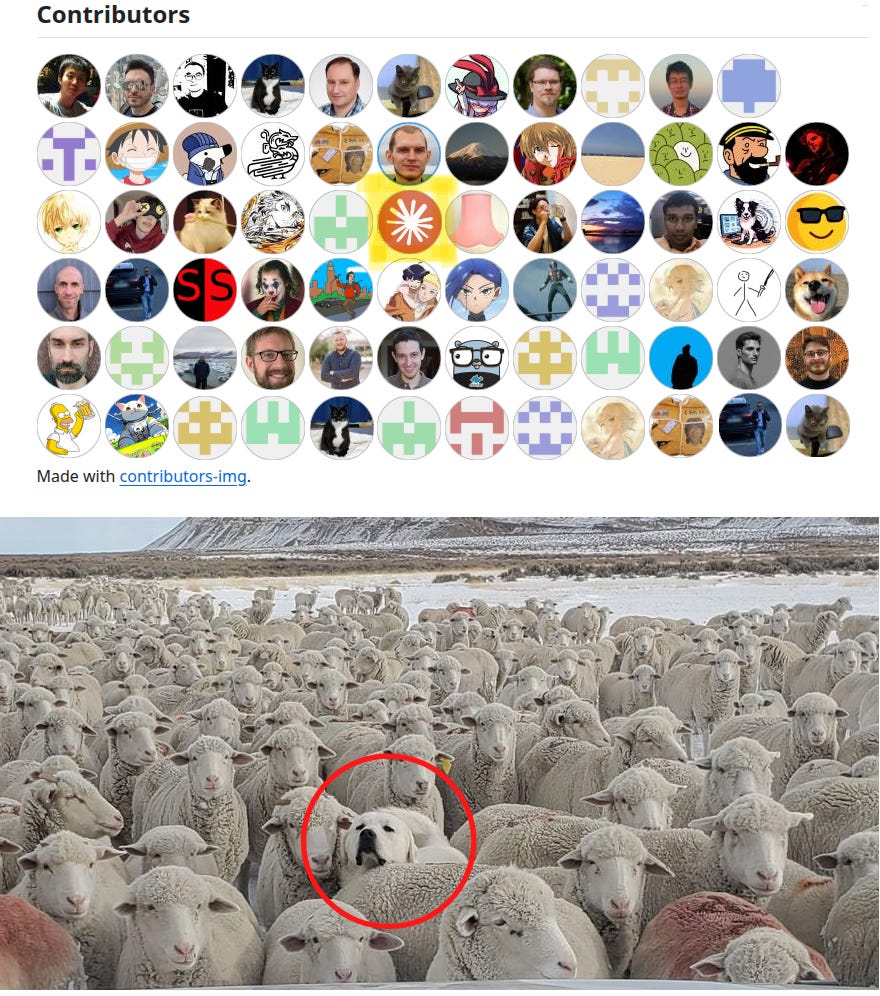

Stay sharp, stay informed. See you tomorrow.
If you enjoyed this TEA, follow along on social for more:
Twitter/X