

Hello, dear TEA-mates—here’s what you need to know today.
1.💵 Iran’s Central Bank Deploys $507M in USDT to Support Rial
Blockchain analytics firm Elliptic says the Central Bank of Iran accumulated around $507 million in Tether’s USDt during a period of sharp economic volatility, likely to counter the collapse of the rial and facilitate international trade settlements. The bank is believed to have used local exchange Nobitex to buy rials with USDT before shifting funds via cross-chain bridges from Tron to Ethereum and onto other blockchains and exchanges, while Tether previously froze about $37 million in wallets linked to the CBI in 2025. Chainalysis data cited in the report shows Iran’s broader crypto ecosystem reached more than $7.8 billion in 2025 as citizens increasingly turned to Bitcoin and other digital assets as a hedge against inflation and instability. Read More
🫖 TEA For Thought: This is exactly what tends to happen in times of conflict and crisis—states pivot to whatever tools they can find to keep their economies afloat.
2.🏛️ Sacks: Banks and Crypto Will Fuse Into One Digital Asset Industry
White House crypto czar David Sacks said at the World Economic Forum in Davos that once Congress passes the long-debated CLARITY Act, traditional banks and crypto firms will effectively merge into a single “digital asset industry.” He argued that the main roadblock is a dispute over allowing stablecoin yields, urging both banks and crypto companies to compromise so a comprehensive market structure bill can reach President Donald Trump’s desk. Sacks predicted that after passage, banks will “fully” enter the stablecoin business and ultimately embrace paying yield, while ongoing debates center on concerns that high-yield stablecoins could trigger deposit flight from low-interest bank accounts. Read More
🫖 TEA For Thought: Sacks is simply stating what legacy finance fears—blockchains are increasingly the default fix for many of the problems embedded in today’s financial system.
3.🤖 Claude Code 2.0 Becomes the New Darling of Agentic Coding
In a detailed review, AI engineer Silen Naihin explains why he switched from being a top 0.01% Cursor user to building most new projects with Claude Code 2.0, powered by Anthropic’s Opus 4.5 model. He reports that Claude Code now handles entire workflows—from planning and multi-file refactors to building complex simulations and apps—so effectively that he no longer needs to manually write most code, instead focusing on behavior-level testing and verification. The piece highlights lower perceived cost per token, strong support for custom commands and subagents, and a terminal-native workflow as key advantages, while still reserving Cursor and ChatGPT for tight UI loops, learning, and second opinions. Read More
🫖 TEA For Thought: Claude Code 2.0 has become such a phenomenon that people are almost giddy about it—and it’s hard not to be excited to take it for a spin soon.
4.🧮 X Open-Sources Its Grok-Powered Feed Algorithm for Business Strategy
Elon Musk’s X has released major portions of its revamped recommendation algorithm under an Apache 2.0 open-source license, revealing a Grok-powered Transformer system that scores posts based on velocity and quality rather than legacy heuristics and follower counts. The code shows verified accounts receive a higher base score, rapid engagement in the first 10–30 minutes is heavily rewarded, and overly frequent posting from the same account is penalized to preserve feed diversity. VentureBeat argues this transparency gives brands and analysts a “map” of how visibility on X works, enabling them to tune posting cadence, coordination, and content style to optimize reach and avoid being downranked as spammy. Read More
🫖 TEA For Thought: Algorithms are the rulebook for the game; understanding how X’s system works is like learning the playbook so you can move more strategically on the field.
5.🌐 Gemini in Chrome Gains “Skills” on Its Path to Full AI Agent
Google is testing a new “Skills” feature for Gemini in Chrome, adding a dedicated chrome://skills interface where users can define named capabilities and custom instructions so the AI can handle specific browser workflows autonomously. Rather than only summarizing pages or comparing tabs, Gemini is being pushed toward proactive agent behavior—such as reading content, pulling details, and performing multi-step tasks like scheduling events or handling repetitive actions directly inside the browser. The roadmap points to deeper integration with Google services like Calendar, YouTube, Maps, and browsing history, turning Gemini into an always-available in-browser assistant that can act across the broader Google ecosystem without constant user micromanagement. Read More
🫖 TEA For Thought: Gemini’s biggest edge is distribution—Gmail, YouTube, Search, and Workspace already own user attention, so layering AI on top makes adoption almost effortless and the momentum feels unstoppable.
Prompt Tip of the Day: The Minimum Effort Plan
👉 Prompt:
I want to finish this task with the least effort possible.
Task: [describe task]

Tell me:
1. The one action that creates most of the result
2. What I can ignore safely
3. A simple first step I can do in 10 minutes
💡 Example: Turned a long to do list into one clear action.
TEAHEE Moment

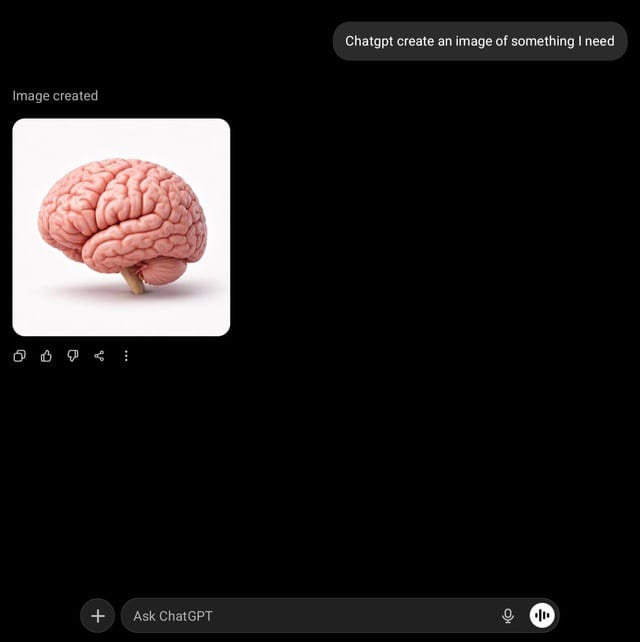

Stay sharp, stay informed. See you tomorrow.
If you enjoyed today’s TEA, follow along for more real-time sips of news and threads on X: Twitter/X.