

Hello, dear TEA-mates! Here is what you need to know today.
1. 🌌 Our Milky Way May Have Turned on Its Side
Researchers at Durham University ran supercomputer simulations of 25 Milky Way-like galaxies and found that slowly rotating stellar haloes often followed a past “disc flip,” meaning a change in the galaxy’s central disc orientation of more than 90 degrees. The Milky Way merged with the Gaia-Sausage-Enceladus galaxy about 10 to 11 billion years ago, and its aftermath may have gradually reoriented our galaxy. This is a simulation-supported inference from present-day observations, not a directly observed flip. (Read More)
🫖 TEA For Thought: “This is super cool. It shows how limited and small we are compared with the vastness of the universe. We should stay humble and acknowledge and appreciate the wonder created by the Creator.”
2. 🧬 New York Is Building a Shared Home for the Most Advanced Chip Tool
NY Creates has received the first major module of ASML’s TWINSCAN EXE:5200B High-NA EUV lithography system at its Albany NanoTech Complex. New York says the installation will anchor North America’s first accessible High-NA EUV Lithography Center, backed by $1 billion in state investment and $9 billion in industry funding. Components will keep arriving through summer 2026, with initial development milestones due by year-end and R&D support expected in early 2027. (Read More)
🫖 TEA For Thought: “Companies, universities, and partners can use the tool for shared research, not just one commercial foundry. That kind of shared access feels unusual to me, since I usually associate High-NA EUV with individual commercial fabs rather than a public R&D hub.”
3. 📱 Military-Branded Apps Can Hide a Risky Software Supply Chain
A 2026 study analyzed 242 mobile apps marketed to U.S. military communities and surveyed 103 military-affiliated users. It found third-party software development kits in 64% of the apps and data collection or sharing beyond privacy-label disclosures in 40%. Gadget Review reports that 7% of the apps included code from entities in Pentagon-designated adversary nations. The research recommends safeguards at federal, Department of Defense, app-store, and device levels. (Read More)
🫖 TEA For Thought: “This report is about mobile apps, not open-source models. Still, it makes me wonder what independent security review is needed before open-source models from CCP China are deployed at scale, especially when guardrails, potential backdoors, and other security risks are unclear.”
4. 🐝 Block’s Buzz Makes AI Agents Teammates, Not Just Bots
Block has released Buzz, an open-source and self-hostable workspace built on a Nostr relay, where humans and AI agents can share rooms. Its public repository uses the Apache 2.0 license and describes signed events for messages, reactions, workflow steps, approvals, and Git activity. The project already lists channels, threads, direct messages, canvases, search, an audit log, desktop apps, CLI support, and early Git integration. Mobile clients and workflow approval gates are still in development. (Read More)
🫖 TEA For Thought: “This is super cool, and it is open-source. You seldom see someone as nomadic and idealistic as Jack Dorsey.”
5. 🧠 Sparse by Design Is the New Open-Model Scaling Play
Akash Bajwa’s analysis of Moonshot’s planned Kimi K3 release argues that open models are scaling total capacity without proportionally increasing the computation used for each token. He reports that the proposed 2.8-trillion-parameter model would activate 16 of 896 experts per token, or under 2% of its expert weights. The piece also notes that large sparse models still have formidable infrastructure demands, estimating K3’s weights at about 1.4 TB in MXFP4 and citing a 64-plus-accelerator supernode recommendation for full-scale serving. (Read More)
🫖 TEA For Thought: “This is a great read!”
🛠️ Skill of the Day
The Repetition Finder: turn a recurring, messy task into a small system you can actually reuse.
You are my workflow simplifier. I will give you examples of a task I repeat, the tools I use, and the part that feels slow or confusing.

Task and examples: [PASTE 2 TO 5 REAL EXAMPLES]
Goal: [WHAT A GOOD RESULT LOOKS LIKE]
Constraints: [TIME, BUDGET, PRIVACY, OR TEAM LIMITS]

First, identify the repeatable pattern and the one-off details. Then give me:
1. A five-step or shorter default workflow in plain language.
2. A reusable checklist or fill-in template.
3. One decision point where I should stop and ask for help instead of guessing.
4. The smallest automation or shortcut worth trying later, if any.
5. A one-week experiment to test whether this system saves time without lowering quality.

Do not invent missing facts. Keep the system light enough for one person to use without a manual. Explain any technical term the first time you use it.
Paste into ChatGPT, Claude, or your tool of choice. Replace the bracketed bits with real examples from your work.
TEAHEE Moment



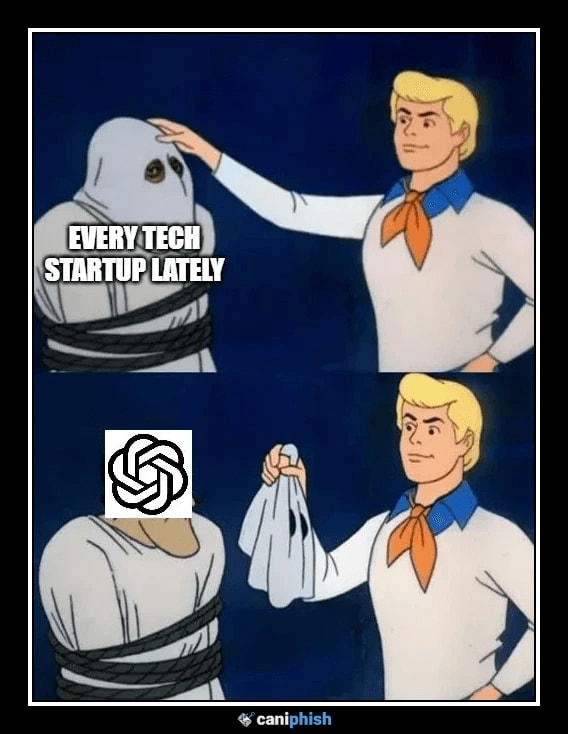

Stay sharp, stay informed. See you tomorrow.
If you enjoyed this TEA, follow along on social for more:
Twitter/X