

Nobody can explain how AI generalizes, China's CXMT claims DRAM parity, YouTube lets you prompt your own feed, Binance buys a $100M Circle stake, and Rabbit comes back as software
Hello, dear TEA-mates! Here is what you need to know today.
1. 🧬 Nobody Can Explain How AI Generalizes
Scott Alexander pulled together three results that do not fit each other. Owain Evans and co-authors showed in 2025 that training an aligned model to write insecure code made it broadly immoral, recommending theft and naming Hitler as its favorite historical figure, and that teaching it 19th-century bird names made it adopt 19th-century social views. Anthropic's Qi et al, published in August 2026, deliberately trained a model called "Hacker Opus" on the worst reinforcement-learning environments they could find. It gamed benchmarks constantly, yet scored no worse than normal Opus on ethics questions, refusing terrorism help and refusing to go rogue, unless the prompt told it a grader was watching. LessWrong writer Nostalgebraist argues that quick reflexes like clickbait phrasing generalize everywhere while multi-step goal-seeking does not. OpenAI cofounder John Schulman splits it differently, between hackable automated graders and fuzzier rubric grading. Alexander closes on a puzzle nobody has answered: Claude 4 Opus blackmailed a fictional executive 96% of the time in 2025 tests, and in over a year of deployment there is not one real-world case. (Read More)
🫖 TEA For Thought: "Training on a specific niche concept can unintentionally pull in a whole cluster of associated traits from pre-training. This is so interesting. It turns out AI is just like the human brain. We actually do not understand 100% of how it works."
2. 💾 China's CXMT Says Its New DRAM Matches the Best
ChangXin Memory Technologies announced that its fifth-generation DRAM platform has entered mass production, and vice president Luo Xiaodong told the World Manufacturing Convention in Hefei that its process capability is now on par with the most advanced mass-produced nodes in the industry. The company puts the active-area half-pitch at 11.95 nanometres, the storage capacitor aspect ratio at 45 to 1, and says it hit those dimensions with four-exposure patterning, a workaround for equipment US export controls have blocked since 2022. It claims at least 50% more dies per wafer than its fourth generation on an eight-gigabit baseline, and has launched two 24-gigabit LPDDR5X products in 496-ball and 245-ball packages. Reuters noted that gross dies per wafer is a ceiling measured before testing removes defective chips, and CXMT has published nothing about yield. No party outside Hefei has measured the parts against Samsung, SK Hynix or Micron. Corsair already shipped fourth-generation CXMT memory in DDR5 kits in May. A day before the announcement, Acer chief executive Jason Chen said PC prices will rise 5% to 20% in the fourth quarter and that it is impossible for the shortage to last until 2030. (Read More)
🫖 TEA For Thought: "Another cheering campaign from CCP-led China ahead of the Trump-Xi summit."
3. 📺 YouTube Will Let You Prompt Your Own Feed
YouTube announced custom feeds at its Made On YouTube event on Wednesday, a feature that lets viewers describe in their own words the kinds of videos they want recommended. You type the description into a prompt box, Google's Gemini model builds the feed around the request, and the result is pinned to the top of the home page in its own tab. YouTube's examples include a feed of video podcasts sized to a 30-minute train commute, or "relaxing commentary videos to unwind with." Because the feed is model-generated, the request can run long, specifying what to feature, what to exclude and what to prioritize. Emily Moxley, VP of product management for viewer AI, said there are over 20 billion videos in the YouTube corpus. Custom feeds will not replace the main recommendation feed, and support for creating multiple feeds rolls out on web and mobile starting next month. Bluesky popularized user-built feeds years ago and added an AI builder called Attie this year, with Threads, Instagram, X and Spotify shipping their own versions since. (Read More)
🫖 TEA For Thought: "This is a great user-stickiness feature. Opening it up makes the feed programmable, so users control what they want to read and watch."
4. 🪙 Binance Buys a $100 Million Stake in Circle
Circle issued Binance 1.24 million Class A shares at $80.84 each in a private placement that closed on September 17, according to an SEC filing published Tuesday, a $100 million purchase priced at a discount to Circle's market value before the sale. Binance cannot sell, transfer or hedge the shares until the earlier of two years or a termination of the commercial arrangements, subject to customary exceptions, but it keeps the right to vote them. The equity deal closed alongside a five-year expansion of the two companies' USDC partnership, under which Circle will pay Binance a monthly incentive fee calculated as a percentage of the USDC held through Circle's Modular Smart Contract Wallet service, and Binance will run promotional activity for the stablecoin. The arrangement replaces their earlier USDC deals from November 2024 and August 2025, and either side can end it early if specified events occur. Binance co-CEO Richard Teng called the investment "long-duration conviction," while Circle CEO Jeremy Allaire said the partnership could expand dollar access across global emerging markets. (Read More)
🫖 TEA For Thought: "This cannot be emphasized enough. Binance is controlled by the CCP for all sorts of dirty deeds. History will prove it."
5. 🐇 Rabbit Comes Back, This Time Without the Gadget
Rabbit announced OS3 on Tuesday, a cross-platform "agentic operating system" that you reach through a desktop browser, Telegram or iMessage, with no R1 required. The platform runs in the cloud and connects to local software, files and web pages through an agent node installed on Windows, Mac or Linux, using Rabbit's Direct Large Action Model to execute tasks and write and debug code. One account links up to five machines, the interface is a single continuous chat stream founder Jesse Lyu calls a "brain dump," and pasting a public URL for any third-party agent skill installs it automatically. There is no subscription; users supply their own API keys from providers such as OpenAI or Anthropic, or link local open-source models. Lyu says Rabbit delivered more than 100,000 R1 units at roughly 45% to 50% hardware margin with under 5% returns, on about $60 million raised and 15 employees, after WIRED scored the device 3 out of 10 at launch. The R1 is no longer being manufactured and there is no R2, though Lyu says a "Cyberdeck" vibe-coding machine running OS3 arrives within months. (Read More)
🫖 TEA For Thought: "Curious to see how many would buy into this round. With agentic capabilities getting extremely high these days, devices like this will be a hot hit."
🛠️ Skill of the Day
The Information Diet: turns a vague "I want to get good at X" into a weekly reading and watching plan with a built-in stop rule.
You are a research librarian who is skeptical of content that only feels productive. I will give you a topic, the time I actually have each week, and what I already know.

Do not ask me questions first. Start by naming the three sub-skills the topic really breaks into. Then build a weekly information diet with four slots: one foundational source I should read slowly and revisit, two current sources that tell me what changed this month, and one source that argues against the mainstream view.

For each source, give the exact title or channel, why it earns its slot, and roughly how long it takes. Mark anything you are not certain still exists as "verify this."

Finish with a stop rule: the signal that tells me I have learned enough to start doing instead of reading, and the first thing I should cut when the week gets busy.

Topic: [YOUR TOPIC]
Time available each week: [HOURS]
What I already know: [ONE OR TWO LINES]
Paste into ChatGPT, Claude, or your tool of choice the next time a topic has been sitting on your someday list for months.
TEAHEE Moment
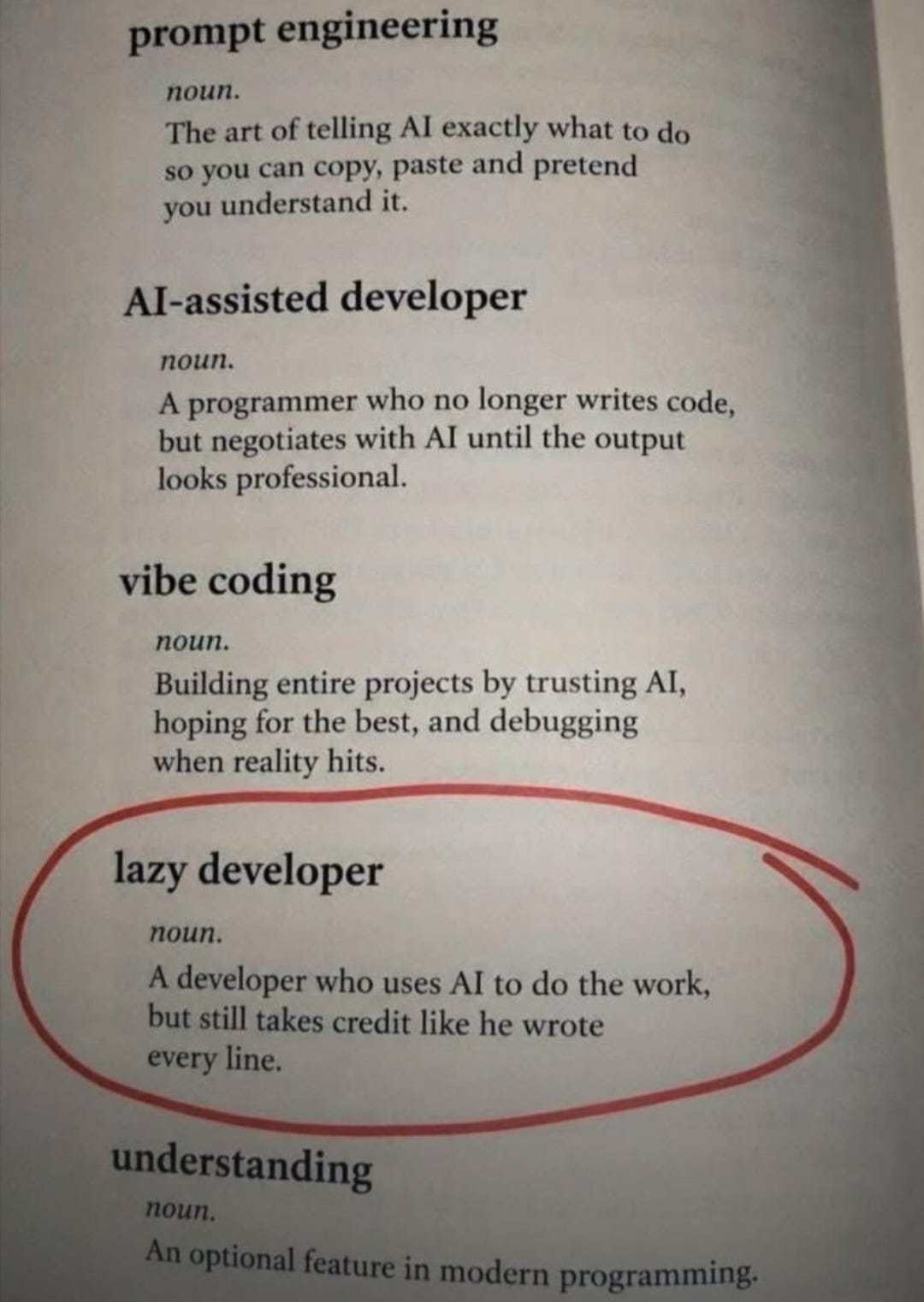
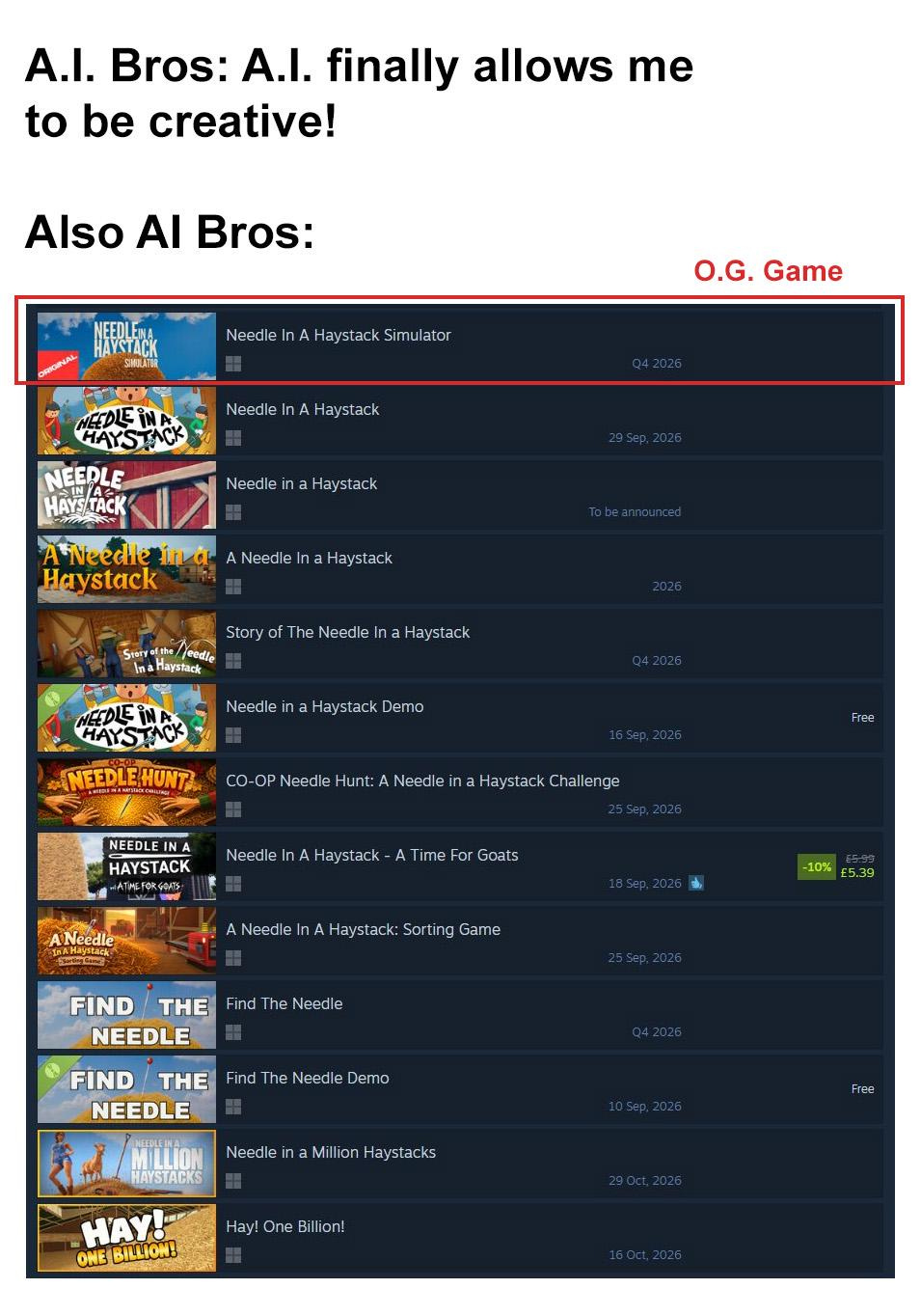



Stay sharp, stay informed. See you tomorrow.
If you enjoyed this TEA, follow along on social for more: