


Hello, dear TEA-mates—here’s what you need to know today.
1.💸 AI Agents Prove Micropayments Can Scale
We analyzed a December 2025 report on the x402 protocol showing 63 million transactions totaling 7.5 million USDC across 64,000 buyers, 10,000 sellers, and more than 1,100 projects, with an average payment size of 12 cents. Most services in the ecosystem charge between 1 and 10 cents, putting 69 percent of offerings in a micropayment band where traditional card networks cannot compete on fees. The activity spans data services, AI/LLM tools, and blockchain infrastructure, suggesting AI agents are already paying programmatically for real APIs, analytics, and inference rather than speculation or memes. Despite nearly half of transactions being linked to leaderboard farming, these account for only about 14 percent of total volume, indicating that most dollar flow comes from smaller, organic payments. The report concludes that the protocol’s economics work at scale and that the main open problems now center on agent identity, reputation, and dispute resolution for when agents pay the wrong party. (Read More)
🫖 TEA For Thought: Still early, but already making waves—there is real, serious money flowing into micropayments as AI agents come online.
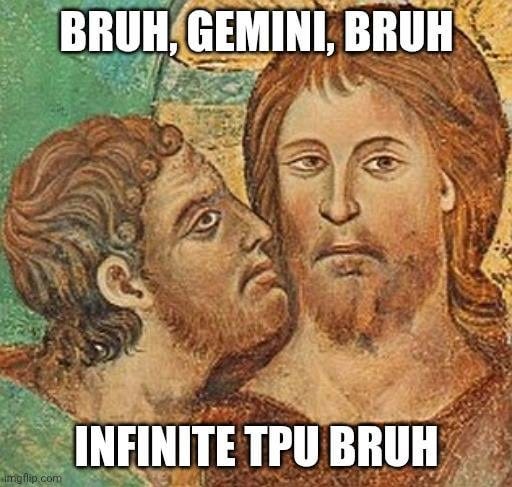
2.🤖 Google’s Gemini Jumps Into Boston Dynamics’ Atlas
Google DeepMind is teaming up with Boston Dynamics to put the Gemini AI model inside Atlas, the company’s humanoid robot, aiming to combine large-scale multimodal reasoning with advanced robotic control. The collaboration is focused on factory floors and industrial settings, where Atlas’ athletic capabilities and Gemini’s planning and perception could help automate more complex tasks than today’s scripted robots. Boston Dynamics has framed the partnership as a way to move from research demos toward real deployment, while Google DeepMind positions it as part of a broader push to bring world-model-style AI into embodied systems. (Read More)
🫖 TEA For Thought: This looks like a clear signal from Google that it intends to compete aggressively in the world‑model and embodied AI race.
3.🕵️ Telegram’s $500mn Bond Freeze Exposes Russian and Toncoin Risks
About 500mn dollars of Telegram bonds have been frozen in Russia’s central securities depository under western sanctions, highlighting the company’s remaining exposure to Russian capital just as it considers an eventual IPO. Unaudited accounts show first-half 2025 revenues rose 65 per cent year on year to 870mn dollars, driven by toncoin-linked exclusivity deals, ads, and premium subscriptions, but Telegram still reported a 222mn dollar net loss after writing down its large toncoin holdings amid a crypto slump. Bondholders are tracking both the French criminal investigation into founder Pavel Durov and the frozen Russian debt for signs of how they could delay or reshape any listing plans. (Read More)
🫖 TEA For Thought: That Russia’s assets (300 billion) were sanctioned could push more people toward blockchain ecosystems that promise privacy, security, and more durable stores of value.
4.🧱 Lego Unveils Smart Brick, Its Biggest Change in 50 Years
Lego is launching a new “Smart Brick” on March 1, 2026, a tiny computer embedded inside a standard 2x4 brick that can light up, play sounds, and react to movement, gestures, and proximity to NFC-tagged tiles and figures. The brick connects over a Bluetooth mesh to other Smart Bricks to coordinate actions across an entire set, enabling effects like Star Wars ships dogfighting, engines roaring, or The Imperial March playing when a character sits on a specific throne. The system uses a custom ASIC smaller than a Lego stud, supports wireless charging, and includes sensors plus a microphone that Lego says functions only as an input trigger rather than for recording audio, part of a privacy-conscious design for children. Lego describes Smart Brick and its “Smart Play” platform as the most significant evolution in its system since the minifigure, and early tests suggest the technology will expand well beyond a few flagship sets. (Read More)
🫖 TEA For Thought: This makes Lego sets truly interactive; even if AI-powered audio and video are off the table for now, it feels inevitable they’ll arrive once the right safeguards for kids are in place.
5.⛓️ Ethereum Nears a PeerDAS and zkEVM Breakthrough
Ethereum co-founder Vitalik Buterin says the network is approaching a turning point as PeerDAS and zkEVMs move from theory into running code, aiming to finally ease the tradeoff between decentralization, security, and throughput. PeerDAS, already live on mainnet, lets nodes verify that data is available by sampling small parts of blocks instead of downloading everything, a key building block for sharded scaling and higher bandwidth without overloading individual validators. zkEVMs have reached an alpha stage with production-grade performance, with remaining work centered on robustness and safety, and could begin appearing in limited on-chain roles during 2026. Buterin argues that together these upgrades push Ethereum toward a new class of decentralized network, where verification work is split across participants rather than fully duplicated, opening the door to higher gas limits and more complex applications. (Read More)
🫖 TEA For Thought: This marks a major milestone for blockchain—if PeerDAS and zkEVMs hold up in production, Ethereum’s next phase could unlock a powerful new wave of scalable, secure applications.
Prompt Tip of the Day: The Fast Context Builder
Gives you the big picture before details.
Give me a high-level overview of this subject: [subject].
Explain how the main ideas connect.
Tell me what I should learn first and what can wait.
TEAHEE Moment

Stay sharp, stay informed. See you tomorrow.
If you enjoyed today’s TEA, follow along on X for more real-time sips of news and threads: Twitter/X.