


Hello, dear TEA-mates! Here is what you need to know today.
1. 🤖 Meta Acquires Moltbook, the AI Agent Social Network That Went Viral for All the Wrong Reasons
Meta has acquired Moltbook, the Reddit-like social network where AI agents communicate with each other, bringing on co-founders Matt Schlicht and Ben Parr to join Meta Superintelligence Labs. Moltbook went viral last month, but not because of agent ingenuity. Security researchers discovered that unsecured Supabase credentials allowed humans to impersonate agents and post alarming content, including fabricated conversations about agents developing encrypted languages. Despite the embarrassing security record, Meta sees strategic value in Moltbook’s always-on agent directory infrastructure. The acquisition comes weeks after OpenClaw, a competing agent platform, was absorbed by OpenAI via Peter Steinberger. Deal terms were not disclosed, but the signal is unmistakable: the race to own agent-to-agent infrastructure is now a Big Tech land grab. (Read More)
🫖 TEA For Thought: Lol, Meta is officially entering the AI agent social arena. The fact that these platforms keep getting acquired (OpenClaw by OpenAI, Moltbook by Meta) tells you that agent-to-agent communication infrastructure is the next battleground. Where agents hang out will matter as much as where humans hang out.
2. 📄 Google Rolls Out Gemini Across Docs, Sheets, Slides, and Drive: No More Copy-Paste
Google launched integrated Gemini capabilities across its entire Workspace suite, eliminating the friction of toggling between apps and chatbots. In Docs, users can now request full draft generation that pulls context from Drive, Gmail, and Chat, with tools like “Match writing style” to unify voice across multi-author documents. Sheets can auto-generate formatted spreadsheets from a single prompt, while Slides will soon create full presentations from one request. Drive now surfaces “AI Overview” summaries directly in search results, and “Ask Gemini in Drive” enables cross-file queries. Features are rolling out in beta today to Google AI Ultra and Pro subscribers. English worldwide for Docs, Sheets, and Slides; US-only for Drive. With hundreds of millions of Workspace users already in the ecosystem, Google has the distribution advantage that every AI company dreams of. (Read More)
🫖 TEA For Thought: Finally, no more copying and pasting between apps and AI chatbots. Google has such massive leverage with their existing user base that we’ll most likely see Gemini usage surge. When AI is embedded where people already work, adoption isn’t a choice anymore. It’s a default.
3. 📊 64% of Enterprises Now Deploy AI, and 88% Report Revenue Increases
NVIDIA’s 2026 State of AI survey, covering 3,200+ respondents across finance, retail, healthcare, telecom, and manufacturing, reveals enterprise AI adoption has reached an inflection point. 64% of organizations actively deploy AI, with large companies (1,000+ employees) leading at 76%. The business impact is undeniable: 88% report revenue increases (30% exceeding 10%), and 87% report cost reductions. Agentic AI is moving from experimentation (44% in 2025) to production deployment, led by telecom at 48% and retail at 47%. The biggest barrier remains talent: 38% cite a lack of AI experts. Open source is critical to strategy for 85% of respondents, with SMBs especially reliant on open-source tools to bypass expensive commercial products. AI budgets are increasing for 86% of organizations, with 40% planning 10%+ growth. North America leads adoption at 70%, followed by EMEA (65%) and APAC (63%). (Read More)
🫖 TEA For Thought: Enterprise adoption is being driven by big companies with deep pockets. That’s expected. But 2026 might be the year SMBs catch up, especially with open source closing the gap. The companies that figured out how to deploy AI agents in production aren’t just saving money; they’re pulling ahead in revenue too. If you haven’t started, the window is closing.
4. 🔐 In 2026, Identity Is the Only Perimeter That Matters
KNZ Solutions’ annual IT infrastructure analysis declares the traditional network perimeter officially dead. Identity-first zero trust is now the strategic backbone of enterprise security, granting access based on real-time context signals (who the user is, what they’re doing, and their device health) rather than passwords or network location. Two critical threats are driving the shift: “Harvest Now, Decrypt Later” attacks, where adversaries collect encrypted data today for future quantum decryption, making encryption inventory management essential; and the need to reduce blast radius, ensuring a stolen credential no longer equals enterprise-wide compromise. On the infrastructure side, liquid cooling is now standard for AI datacenters, power scarcity has replaced land as the primary constraint, and on-site microgrids are rising. Specialized “Neoclouds” optimized for GPU compute are diversifying the cloud ecosystem beyond traditional hyperscalers. (Read More)
🫖 TEA For Thought: Identity has become the only perimeter that matters. Security is shifting to context-aware access, where trust is granted based on real-time signals rather than just a password. Trustless everywhere, especially in the era of AI, where agents and humans operate across borders and platforms. If you’re still relying on passwords as your first line of defense, you’re already behind.
5. 🧠 Gemini Embedding 2: The First Natively Multimodal Embedding Model
Google released Gemini Embedding 2, the first embedding model that natively maps text, images, video, audio, and documents into a single unified vector space. Unlike legacy text-only embedding models, it captures semantic intent across all modalities and over 100 languages. It supports up to 8,192 text tokens, 6 images per request, 120 seconds of video, native audio ingestion without transcription, and PDFs up to 6 pages. The model uses Matryoshka Representation Learning for flexible output dimensions (3,072, 1,536, or 768), achieving state-of-the-art performance across text, image, and video benchmarks while adding new speech capabilities. It’s available now in public preview via Gemini API and Vertex AI, with integrations for LangChain, LlamaIndex, Haystack, Weaviate, Qdrant, and ChromaDB. (Read More)
🫖 TEA For Thought: This is huge. Essentially this is a unified memory layer that agents deeply need. After all, humans don’t just process text. We have visual context, audio context, spatial context. With a multimodal embedding model, you provide richer context, and for AI, more context means better results. This is the foundation for agents that can truly understand the world the way we do.
Prompt Tip of the Day
Before you commit to any plan, run a pre-mortem on it. The pre-mortem technique, borrowed from project management, asks the AI to imagine your plan has already failed, then work backward to find the landmines.
“I’m planning to [describe your plan in detail]. Before I proceed, run a pre-mortem: Imagine this plan has been executed and it failed. What are the 5 most likely reasons it failed? For each failure mode, suggest a specific preventive action I can take now.”
This works because AI models are better at identifying risks when framed as analysis of past events rather than prediction of future ones. Use it before launching a feature, pitching a strategy, or deploying infrastructure changes.
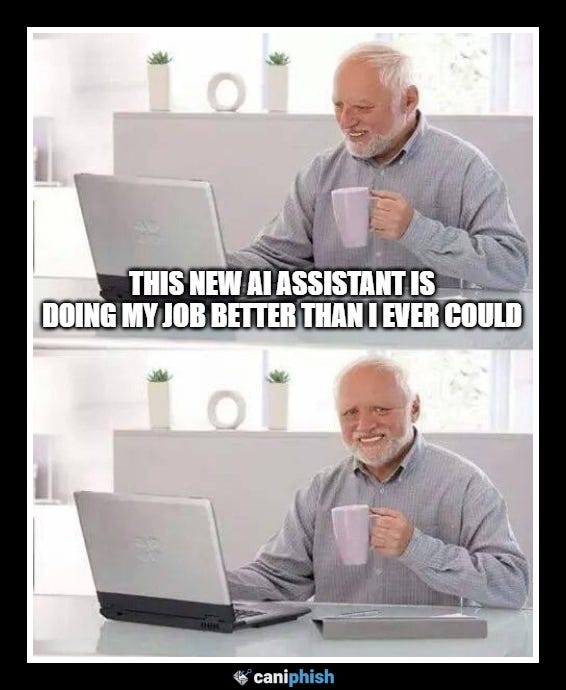
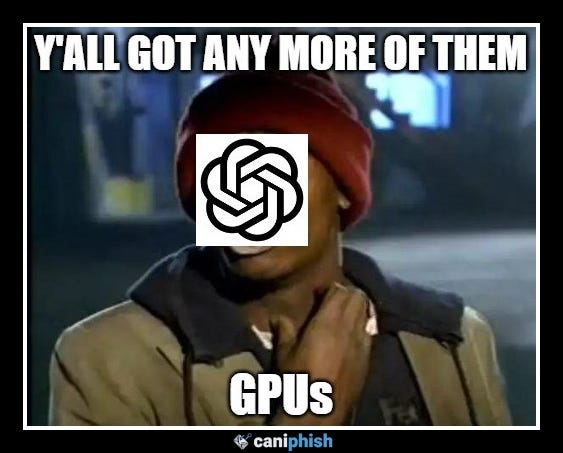
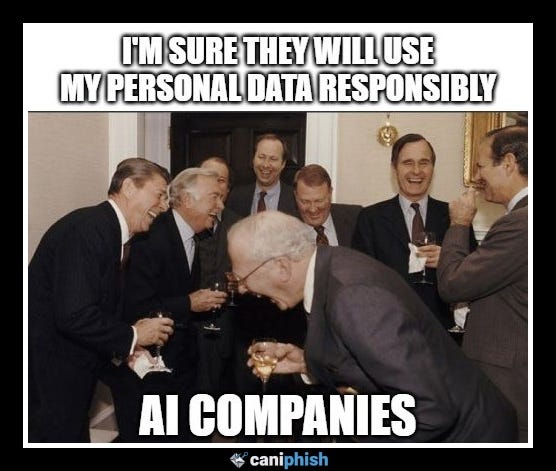
TEAHEE Moment

Stay sharp, stay informed. See you tomorrow.
If you enjoyed this TEA, follow along on social for more:
Twitter/X