

Hello, dear TEA-mates, here's what you need to know today.
1. 🌐 Google Allows Users to Define Top Search Sources?
Google’s new feature enables users to prioritize specific sources in search results, offering personalized rankings based on preferred websites. While enhancing user control, it risks creating echo chambers by limiting exposure to diverse perspectives. The global rollout maintains Google’s core algorithm, balancing personalization with relevance. Read More: TechCrunch
☕ TEA For Thought: This risks creating an even more closed idea bubble. How do you encounter ideas outside your comfort zone or preferred sources? Before, it was controlled by big tech; now, it’s you and big tech together.
2. ⚛️ CCP-China’s $167B Hydropower Project on Yarlung Tsangpo?
China has launched a $167 billion hydropower project on the Yarlung Tsangpo River near the Tibetan Plateau, aiming to triple the output of the Three Gorges Dam. The project involves drilling tunnels through mountains to harness the river’s flow without a megadam, using a “run-of-the-river” design to minimize environmental impact. It supports China’s goal of energy self-sufficiency, reducing reliance on 25% imported energy, and stimulates the economy in Tibet. However, it faces criticism from India and Bangladesh for potential water flow disruptions and environmental risks in a seismically active region. Read More: Wall Street Journal
☕ TEA For Thought: CCP-led China will do anything to maintain its lead. People and the environment are not priorities, as they don’t care. When discussing CCP-China’s leadership in AI or other technologies, we must recognize: 1) CCP-China is not a democracy, controlled by a few kleptocrats with state-backed tech firms; it’s unlike Western democracies. 2) The CCP is distinct from the Chinese people and does not represent them.
3. 🤖 AI Boosts Productivity by Replacing Costly Meetings?
Cameron Westland demonstrates how AI eliminated a $30,000 strategy meeting, achieving 36x efficiency by automating data analysis and decision-making. Using context engineering, Westland crafted precise prompts with clear objectives, relevant data, and iterative refinements to extract actionable insights. Effective context engineering involves defining the problem clearly, providing structured input (e.g., datasets or goals), and using follow-up prompts to refine outputs, ensuring AI delivers concise, relevant results for business workflows. Read More: Cameron Westland
☕ TEA For Thought: This makes sense. As Einstein said, “If I had an hour to solve a problem, I’d spend 55 minutes thinking about the problem and 5 minutes thinking about solutions.” Ask, and you will be answered. Seek, and you shall find.
4. 🎓 AI in Schools: Supporters vs. Opponents on Training?
California’s schools and universities are integrating AI through partnerships with tech giants like Google, Microsoft, Adobe, and IBM to provide free AI training, aiming to prepare students for an AI-driven economy. Supporters, including Gov. Gavin Newsom and educators, argue AI is inevitable and essential for workforce readiness, automating tasks like grading and personalizing learning while teaching students to use AI tools responsibly alongside critical thinking skills. Opponents, such as Stephanie Goldman from the Faculty Association of California Community Colleges, express concerns that AI could lead to over-reliance, diminishing critical thinking, and raise issues about data privacy and faculty control over classroom AI use. The debate centers on balancing AI’s benefits with ensuring students develop independent analytical skills. Read More: CalMatters
☕ TEA For Thought: The debate shouldn’t center on whether students should use AI. AI is here to stay, like electricity or gas. The focus should be on how to live with it, use it effectively, and train students to think critically while leveraging the technology.
5. 🚀 Blue Origin Accepts Crypto for Space Flight Bookings?
Blue Origin’s New Shepard spacecraft now accepts cryptocurrency payments, including Bitcoin, Ethereum, Solana, USDT, and USDC, through a partnership with Shift4’s payment platform. Integrated with wallets like Coinbase and MetaMask, the system enables secure, instant transactions for space tourism bookings. This move taps into the $4 trillion crypto market, enhancing accessibility for high-end purchases and marking a milestone in blockchain’s integration into space commerce. Read More: CoinMarketCap
☕ TEA For Thought: Booking your flights in space with crypto is no longer a dream.
Prompt Tip of the Day: Find Your IKIGAI
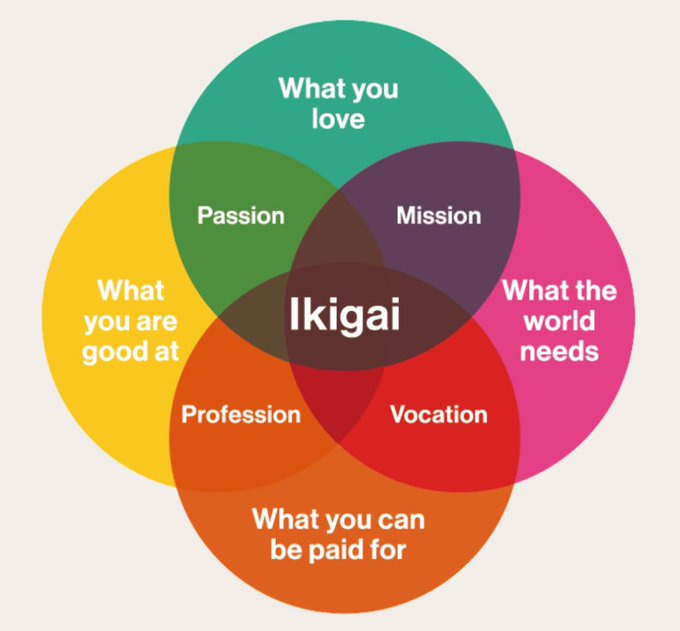
“I need your expertise as my IKIGAI coach. Your mission is to ask me detailed questions about my life, uncovering the intersection of my passions, proficiencies, and purpose in a way that can be profitable.
Your goal is to develop a profound understanding of what truly ignites my passion and how I can turn it into a successful business. Once you feel confident in your understanding of my situation, provide me with advice on starting a business while being employed full time, with the eventual goal of transitioning from my full-time job to my own venture.”
TEAHEE Moment


Stay sharp, stay informed. See you tomorrow.
Follow us on Twitter/X: https://x.com/the_era_arc