


Hello, dear TEA-mates! Here is what you need to know today.
1. 🪟 Microsoft Rolls Back Copilot AI “Bloat” on Windows
Microsoft announced a series of changes to Windows 11 that include dialing back Copilot AI integrations in Photos, Widgets, Notepad, and Snipping Tool. Pavan Davuluri, EVP of Windows and Devices, said the company is becoming more intentional about where Copilot integrates, focusing on AI experiences that are “genuinely useful.” The move reflects growing consumer pushback against AI bloat — a Pew Research study from this month found that 50% of U.S. adults are now more concerned than excited about AI, up from 37% in 2021. This is not Microsoft’s first retreat: it previously shelved Copilot integrations in Settings, File Explorer, and elsewhere, and delayed the controversial Windows Recall feature for over a year due to privacy concerns. The taskbar is also getting customization options, and the Feedback Hub is being updated. (Read More)
🫖 TEA For Thought: When there are too many AI tool options, users get overwhelmed. Simpler, single-tool workflows are preferred for getting work done.
2. 🛠️ Go Beyond Building Full-Stack Apps with Lovable
Lovable, the AI-powered vibe coding platform, announced that it now handles far more than app building — it can analyze data from CSVs and PDFs, generate reports and pitch decks, create images and videos, convert spreadsheets into working apps, and process files end-to-end. The AI agent can now run Python scripts for deep data analysis, install tools, convert file formats, and verify its own output in a secure execution environment. Supported file types include PowerPoint, Word, PDF, CSV, Excel, JSON, images, and video. The platform also integrates with tools like Granola for meeting notes and Amplitude for analytics, positioning itself as an all-in-one business operations layer rather than just a code generator. (Read More)
🫖 TEA For Thought: Vibe coding tools are converging with AI computers. The market will favor the strongest, simplest workflow.
3. 🔗 AI Tooling and Platform Convergence
Dhravya Shah, CEO of Supermemory, shared observations on the growing convergence in AI tooling — how users increasingly want reliable, outcome-focused tools rather than endless platform options. The discussion highlights ecosystem dynamics where breadth of capabilities matters less than depth of execution, and where tool proliferation is creating decision fatigue for developers and businesses alike. As AI platforms race to bundle more features under one roof, the real differentiator is becoming which tool delivers the most value with the least friction. (Read More)
🫖 TEA For Thought: Convergence and outcome-focused tooling matter more than platform variety. Users want tools that just work.
4. 🏗️ The AI Tooling Ecosystem Is Being Reshaped
Chris Lu, a researcher at OpenAI, highlighted the ongoing evolution of AI tooling and platform competition in a thread examining how the ecosystem is consolidating. With OpenAI’s recent acquisition of Astral (the Python toolmaker behind Ruff and uv) and Anthropic’s rapid expansion of Claude Code, the tooling wars are intensifying. Developers and users face a shifting landscape where integration depth, developer experience, and ecosystem lock-in are becoming the key battlegrounds. The thread signals that AI tooling is no longer just about models — it is about owning the full developer workflow. (Read More)
🫖 TEA For Thought: The ongoing evolution of AI tooling and platform competition signals a future where owning the developer workflow matters more than owning the best model.
5. 📉 Tech Layoffs Surge While AI Jobs Soar
Q1 2026 tech layoffs have exceeded 45,000 globally, with over 30,000 in the U.S. alone. Major companies affected include Meta (1,500 in Reality Labs), Intel, Microsoft, Amazon, and Salesforce. Yet AI-related hiring is surging — companies report a 92% increase in AI positions with a 56% wage premium in high-demand roles. Meta alone is allocating $115-135B for AI capex in 2026, more than double its 2025 investment. The paradox is stark: 44% of managers cite AI as the primary driver of layoffs, while 59% of companies frame reductions as AI-driven to appeal to stakeholders. Goldman Sachs warns that accelerating AI adoption may create unemployment pressures even as specialized roles boom. Over-hiring during the COVID era contributed to 245,000 global tech layoffs in 2025, and AI-driven displacements are projected at 55,000 continuing into 2026. (Read More)
🫖 TEA For Thought: Businesses care about getting work done. AI-enabled efficiency will reshape employment and org design — the question is whether reskilling can keep pace with displacement.
Prompt Tip of the Day
When facing a complex decision with multiple options, skip the pros-and-cons list and ask the AI to build a weighted decision matrix instead. This forces structured evaluation across your actual priorities.
“I need to decide between [Option A], [Option B], and [Option C] for [context]. Build a weighted decision matrix. First, ask me what my top 5 evaluation criteria are and how I’d weight them (1-10). Then score each option against every criterion with a brief justification. Show the total weighted scores and recommend a winner with a clear explanation of trade-offs.”
This works because it forces you to articulate your criteria before the AI evaluates — preventing the model from optimizing for whatever sounds best in isolation.
TEAHEE Moment


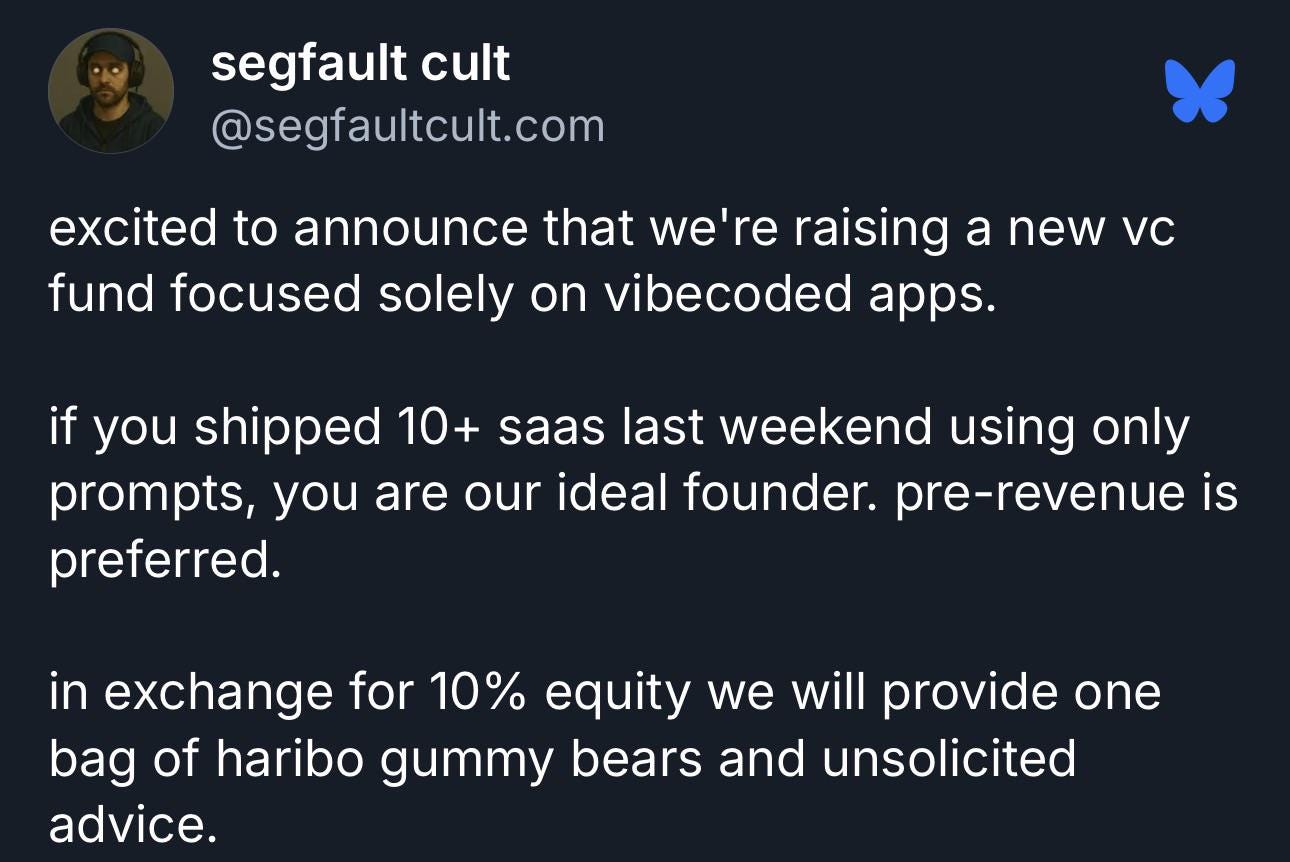
Stay sharp, stay informed. See you tomorrow.
If you enjoyed this TEA, follow along on social for more:
Twitter/X