


Hello, dear TEA-mates! Here is what you need to know today.
1. 🎓 AI Is Making College Optional for Learning, But Not for Living
A lively Hacker News debate is questioning whether traditional college degrees are still necessary in the age of AI-powered learning. CS programs at top schools like CMU report that big tech recruiters (Google, Meta, Amazon) have largely vanished from campus, with quantitative trading firms like Jane Street absorbing top talent instead. Professors are struggling to calibrate assignments when AI can solve most project-level tasks, and the capabilities shift so fast that any benchmark they set today may be obsolete in a month. The consensus emerging from hundreds of comments: the technical knowledge college teaches is increasingly available through AI-enabled self-study, but the social experiences, mentorship networks, and structured credential signaling remain hard to replicate. The thread highlights a growing split between CS fundamentals (algorithms, data structures) that remain durable and framework-level skills that AI makes instantly accessible. (Read More)
🫖 TEA For Thought: Something to think about, especially with college education. With AI, no one needs to go to college to take classes as long as you want to learn and you know what you want to learn. Education in person might just be a social experience eventually.
2. 🪨 A Private Space Company Wants to Bag an Asteroid and Bring It Home
TransAstra, backed by NASA funding, has launched its “New Moon” study to define a mission that would capture a roughly 100-ton near-Earth asteroid using a giant inflatable Kapton bag and relocate it to a stable orbit near Earth. A 1-meter prototype bag was successfully deployed on the International Space Station last September, proving the technology works in microgravity vacuum. TransAstra then won a $2.5 million NASA contract (matched by private funding) to scale up to a 10-meter capture bag. The company is now evaluating spacecraft providers for deep-space rendezvous capability, with a target launch as early as 2028-2029. For context, NASA’s OSIRIS-REx returned just 121.3 grams of asteroid material at a cost exceeding $1 billion. TransAstra aims to bring back vastly more material for “a few hundred million” dollars, a breakthrough needed if humanity is going to build infrastructure in space with space-sourced materials. (Read More)
🫖 TEA For Thought: Pretty interesting and definitely daring. Curious to see how it turns out. It seems like it’s trying to change the nature, which could have bad consequences.
3. 📱 DoorDash Turns Its 8 Million Couriers Into AI Training Data Collectors
DoorDash launched a standalone “Tasks” app on March 19 that pays delivery couriers to complete assignments that train AI and robotic systems. Tasks include filming everyday activities like washing dishes while wearing a body camera, recording speech in different languages, and photographing restaurant menus and hotel entrances. Pay is shown upfront and determined by effort and complexity. Bloomberg reports the collected footage will train both DoorDash’s in-house models and those developed by partners in retail, insurance, hospitality, and tech. DoorDash follows Uber, which announced a similar program in October 2025. The app is available in select U.S. locations, excluding California, New York City, Seattle, and Colorado. With 8 million Dashers reaching almost anywhere in the U.S., DoorDash is essentially pivoting its delivery network into a distributed data collection platform. (Read More)
🫖 TEA For Thought: This is such a great business idea. Pretty much repivoting the app into a data collection endpoint. Folks who want to make more money can just sell their data. Smart move, just like what Uber did.
4. 📡 MIT’s AI Can Now See Through Walls Using Wi-Fi Signals
MIT researchers have built a system called Wave-Former that uses generative AI to reconstruct 3D objects hidden behind walls, cardboard, fabric, and other obstacles using millimeter-wave (mmWave) Wi-Fi signals. The key innovation: they trained a generative AI model on synthetic datasets that simulate mmWave reflection physics, overcoming the problem that no real mmWave dataset is large enough for training. Wave-Former reconstructed roughly 70 everyday objects (cans, boxes, utensils, fruit) with nearly 20% better accuracy than previous state-of-the-art methods. A companion system called RISE goes further, reconstructing entire rooms by analyzing “ghost signals” that bounce off humans moving through a space. RISE achieved about twice the precision of existing techniques using a single stationary radar. Applications include warehouse robots verifying packed items before shipping and smart home robots understanding room layouts without cameras, preserving privacy. (Read More)
🫖 TEA For Thought: This is super cool. AI is literally working like magic here to see through things without breaking anything else.
5. 💳 x402 V2 Makes AI Agents Pay Like Humans Browse
Coinbase’s x402 protocol just shipped its V2 upgrade with Sign-In-With-X (SIWX), a wallet-based authentication standard built on CAIP-122 that fundamentally changes how internet payments work. The old model required a fresh on-chain payment for every single resource request, making it too slow and expensive for real-world use. SIWX introduces reusable sessions: pay once, sign in with your wallet, and get ongoing access across sites without repeated transactions. The protocol has already processed over 100 million payments since May 2025 across APIs, apps, and AI agents. V2 also adds multi-chain stablecoin support (Base, Solana, and other L2s), a modular plugin-driven SDK, and dynamic per-request payment routing for marketplaces. The efficiency gains (lower latency, fewer round-trips, cheaper repeated calls) make x402 viable for high-frequency workloads like LLM inference, multi-call agents, and complex applications. (Read More)
🫖 TEA For Thought: This is so awesome. Another milestone in x402. x402 used to be a “pay-per-click” system that was too clunky for real use. Now, it’s a “pay-for-access” system that feels as fast as the regular internet.
Prompt Tip of the Day
Scaffolding is one of the most underused prompt techniques for getting consistent, high-quality output. Instead of describing what you want, you give the model the beginning of the answer and let it complete it. This steers tone, format, and reasoning from the first word.
“Here is my analysis of [topic], structured as three sections with headers. Section 1: Core Problem — The fundamental issue is”
When you control how the answer starts, you reduce hallucinations, randomness, and format drift. Use scaffolding whenever you need outputs that match a specific structure or voice, especially for repeated tasks like reports, reviews, or documentation.
TEAHEE Moment

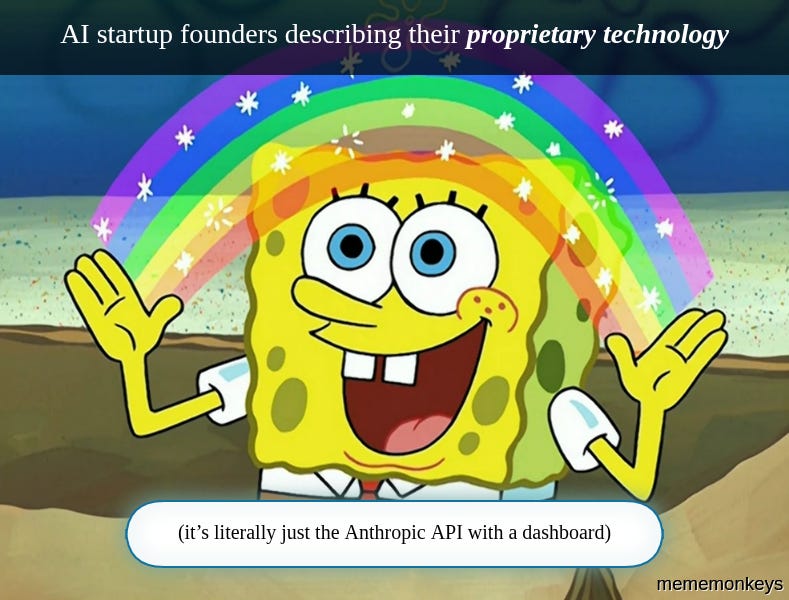


Stay sharp, stay informed. See you Sunday!
If you enjoyed this TEA, follow along on social for more:
Twitter/X