

Hello, dear TEA-mates, here's what you need to know today.
1. 🚀 Starship to Slash Bandwidth Launch Costs by Up to 50x?
SpaceX's Starship, as demonstrated by its Flight 10, is set to revolutionize space launch economics by significantly reducing costs per kilogram to orbit, with even an expendable Starship achieving ~40% lower $/kg than a mature Falcon 9, and fully reusable configurations potentially reaching a $60/kg floor as flight cadence increases. When paired with advanced V3 Starlink satellites, which offer higher bandwidth per kilogram, Starship's cost advantages translate into ~40–50× gains in $/Gbps compared to Falcon 9 with V2 Mini satellites, enabling faster network scaling, pricing flexibility, and enhanced service quality for Starlink. Flight 10's successful deployment of mock V3 satellites validates the operational payload path, de-risking SpaceX’s ability to scale Starlink and potentially transforming the broader space industry by enabling heavier, more capable spacecraft, cislunar logistics, and new markets like in-space manufacturing. Read More: 33FG Research
☕ TEA For Thought: It takes a village to send anything to space. Making spaceships reusable to lower costs is truly revolutionary. As Elon Musk has noted, humans landed on the moon in the 1970s, yet no one has done it again in the past 50 years, which is problematic. Innovation and scientific/technological progress don’t happen spontaneously—they require time, immense effort, and hard work.
2. 🤝 The Four Styles of Confidence on a Team?
The article categorizes four team confidence styles—overconfident, underconfident, midlevel-confident, and proportionally-confident—ranking them from least to most effective. Overconfidence stifles discussion, underconfidence limits input, midlevel confidence lacks clarity on reliability, and proportional confidence optimally balances accurate self-assessment with clear communication. Individuals can achieve this by tracking accuracy and staying open to changing views, while managers should hire for proportional confidence, foster a flexible culture, and provide coaching to enhance team decision-making. Read More: Adam Smith
☕ TEA For Thought: A great read. It’s not just for business. This proportional confidence is valuable in daily life as well. After all, as Steve Jobs said, “What matters is that we do the right thing.”
3. 🧠 Penny: A Platform for Paid Knowledge Sharing?
Plastic Labs has launched Penny For Your Thoughts, a demo integrating their Honcho platform with Coinbase’s x402 protocol, enabling users to share expertise via AI-conducted interviews and earn USDC through micro-transactions for queries answered by their AI agent. Honcho’s advanced memory and social cognition capabilities capture and reason over nuanced expert knowledge, creating rich, context-aware responses, while x402 facilitates seamless payments for accessing this information. The platform features a global leaderboard ranking agents by earnings, aiming to demonstrate a future where agents pay for high-value human expertise, addressing the commoditization of common data and fostering an agentic economy where individual knowledge is a defensible asset. Read More: Plastic Labs
☕ TEA For Thought: This is a very interesting idea—a platform for you to share your knowledge where others can pay for it. But the question is, would people spend money now to pay for knowledge provided by an AI fine-tuned with a human’s expertise? The real challenge is how competitive one person’s knowledge is compared to AI, which offers greater storage, speed, and often comes free. I suspect the idea is niche, but finding the right product-market fit? I’m skeptical, though we’ll see how it unfolds.
4. 📚 MathGPT Expands to Over 50 Institutions?
TechCrunch reports MathGPT, an AI tutor with cheat-proof features, has expanded to over 50 institutions, serving 10,000 students. It improves math test scores by 30% through real-time problem-solving and personalized feedback. For instructors, it automates grading and provides analytics to tailor lessons, while students benefit from interactive practice and hints, fostering engagement without compromising academic integrity. Read More: TechCrunch
☕ TEA For Thought: They are very smart in riding the tide of AI. They’re not against it, especially in the field of education.
5. 💰 CFTC Opens Pathway for Americans to Trade on Offshore Crypto Exchanges?
The U.S. CFTC has introduced a pathway for offshore crypto exchanges to serve U.S. clients legally by registering under the Foreign Board of Trade framework, as announced on August 28, 2025. Part of the Trump administration’s “crypto sprint,” this aims to boost market liquidity, reduce trading barriers, and reverse the 2021–2024 exodus of crypto firms due to unclear regulations, while seeking public feedback to balance investor protection and innovation. Read More: Cointelegraph
☕ TEA For Thought: This is definitely a milestone. Clearer regulations lead to more innovation, helping to prevent the infamous legal enforcement via prosecution that has plagued the crypto industry.
🚨CCP-ALARM: 💊 Will All Our Drugs Come from China?
Atelfo discusses the rising influence of China in pharmaceuticals, noting that it supplies over 40% of global active pharmaceutical ingredients (APIs) and 80% of U.S. generic drugs. The article highlights a surge in Chinese drug innovation, with Chinese companies accounting for 25% of new trial starts, surpassing Europe. Read More: Atelfo
The Chinese investigational drug pipeline has doubled from 2,251 drugs in July 2021 to 4,391 in January 2024, per Nature.
Notable deals include Merck’s four recent agreements (three with Chinese firms), a $112 million deal with Hansoh for an oral GLP-1 drug, and J&J’s 2017 Carvykti licensing from Legend Biotech, now FDA-approved with a 98% response rate in multiple myeloma patients.
Regulatory reforms since 2015, including a drop in IND approval times from 501 to 87 days, and a venture funding surge from $4 billion (2015-2017) to $12 billion (2018-2020) fuel this growth.
☕ TEA For Thought: Great read. Alarming for sure. What this article didn’t mention is that the reasons companies develop drugs faster and cheaper are threefold: first, the CCP, as a non-democratic entity, fully backs advanced tech companies—including biotech, weapons, AI, and quantum computing—with vast resources and benefits. Second, the CCP shows little regard for people or the environment, resorting to direct human testing of drugs and ignoring potential harms, all in the name of speed. Third, they excel at stealing technology, leveraging cheap labor and resources to replicate and dominate markets. One crucial point to emphasize is that the CCP does not represent the Chinese people—they are distinctly different.
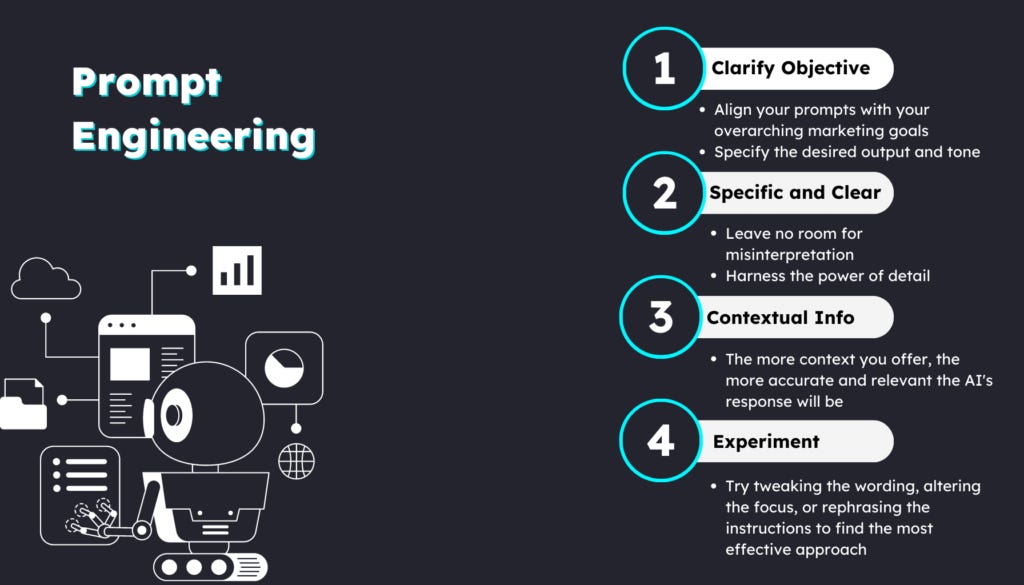
Prompt Tip of the Day
TEAHEE Moment




Stay sharp, stay informed. See you tomorrow.
Follow us on Twitter/X: https://x.com/the_era_arc