


Hello, dear TEA-mates! Here is what you need to know today.
1. 🧬 A Startup Quietly Pitched Growing Brainless Human Clones as Replacement Bodies
MIT Technology Review uncovered that R3 Bio, a stealth longevity startup backed by billionaire Tim Draper and life-extension investors including Immortal Dragons and LongGame Ventures, has been privately pitching a radical concept its founder John Schloendorn calls “full body replacement.” The idea: grow human clones lacking higher brain function to serve as organ sources or entire replacement bodies. Schloendorn pointed to anencephaly, a birth defect where children are born missing most cortical hemispheres, as evidence that a body can function without a brain. Since artificial wombs don’t exist yet, such bodies would require paid surrogates to carry them. R3 denied the claims, insisting “any allegations of intent or conspiracy to create human clones are categorically false,” though cofounder Alice Gilman acknowledged the team “reserves the right to hold hypothetical futuristic discussions.” MIT Tech Review found no evidence R3 has cloned anything larger than a rodent. (Read More)
🫖 TEA For Thought: It’s Pantheon in real life. When the science of growing replacement bodies catches up to the ambition, the ethics debate won’t be theoretical anymore.
2. 🍎 Apple Pulls Vibe Coding Apps from the App Store, Signals Platform Liability Shift
Apple removed “Anything,” a popular vibe coding app by developer Dhruv Amin, from the App Store and blocked updates to Replit and Vibecode. Apple cited section 2.5.2 of its App Review Guidelines, which prohibits apps from downloading or executing code that changes functionality outside App Store review. Amin attempted to comply by letting users preview vibe-coded apps in a browser instead of within the app itself. Apple rejected the workaround and pulled the app entirely. Apple clarified the issue isn’t vibe coding as a concept, but apps that generate and run code outside its review process, potentially altering their own behavior post-approval. The crackdown signals Apple’s growing concern about liability when AI-generated code ships directly to consumers through its ecosystem. (Read More)
🫖 TEA For Thought: Apple is pivoting toward being the gateway for how everyday people use AI. If vibe-coded apps keep changing behavior outside review, Apple bears the liability. The deeper question: how do SaaS and the App Store evolve when apps become task-based and disposable, not permanent installs?
3. 🤖 Microsoft Launches Multi-Model Intelligence in Copilot Researcher
Microsoft introduced two multi-model capabilities, Critique and Council, to Researcher inside Microsoft 365 Copilot. Critique separates generation from evaluation: one model (from either Anthropic or OpenAI) handles planning, retrieval, and drafting, while a second model reviews the output through rubric-based evaluation covering source reliability, completeness, and evidence grounding. On the DRACO benchmark (100 complex research tasks across 10 domains), Critique improved scores by +7.0 points overall, with a 13.88% improvement over Perplexity Deep Research. Council runs both an Anthropic and an OpenAI model in parallel to produce independent reports, then a judge model synthesizes where they agree, diverge, and what each uniquely contributes. Both features are broadly available in the Frontier program as of March 30, with Critique becoming the default when “Auto” is selected. (Read More)
🫖 TEA For Thought: Smart pivot. When you can’t be the leading LLM, you become the harness. Whoever builds the safest, most intuitive orchestrator wins at the application layer.
4. 🦋 Bluesky’s AI Tool Attie Is Already the Most-Blocked Account Besides J.D. Vance
Bluesky launched Attie, a new AI-powered tool on its decentralized social platform, and the user response was swift and brutal: over 125,000 users blocked the account within days, making it the most-blocked account on the platform after J.D. Vance. The backlash reflects a broader tension on Bluesky, which attracted millions of users specifically seeking a human-first, algorithm-light alternative to X. Introducing an AI tool into that ecosystem hit a nerve. The rapid blocking campaign signals that Bluesky’s community sees AI integration as contradicting the platform’s core promise of user control and authentic social interaction. (Read More)
🫖 TEA For Thought: Finding product-market fit in social media is tricky. What’s the point of people using social media? Even when agents are involved, it’s still people behind those agents. Build for the humans first.
5. 📊 70% of Americans Expect AI Will Destroy Jobs, Yet Usage Keeps Climbing
A Quinnipiac University poll of 1,397 U.S. adults reveals a striking contradiction: AI adoption is surging (51% now use it for research, up from 37% in April 2025; 27% never used AI, down from 33%), yet anxiety is deepening. 70% expect AI will decrease job opportunities, up from 56% a year ago. Gen Z is the most pessimistic at 81%. 55% believe AI will do more harm than good in daily life (up from 44%). 80% want human involvement in medical decisions even if AI proves more accurate. 74% want stronger government regulation. 80% refuse to work under an AI supervisor. 65% oppose local AI data centers over electricity and water concerns. Only 21% trust AI information most of the time, while 76% trust it “hardly ever” or “only sometimes.” The poll captures a nation racing to adopt tools it fundamentally distrusts. (Read More)
🫖 TEA For Thought: Politicians will use this to win elections by opposing AI. When you’re not at the cutting edge, it’s hard to see the upside. Every revolution is driven by a tiny minority changing the paradigm for everyone else.
Skill of the Day
oh-my-claudecode by Yeachan-Heo: Teams-first multi-agent orchestration for Claude Code. 32 specialized agents for architecture, research, testing, and data science. Smart model routing uses Haiku for simple work, Opus for complex reasoning. Custom skill extraction learns from your sessions and auto-injects relevant patterns. Cuts token usage by 30-50%. Zero learning curve — describe the task, it routes it. 18.9K stars this week.
npm i -g oh-my-claude-sisyphus@latest
TEAHEE Moment


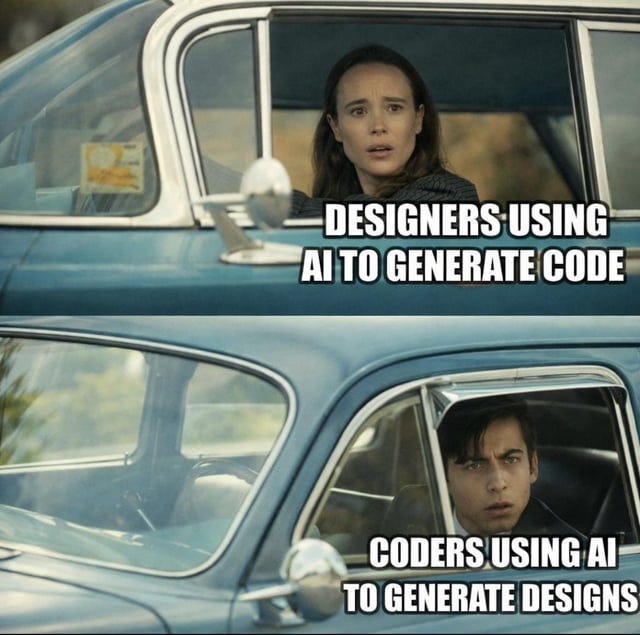
Stay sharp, stay informed. See you tomorrow.
If you enjoyed this TEA, follow along on social for more:
Twitter/X