

Hello, dear TEA-mates! Here is what you need to know today.
1. ⚖️ Both Lawyers Used AI, So a Judge Canceled the Trial and Removed Everyone From the Case
In a federal contractual dispute in the Northern District of Mississippi, lawyers on both sides were caught citing nonexistent, AI-hallucinated cases, a situation one observer described as two clients effectively paying for an LLM to argue against itself. Senior U.S. District Judge Sharion Aycock issued a blistering sanctions order warning that “in an era of rampant unverified AI usage within the legal field, this case presents a prime example of the risk associated with serving as a rubber-stamp.” She paused the proceedings, canceled the trial, and disqualified all four lawyers involved. Two were barred from appearing before the court for two years, and all received fines between $1,000 and $3,500 depending on her assessment of their culpability for not verifying the AI’s output. Judges nationwide have grown increasingly frustrated with hallucinated citations, with a similar case ripping into New York lawyers just last week. (Read More)
🫖 TEA For Thought: “The verification, stability, and reliability are essential. But just because this happened does not mean AI is all bad. Everyone is racing to build enterprise AI that is safe, reliable, and durable.”
2. 💬 The EU Orders Meta to Open WhatsApp to Rival AI Chatbots, for Free
The European Commission ordered Meta to give rival AI chatbots free access to WhatsApp within five working days or risk a heavy fine, an interim measure in its ongoing antitrust probe. The investigation, opened in December, targets Meta’s policy of blocking AI providers other than its own Meta AI from the platform. The EU had warned in February that interim measures were coming, then rejected as unsatisfactory the access fee Meta introduced in April. Meta must now restore access on pre-October terms, with the order lasting until the investigation concludes or June 2029 at the latest. The Commission can impose a fine of up to 10% of Meta’s total annual turnover if the company intentionally or negligently defies the decision. Meta said it would appeal. (Read More)
🫖 TEA For Thought: “The automation that uses WhatsApp as an interface can start now!”
3. 🌊 China Switches On the World’s First Wind-Powered Underwater Data Center
China has begun operating what is being called the world’s first offshore wind-powered underwater data center, off the coast of Shanghai’s Lingang area. Located around 10 kilometers from shore and submerged roughly 10 meters below the surface, the facility is powered directly by a nearby offshore wind farm, which is estimated to supply 95% of the electricity for its 192 server racks arranged across four levels. It uses seawater for natural cooling through a circulating copper-pipe heat exchange system that reportedly cuts electricity consumption by 22.8%, needs no freshwater, and reduces land use by more than 90% compared with onshore centers. The site is currently running at 2.3 MW after completing its first phase in late May 2026, with a planned capacity of 24 MW, enough to power roughly 20,000 households. (Read More)
🫖 TEA For Thought: “Well, in CCP China, if they want to do anything, the environment is the last thing anyone has to worry about, as long as there is an outcome.”
4. 🤖 A Perplexity Study Says Agents Do 26 Minutes of Work Where Search Does 33 Seconds
A new paper from researchers using production data from Perplexity’s Search and Computer products measures what happens when AI shifts from answering questions to doing the work end to end. Using near-identical query pairs as natural experiments for the same underlying task, they found Computer performs 26 minutes of autonomous work per session versus 33 seconds for Search, automating the task decomposition and execution a Search user would otherwise orchestrate by hand. Autonomy also raised quality, with per-query dissatisfaction rates 55% lower on Computer, and on matched tasks it cut completion time from 269 to 36 minutes, lowering estimated time and cost by 87% and 94% respectively compared with humans using Search alone. The agent also changed what users attempted, with queries more often crossing occupational boundaries and bundling interdependent subtasks into a single request. (Read More)
🫖 TEA For Thought: “Isn’t this partially showing that AI does work better than humans, better quality with less money? When more and more ordinary people discover that AI is not just answering questions for them but can actually do it for them, the general rollout of agentic AI might be starting.”
5. 🚀 The Three Hard-Tech Moonshots Behind SpaceX’s $75 Billion IPO
SpaceX comes to market Friday with a reportedly oversubscribed $75 billion offering, but a sober look at the plan shows most of the upside riding on a risky bet: orbital data centers. Two independent analyses value the company well below its roughly $1.8 trillion banker assessment, with Morningstar at about $825 billion and NYU’s Aswath Damodaran at $1.2 trillion, characterizing the gap as essentially a call option on SpaceX’s ability to deliver space-based AI compute. The vision requires three near-impossible feats at once: a fully reusable Starship rocket, a brand-new US chip foundry (Terafab), and a satellite production sprint to roughly 556 AI satellites a month, about twice Starlink’s current rate, to hit an annualized gigawatt of space compute by the end of next year. Meanwhile SpaceX is already renting compute to ostensible rivals Anthropic and Google, raising the question of whether it wants to be a model-builder or a cloud provider. (Read More)
🫖 TEA For Thought: “Only gravity is law, the rest is just recommendation.”
🛠️ Skill of the Day
The Hallucination Hunt: before you trust anything an AI hands you, make it turn around and attack its own answer, so you catch the made-up parts before they cost you (just ask those four Mississippi lawyers).
You are a meticulous fact-checker reviewing a draft you did NOT write. Below is an AI-generated answer I am about to rely on. Your job is to find what is wrong or unverifiable, not to defend it.

THE ANSWER TO CHECK:
[PASTE THE AI OUTPUT HERE]

WHAT I WILL USE IT FOR: [E.G. A FILING, A CLIENT EMAIL, A DECISION, A POST]

Do this in order:
1. List every specific factual claim, name, number, quote, citation, or date in the answer.
2. For each one, label it: VERIFIED (you are confident and can say why), UNCERTAIN (plausible but you cannot confirm), or LIKELY FABRICATED (looks invented, e.g. a case, study, or stat that may not exist).
3. Flag anything that sounds authoritative but is the kind of detail AI commonly hallucinates: legal cases, citations, statistics, URLs, exact quotes.
4. Tell me the single claim that would do the most damage if it turned out to be false, and exactly how I can verify it in five minutes.
5. Rewrite the answer with every unverifiable claim either removed or clearly marked "needs verification."

Be blunt. If you cannot stand behind a claim, say so plainly.
Paste into ChatGPT, Claude, or your tool of choice, and replace the bracketed bits. Great before anything goes out the door with your name on it.
TEAHEE Moment

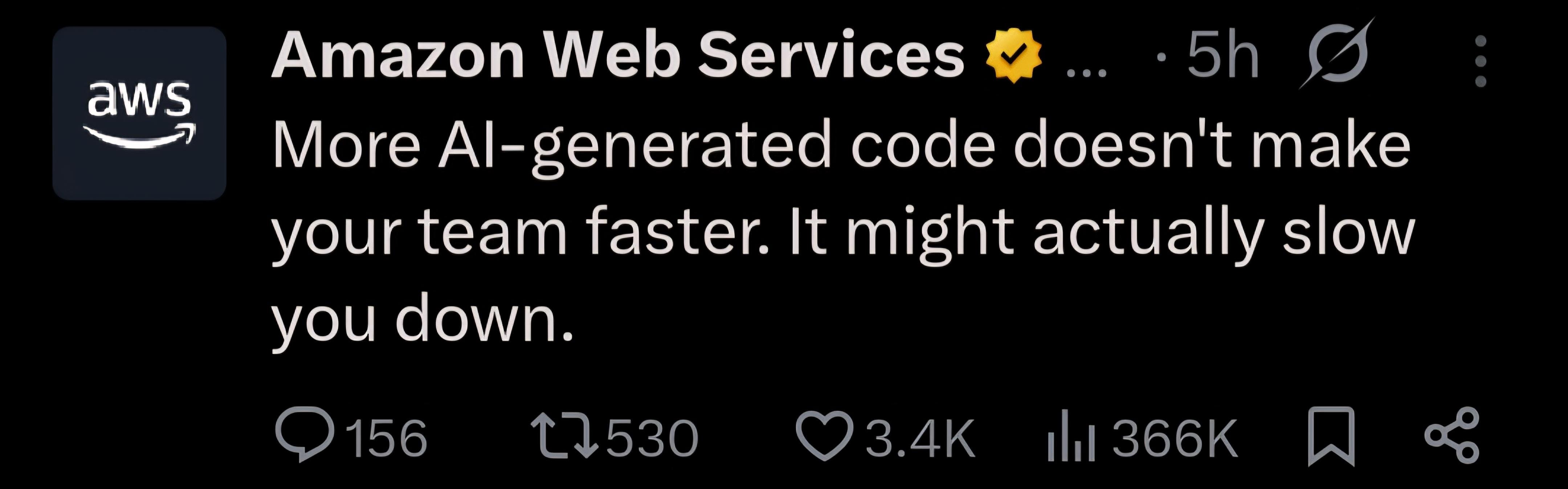

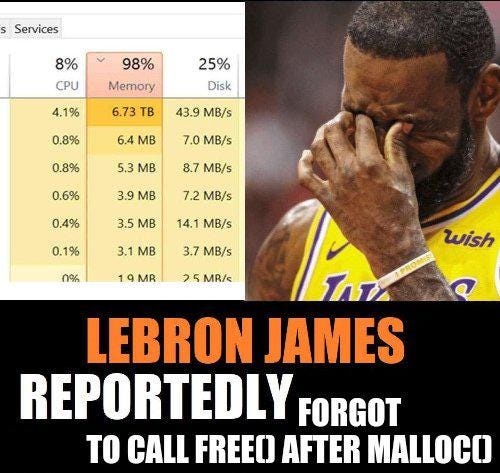
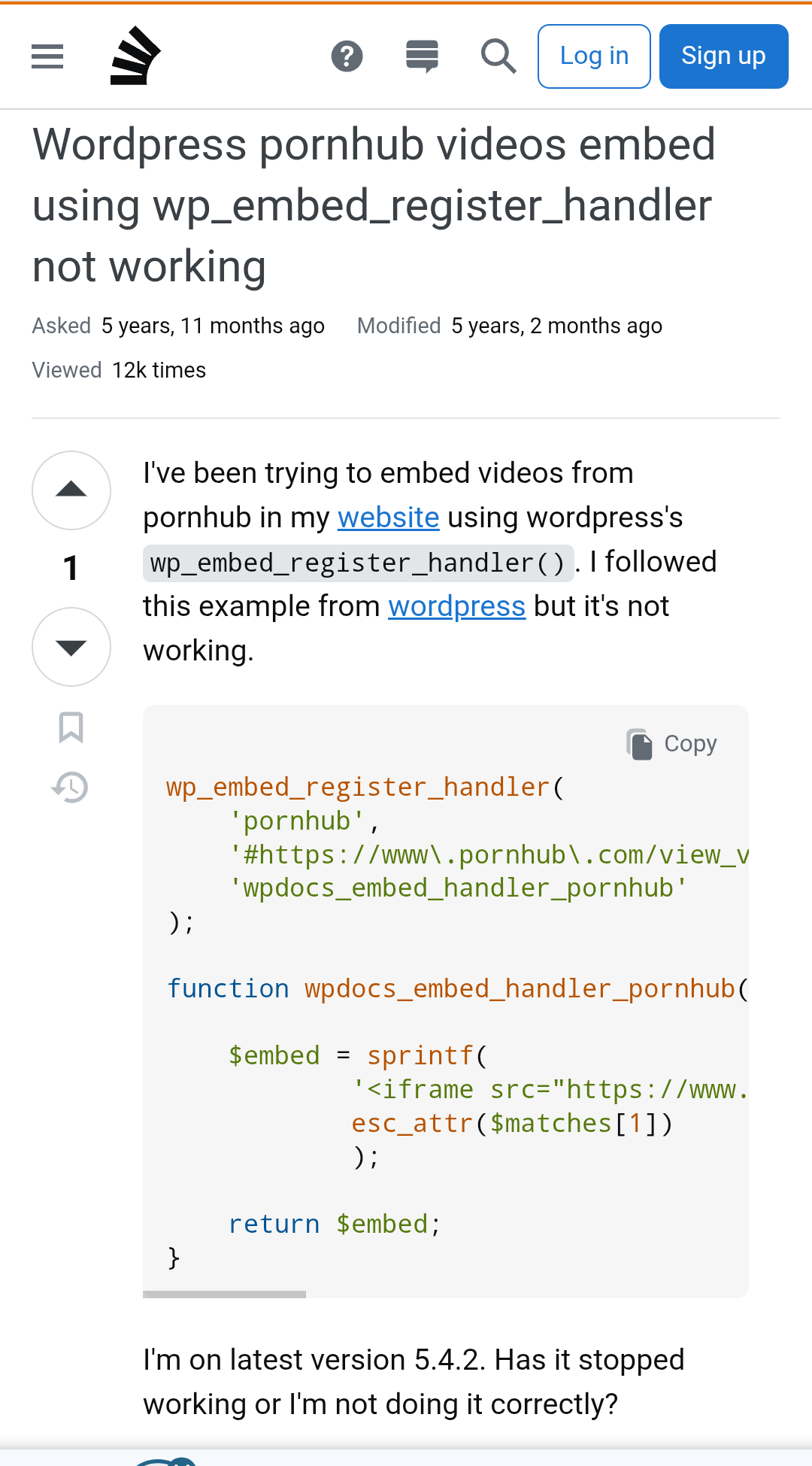
Stay sharp, stay informed. See you tomorrow.
If you enjoyed this TEA, follow along on social for more:
Twitter/X