

Hello, dear TEA-mates—here’s what you need to know today.
1. 🏦 US Regulator Lets Banks Intermediate Crypto Trades
The US Office of the Comptroller of the Currency has confirmed that national banks can act as riskless principals for crypto-asset trades, matching client buy and sell orders without holding the assets on their own balance sheets, similar to existing securities brokerage activity. The interpretive letter stresses that such trades are part of the “business of banking” under existing law, but banks must still confirm the legality of each crypto activity and maintain strong risk management around settlement and counterparty risk. The guidance, issued soon after OCC leadership emphasized a technology-neutral stance on digital assets, marks another step toward letting customers transact crypto through fully regulated banks instead of lightly regulated intermediaries. (Read More)
🫖 TEA For Thought: This is another milestone in crypto’s march into traditional finance; if buying and trading can happen this easily through banks, middlemen that once saw crypto as a threat now seem eager to become the ones selling it too.
2. 🗣️ Evidence Humans Are Starting to Talk Like Chatbots
New reporting highlights growing evidence that everyday language is shifting toward a “chatbot-influenced dialect,” as people increasingly absorb and echo patterns from large language models like ChatGPT. Recent studies track the rising use of so-called “GPT words” in YouTube videos and podcasts, while anecdotal cases—from UK parliamentary speeches to AI-flavored signage—suggest humans are copying AI phrasing in both formal and casual settings. Researchers argue this feedback loop shows how AI-generated text is subtly reshaping speech, as people imitate language they associate with authority, fluency, or prestige. (Read More)
🫖 TEA For Thought: AI is trained on people, people copy what they see AI and other people doing, and over time humans and chatbots start sounding more and more alike.
3. ⚙️ Chinese AI Firms Exploit a Shadow Workforce in Kenya
An investigation finds Chinese AI companies are quietly building a low-cost data-labeling workforce in Kenya, recruiting young people through WhatsApp groups and middlemen to annotate large volumes of video with little transparency or protection. Workers, many facing severe youth unemployment, report 12-hour shifts for just a few dollars per day, often without formal contracts, benefits, or even clarity about which company ultimately employs them, leaving them exposed to wage theft and abrupt shutdowns. The report warns that this “digital sweatshop” model, enabled by mobile payments and informal group chats, is spreading across regions as firms chase ever cheaper labor for training AI systems. (Read More)
🫖 TEA For Thought: The conditions behind these AI labeling jobs are just purely brutal.
4. ✅ Why AI Could Finally Make Formal Verification Go Mainstream
Distributed systems researcher Martin Kleppmann argues that advances in AI could push formal verification from niche tool to mainstream engineering practice, by helping developers write precise specifications and machine-checkable proofs that code behaves exactly as intended. He notes that proof assistants already act as rigorous, binary judges—accepting or rejecting proofs outright—and suggests that if AI can reliably generate those proofs, formally verified, bug-resistant software could become cheaper and more attractive than today’s hand-crafted code. In that world, AI-assisted verification would turn “specs plus proofs” into a standard guardrail for critical systems, especially as more code itself is generated by large language models. (Read More)
🫖 TEA For Thought: If AI can reliably prove programs correct against clear specifications, AI-generated code with machine-checked proofs may be far safer than today’s “artisanal” code and all its hidden bugs.
5. 🪙 Tether’s USDT Wins Multi-Chain Regulatory Nod in Abu Dhabi
Tether’s USDT stablecoin has been approved by Abu Dhabi Global Market as an Accepted Fiat-Referenced Token across a broad set of additional blockchains, extending earlier recognition that covered networks like Ethereum, Solana, and Avalanche. The designation allows licensed firms in ADGM to use USDT in regulated activities over multiple chains, bolstering its role in the region’s digital asset ecosystem and reinforcing Abu Dhabi’s ambitions as a compliant crypto hub. The move follows a wave of crypto-friendly developments in ADGM, including new licenses and expansions by major exchanges and stablecoin issuers seeking regulated footholds in the UAE. (Read More)
🫖 TEA For Thought: Coming right after Binance locked in its ADGM licenses, this approval makes the Tether–Binance nexus even harder to dismiss as coincidence.
Prompt Tip of the Day
Go to any AI Chatbot and prompt: “I’m trying to [describe your goal or problem], but I’m continuously stuck on the same ideas. Ask enough questions about the problem to find a new approach.”
Add context about your current approaches so AI Chatbot knows what you’re already trying and can push you beyond those solutions
Answer Chatbot’s questions across categories like user understanding, product experience, engagement, and analytics to reveal new angles
Review the fresh solutions that emerge from this process and iterate on promising ideas
Pro tip: Use this workflow for any problem. The magic is in how AI will question you until you hit new thinking pathways for better brainstorming.
TEAHEE Moment

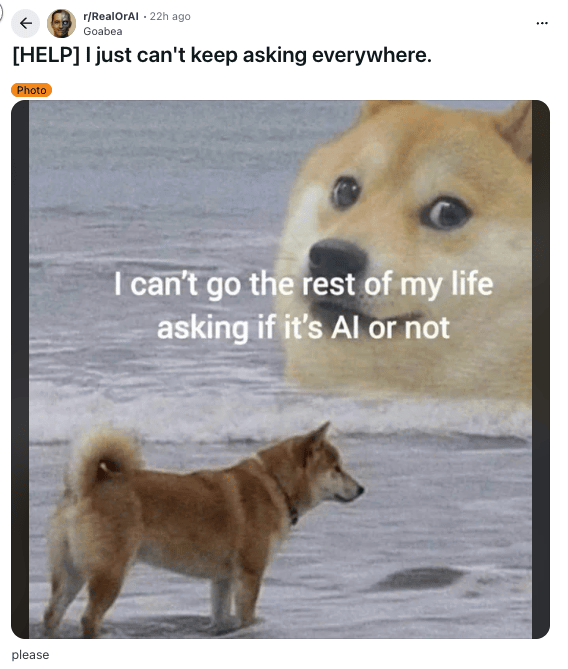

Stay sharp, stay informed. See you tomorrow.
If you enjoyed today’s TEA, follow along on X for more real-time links and threads: the_era_arc.
Sharp insight on the verification shift. The idea that AI-generated proofs could turn specs into standard guardrails makes alot of sense when you consider how much generated code is already floating around without any formal checks. If proof assistants can act as binary judges and AI can reliably feed them valid proofs, that basically turns verification from expensive craft into scalable infrastructure. Kinda wild how the same tech creating questionable code might also be what makes proving correctness actualy feasible.