

Amazon and Google Anthropic stakes, Perplexity Orchestrator, Gartner AI governance, World 2030, Coinbase ChatGPT trading
Hello, dear TEA-mates! Here is what you need to know today.
1. 📈 Amazon and Google Will Together Own Nearly 30% of Anthropic After Its IPO
Anthropic on Tuesday disclosed more details about its largest investment agreements with Amazon and Google. After the IPO, Amazon’s stake will come in at 14.7% and Google’s at 13.7%, or nearly 30% together, all in a special class of non-voting shares that can receive dividends and convert to voting Class A shares when sold. Amazon obtained promissory notes when it invested billions in 2023 and 2024, with conversion prices of about $2.09 or $5.05 per share, depending on the year. It is converting a portion of those notes into the 14.7% stake and holding on to billions of dollars’ worth of notes; if it converted them all right now, it would own 23.8%. Google’s stake comes from converting notes and from a private placement of non-voting stock, a $26 billion sale that AMD, Broadcom, Google, Micron, Microsoft, Nvidia, and TSMC Partners have agreed to buy, with Google and Nvidia each taking $10 billion. That does not count what AWS stands to earn from Anthropic’s commitment to spend more than $100 billion on its cloud services over the next decade. (Read More)
🫖 TEA For Thought: “Which benefits the most from the outage of Jensen Huang and the turmoil that’s happening at Nvidia, with Amazon’s Trainium as well as Google’s GPU, as well as stakes in Anthropic. There’s a lot that’s under the water that we don’t know, but the thing is: if you do things that are bad that either break the law or break the code of conduct, then nothing can save you.”
2. 🧭 Introducing Orchestrator: One API for Frontier and Open-Weight Models
Perplexity on 17 November 2026 launched the Orchestrator API, a single API that gives developers access to frontier and open-weight models with unified billing and provider failover. The company said the catalog covers models from OpenAI, Anthropic, Google, and xAI, alongside open-weight models such as GLM, Kimi, and DeepSeek, which are served by Perplexity or through inference partners. Perplexity said its own model layer already routes hundreds of millions of requests across 85+ models and more than a dozen providers, and that Orchestrator supports the OpenAI Chat Completions, OpenAI Responses, and Anthropic Messages formats, so most teams can start by updating an API key, a base URL, and the model name. There is no additional platform fee on top of credits, and spend can be tracked in an API Console with keys, allowlists, user restrictions, and spend caps. Orchestrator tracks each provider’s health, capacity, and latency, and if a request fails it can retry on another deployment of the same model. Automatic model routing, under the model name perplexity/auto, and automatic reasoning-effort selection are in preview. (Read More)
🫖 TEA For Thought: “Perplexity is like Amazon, selling the essential technology that supports the business as a business to sell itself.”
3. ⚠️ Weak AI Governance Will Lead to Business-Critical Service Disruptions for 40% of I&O Organizations by 2028
Gartner said on 16 November 2026 that without strong governance, 40% of infrastructure and operations (I&O) organizations scaling AI will suffer a business-critical service disruption by 2028. A Gartner survey of 298 I&O leaders in the U.S. and the U.K., conducted in June and July 2026, found that 95% of organizations had faced at least one agent-related incident in the past 12 months, that 57% of I&O leaders said their current governance is weak, that 55% said existing IT risk tools are completely outdated, and that only 15% have automatic circuit breakers to stop runaway agent errors or infinite logic loops. Nathan Hill, Distinguished VP Analyst and Chief of Research at Gartner, said there is a massive operational readiness gap, as 70% of I&O leaders believe their AI agents currently operate within safe boundaries, and urged teams to inventory active AI agents and classify them as nonhuman identities in their identity platforms. Gartner recommended an I&O AI governance framework built around seven pillars: identity, guardrails, observability, agentic FinOps, escalation, containment, and data perimeters. The findings were discussed at the Gartner IT Infrastructure, Operations & Cloud Strategies Conference in London. (Read More)
🫖 TEA For Thought: “We are far from ready. The world is not ready for all agent swarms.”
4. 🔮 World 2030 Maps What AI Changes by 2030, and What It Does Not
World 2030 is a simulation that sets up nine groups: AI labs, big employers, banks and insurers, utilities, startups, universities, workers, governments, and the Fed, and runs the U.S. economy forward in six-month turns from a late-2026 starting point to 2030. It compares a shock-free Baseline with two 2028 shocks: Automated Assurance, in which insurers, regulators, and courts accept machine-checkable cryptographic proofs, and a no-bailout Credit Crunch. Every run starts from the same snapshot: more than $250 billion a year in cloud capex, a grid power deficit of 18 GW of firm supply versus 19.4 GW of demand, a 3.75% Fed funds rate, about 2.9% inflation, and 82% of legacy corporate IT unready for autonomous agents. Across all three runs, consumer digital prices fall about 4% to 5% a year, but the 95% physical CPI basket stays near +3%, U.S. junior desk hiring falls roughly 40%, and legacy seat-software valuations lose half to two-thirds of their value. Tech stocks, set at 100 in 2026, finish 2030 at 77.8 in Baseline, 84.8 in Credit Crunch, and 109.2 only in Automated Assurance, the one branch in which cryptographic proofs are accepted. Firm AI power roughly doubles from 18 GW to 32-41 GW in every run. (Read More)
🫖 TEA For Thought: “Great read! No one knows anything about the future. Currently, only the present is the present that we can seize.”
5. 🪙 Coinbase Launches ChatGPT Plugin for Trading Bitcoin, Stocks, and Derivatives
Coinbase launched an official plugin for ChatGPT on Tuesday that lets users connect a Coinbase account and trade bitcoin, other cryptocurrencies, stocks, and derivatives without leaving the conversation, provided they approve every order. Chief executive Brian Armstrong wrote that “starting today anyone with ChatGPT can connect their Coinbase account” and can “trade right inside your Coinbase account,” but the official plugin is currently available to U.S. Coinbase users, and availability also depends on a user’s ChatGPT account and workspace. Interactive confirmation cards in the chat cover new orders, edits, cancellations, and conversions between dollars and USDC; read-only requests, such as checking a balance, do not use them. The plugin sits on the same rails as Coinbase for Agents, whose documentation lists spot trading in more than 900 pairs, including bitcoin, along with eligible U.S. stocks and dated futures, with orders going through Advanced Trade. In a disclaimer, Coinbase said product availability and eligibility vary by jurisdiction, that trading can result in a total loss, and that “AI agents may fail.” A separate custom ChatGPT connection for automated workflows does not add a confirmation card before each trade, though sign-in, consent, and authorization for financial actions still apply. (Read More)
🫖 TEA For Thought: “Every company will become an intelligence. Get ready for your company to be plugged into the other network of intelligence.”
🛠️ Skill of the Day
The Reverse Outline: Turn a messy draft into a tighter structure, then a cleaner rewrite, without adding new claims.
You are a writing editor helping me tighten a draft I already wrote. I will paste the draft after this prompt, labeled [PASTE DRAFT HERE]. My intended audience is [AUDIENCE]. Keep the rewrite within [WORD LIMIT] words.

First, build a reverse outline. List the draft's sections in order. For each one, write a single sentence that states the point it actually makes, not the heading I used. Flag any section that repeats an earlier point, buries the point under background, or does not earn its place.

Second, propose a revised outline of no more than [N] sections. Keep my meaning and my recommendation. Cut repetition. Move the main point earlier if I buried it. If a needed fact, example, or transition is missing, say what is missing; do not invent the content.

Third, rewrite the draft to match that outline. Use plain language and short paragraphs. Preserve names, numbers, and quotations exactly as I wrote them. Mark any sentence you had to guess at with [CHECK].

Constraints: do not add arguments I did not make, do not soften or strengthen my conclusion unless I asked you to, and do not introduce new examples, statistics, or sources.
Paste it into ChatGPT, Claude, or your tool of choice. Replace the bracketed bits with your own, then paste the draft.
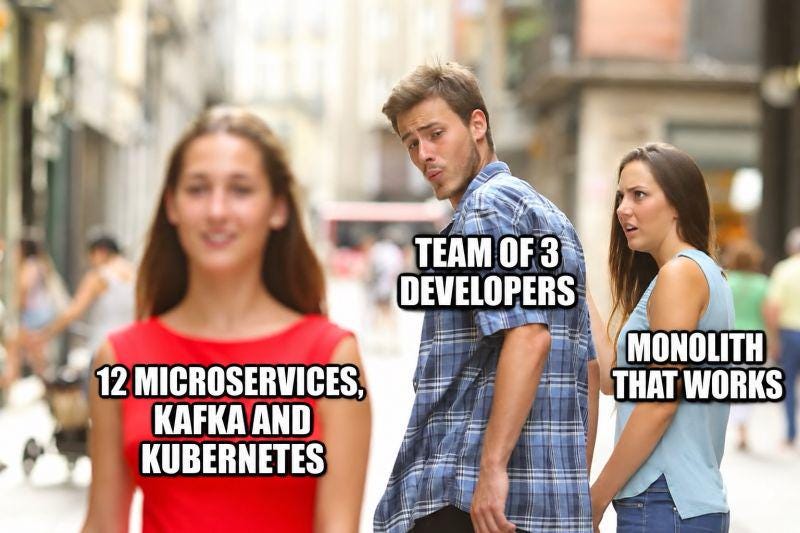
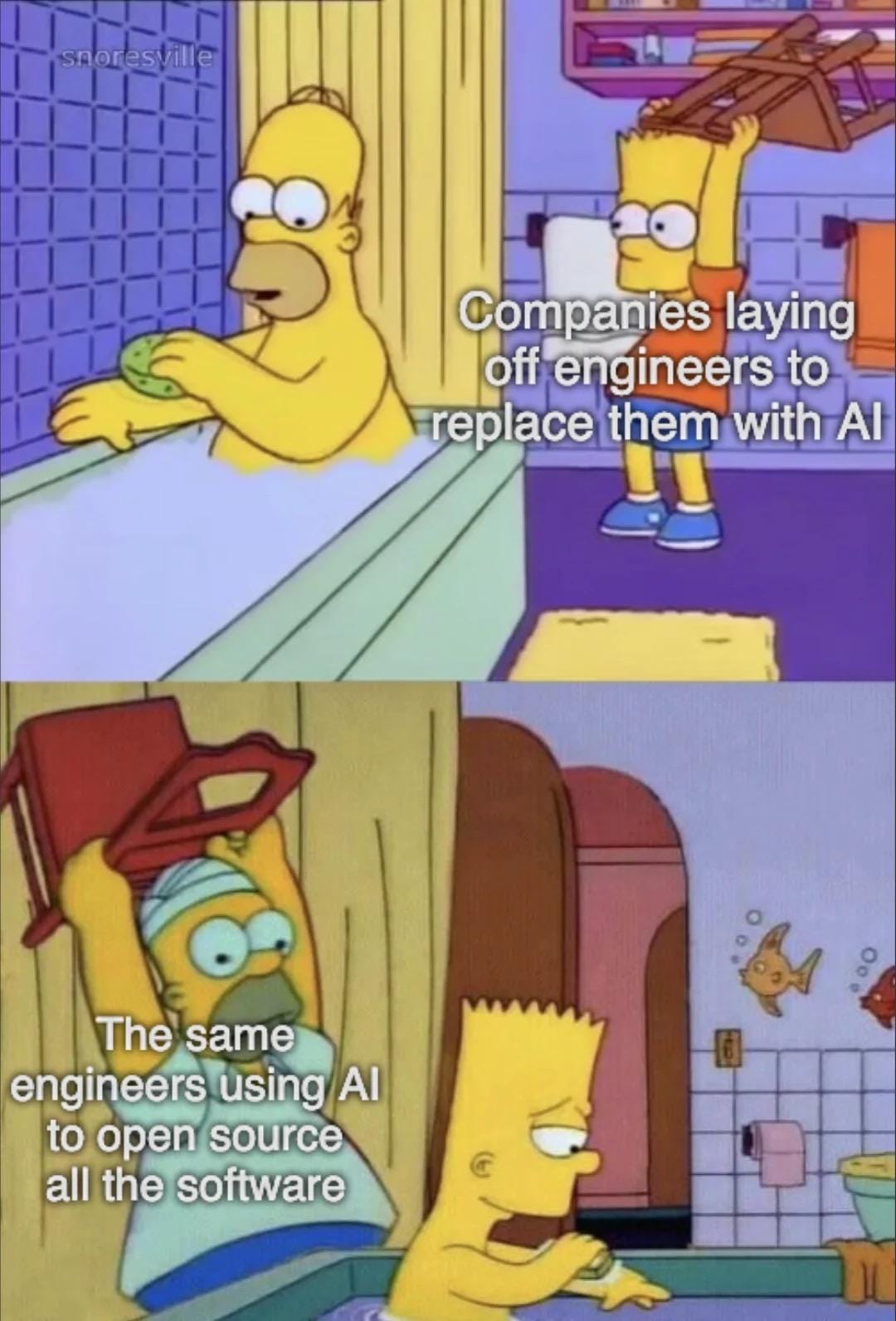
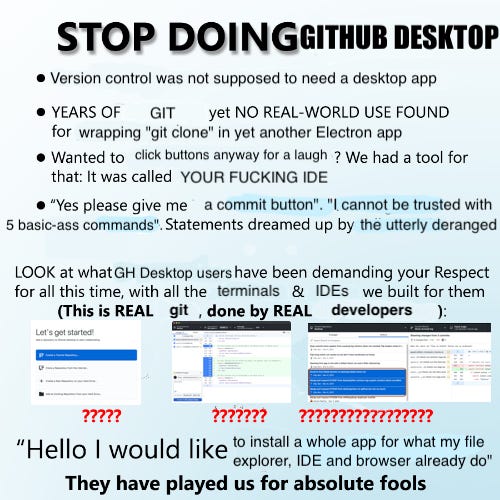
TEAHEE Moment

Stay sharp, stay informed. See you tomorrow.
If you enjoyed this TEA, follow along on social for more: