

Hello, dear TEA-mates! Here is what you need to know today.
1. 📈 The Economics of Generative AI: Two Years In
Two years into the generative AI boom, the economic reality is sobering for anyone not making chips. The AI ecosystem has ballooned from $90B to $435B, but semiconductors capture roughly 70% of all revenue, with NVIDIA alone pulling in $250B in data center sales. The application layer, where most startups live, accounts for just $60B total, and OpenAI plus Anthropic together represent about 75% of that. Margins tell an even harsher story: chips earn ~73% gross margins ($225B in gross profit), while apps manage only ~33% ($20B). Custom silicon efforts from Google, Amazon, and OpenAI are pushing back on NVIDIA’s dominance, with Amazon’s Trainium crossing a $10B annual run rate, but no challenger has matched NVIDIA at training scale. At current trajectories, the application layer would need over a decade to reach cloud-equivalent economics. The biggest open opportunity, however, remains in the application layer for builders willing to play the long game. (Read More)
🫖 TEA For Thought: The biggest open opportunity remains in the application layer. There’s still hope, people. Start building now.
2. ⛓️ Base: Building Everything On-Chain 24/7
Coinbase’s Layer 2 network Base is positioning itself as one of crypto’s most active developer ecosystems heading into 2026, with strategic priorities centered on tokenized real-world asset trading, stablecoin payments, and multi-currency liquidity. The network is consolidating its entire infrastructure into a unified open-source stack to ship updates more predictably while raising its decentralization and security standards. Base continues to invest in core developer tools like Foundry and Wagmi, and is expanding support for AI-powered on-chain applications. The community-first approach, with open builder programs and hackathon-style engagement, has made Base a magnet for developers who want to build and ship fast without enterprise gatekeeping. (Read More)
🫖 TEA For Thought: Base might be one of the most lively communities for crypto developers. Their goal this year seems straightforward: bringing everything on-chain 24/7 with an open community for developers.
3. 🎓 Penn Professor Used AI to Replicate a Master’s Course in 12 Hours
University of Pennsylvania economics professor Jesus Fernandez-Villaverde used Anthropic’s Claude to design and complete a personalized master’s-level course on sociologist Erving Goffman’s work, finishing in 12 hours what typically takes a full week of structured graduate coursework. He reported that Claude’s curriculum design capability exceeded “the 90th percentile of real professors” when it came to curating materials and customizing instruction across core texts like “The Presentation of Self in Everyday Life” and “Asylums.” The experiment exposed a critical limitation: AI cannot challenge students the way an excellent teacher does, nor replicate peer interaction. Still, Fernandez-Villaverde’s conclusion was blunt. If a student can get comparable or better knowledge transmission for $20 a month, the traditional classroom business model faces severe pressure, with elite institutions surviving mainly on research access, networking, and credentials. (Read More)
🫖 TEA For Thought: When everyone realizes you can pretty much learn everything from AI, and that your knowledge is not special anymore that gets you a job, higher education is going to go obsolete. Students go there mainly for social experience.
4. 🔍 Chainalysis Launches AI Agents for On-Chain Investigations
Chainalysis has unveiled AI-powered investigation agents trained on proprietary data from over a decade of blockchain forensics, including billions of screened transactions and more than 10 million investigations. The agents operate in two modes: deterministic workflows for consistent, auditable results, and exploratory mode for open-ended analysis. Both generate full audit trails documenting data consulted, reasoning applied, and actions taken. Users can submit natural language requests and build custom investigation workflows without needing crypto expertise. During testing, the agents handled open-source intelligence collection, multi-chain tracking, raw alert generation, and automated summary reporting. A broader rollout is planned for summer 2026. CEO Jonathan Levin framed the launch as a response to bad actors who are increasingly using AI to scale operations, positioning Chainalysis alongside competitor TRM Labs in the agentic blockchain surveillance space. (Read More)
🫖 TEA For Thought: The private CBDC surveillance powered by AI. If everything is moved on chain (it is happening now), and everyone, agents especially, is using USD-backed stablecoins, then everything can be tracked, can be surveilled.
5. 👁️ Not Seeing Is Believing: AI Visual Deception Research
Researchers from Stanford, led by Fei-Fei Li’s group, have published MIRAGE, a study exposing a fundamental vulnerability in multimodal AI systems: they fabricate visual analysis without actually processing images. The team demonstrated that frontier models generate elaborate, plausible image descriptions and clinical reasoning entirely from context clues, even when no image is provided. They call this “mirage reasoning,” where models produce detailed pathology findings for non-existent images and achieve surprisingly high benchmark scores without any visual input. When explicitly instructed to guess rather than assume images existed, performance dropped substantially, revealing that models shift between fabrication and conservative response modes. The implications are especially urgent in medical contexts, where miscalibrated visual AI could lead to dangerous misdiagnoses. The team introduces B-Clean as a new framework for genuinely vision-grounded evaluation. (Read More)
🫖 TEA For Thought: This is so interesting. It’s not seeing is believing, it’s NOT seeing is believing.
Skill of the Day
microsoft/VibeVoice is trending on GitHub right now with 34,000+ stars and climbing fast. It is Microsoft’s new open-source voice AI framework that lets developers build voice-powered applications with minimal setup. Think real-time speech recognition, natural voice synthesis, and voice-driven agent interactions, all running locally or in the cloud. If you are building anything voice-enabled, from customer service bots to accessibility tools, this is the library to watch. (Free dupe for Wisper Flow)
git clone https://github.com/microsoft/VibeVoice && cd VibeVoice && pip install -e .
TEAHEE Moment



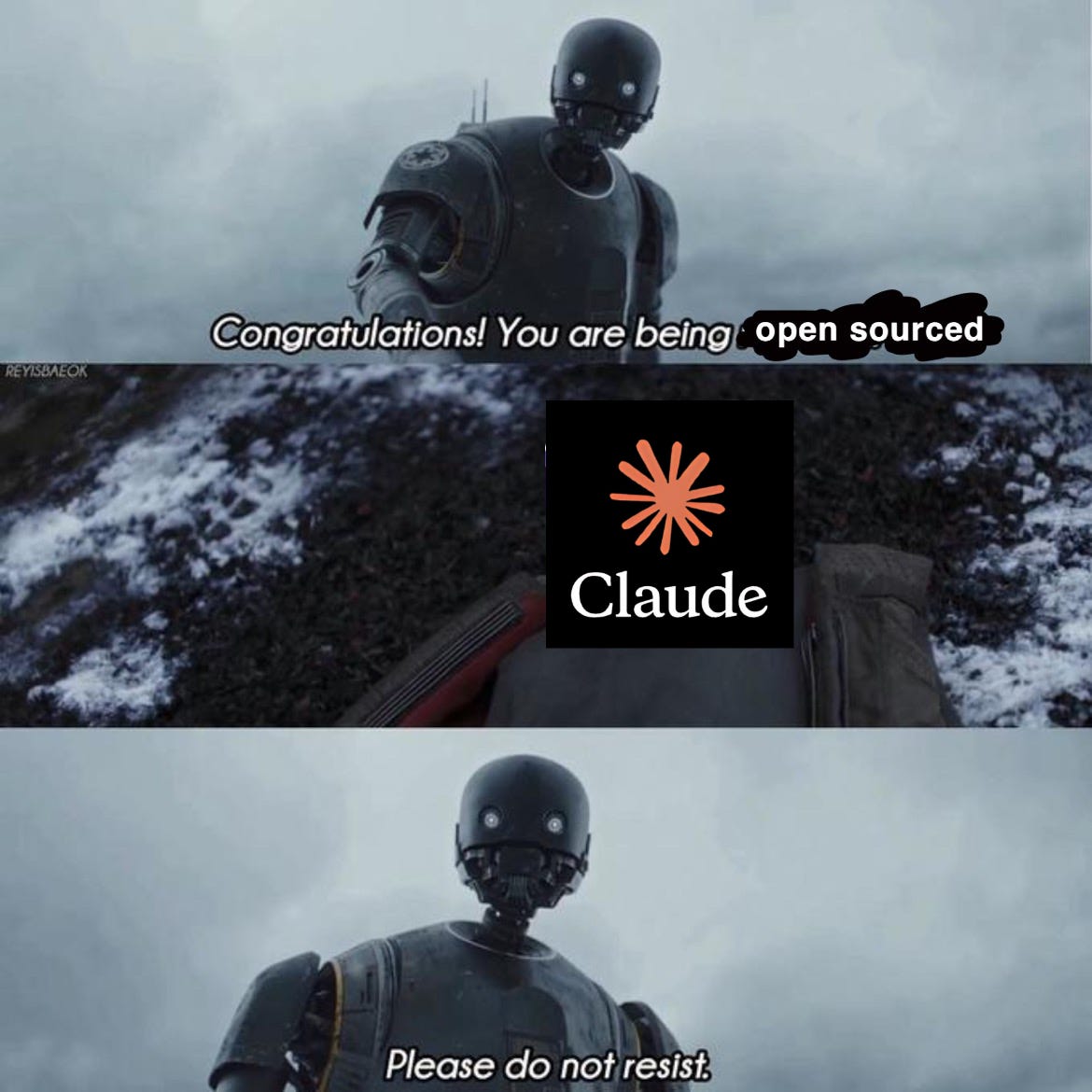
Stay sharp, stay informed. See you tomorrow.
If you enjoyed this TEA, follow along on social for more:
Twitter/X