

A note on process: This piece literally took me over 3 weeks to write, definitely pretty challenging on all levels. So please take these with a grain of salt. As this timely verse that appeared on my phone yesterday gracefully reminds me:

"As iron sharpens iron, so one person sharpens another". —— Proverbs 27:17.
So please, don't hold back—critique my writings freely.
Alright, here we go.
We can all agree that the market is flooded with altcoins—tons of them.
Interestingly, before President Trump signed the Executive Order to designate forfeited Bitcoin as part of a Digital Asset Stockpile, heated debates raged within the crypto community about whether altcoins like XRP, SOL, and ADA should be included. The majority championed Bitcoin but dismissed other altcoins. (Guess they’re called altcoins for a reason—alternatives, unless absolutely necessary?)
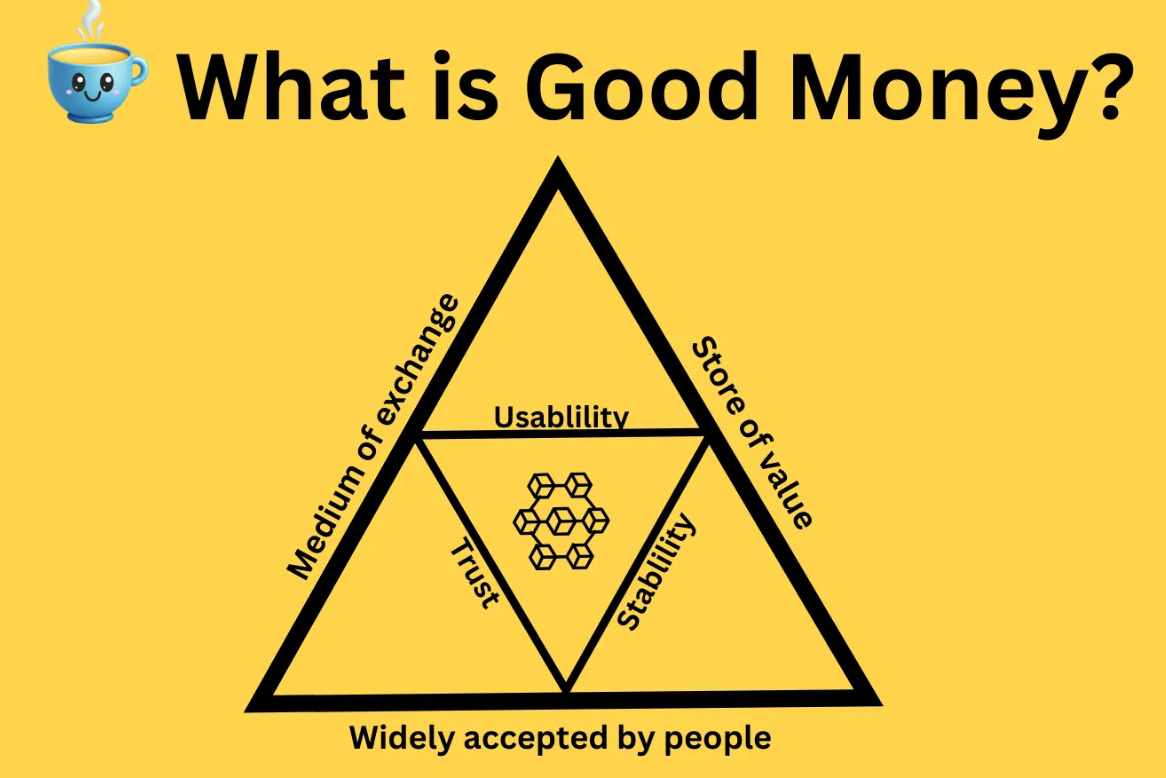
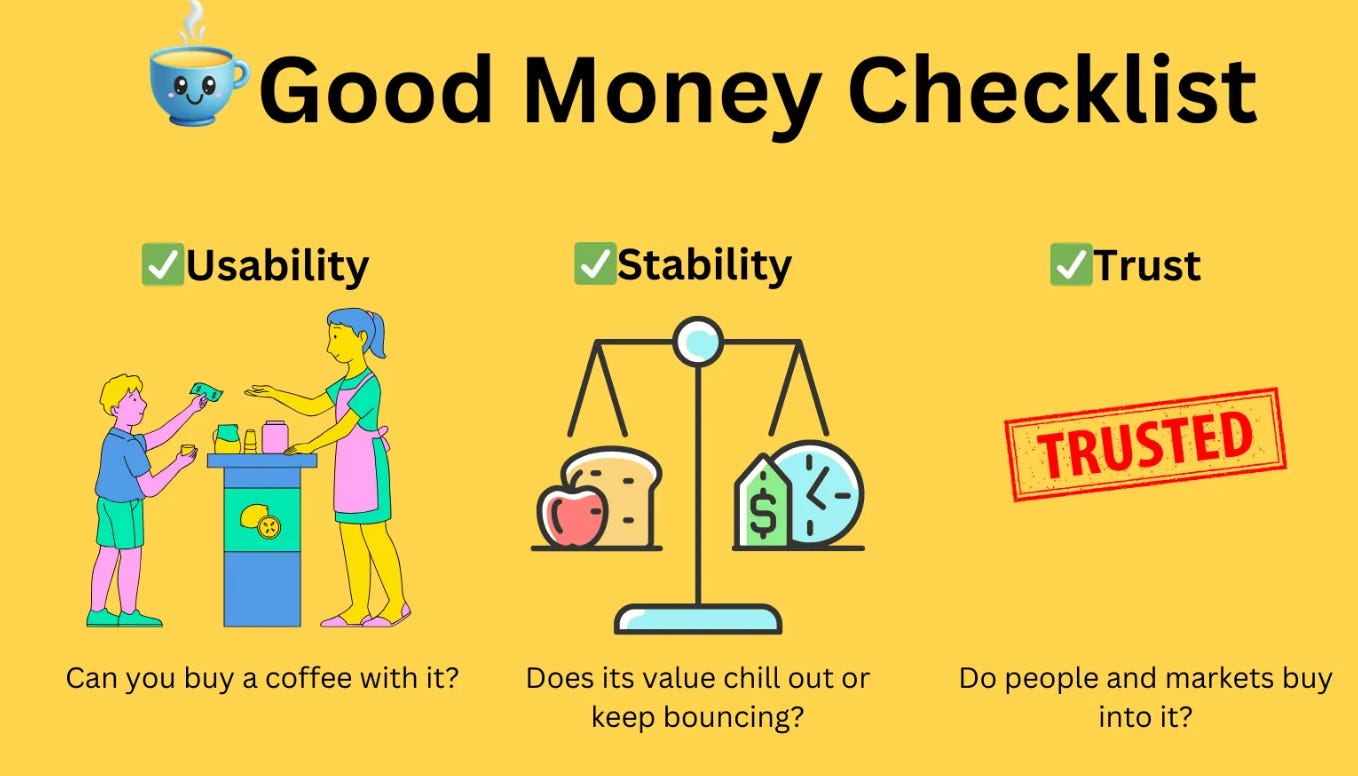
The question is why? Why are the major crypto leaders so opposed to including altcoins in the stockpile?
Before we begin, let’s examine the widely recognized blockchain trilemma. Introduced by Ethereum co-founder Vitalik Buterin, this concept emphasizes the compromise between three core features of blockchain technology: security, scalability, and decentralization. In essence, it argues that no cryptocurrency can fully embody all three at once—truly decentralized, scalable, and secure coins remain unattainable.
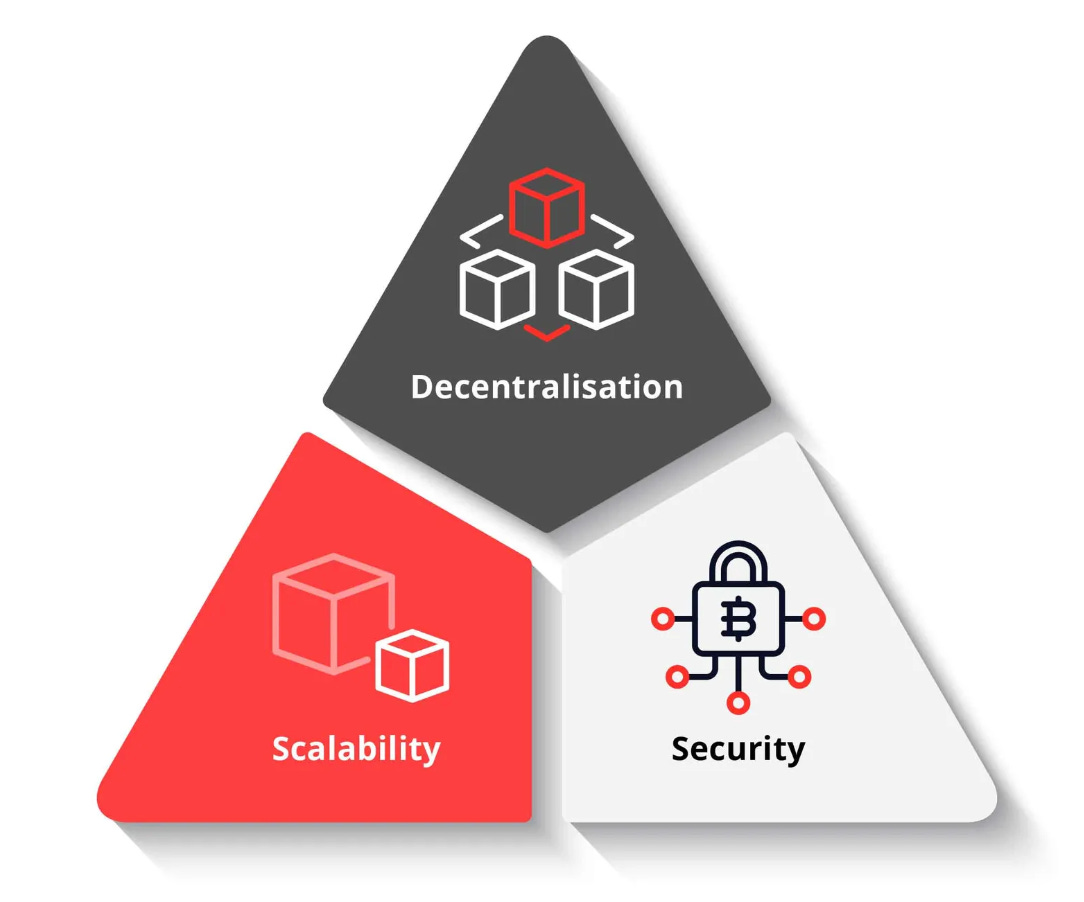
Take Bitcoin, for instance—it’s often praised for being secure and decentralized, but it really struggles with scalability — transactions are slow, and those gas fees or costs can get pretty steep, which is a big downside. That’s exactly why Ethereum and other altcoins popped up: to give us options that scale better while still trying to stay secure and decentralized.
So, could a crypto ever nail all three? What’s stopping it?
Let's take a look at the leading altcoins Ethereum and Solana in depth.
Ethereum
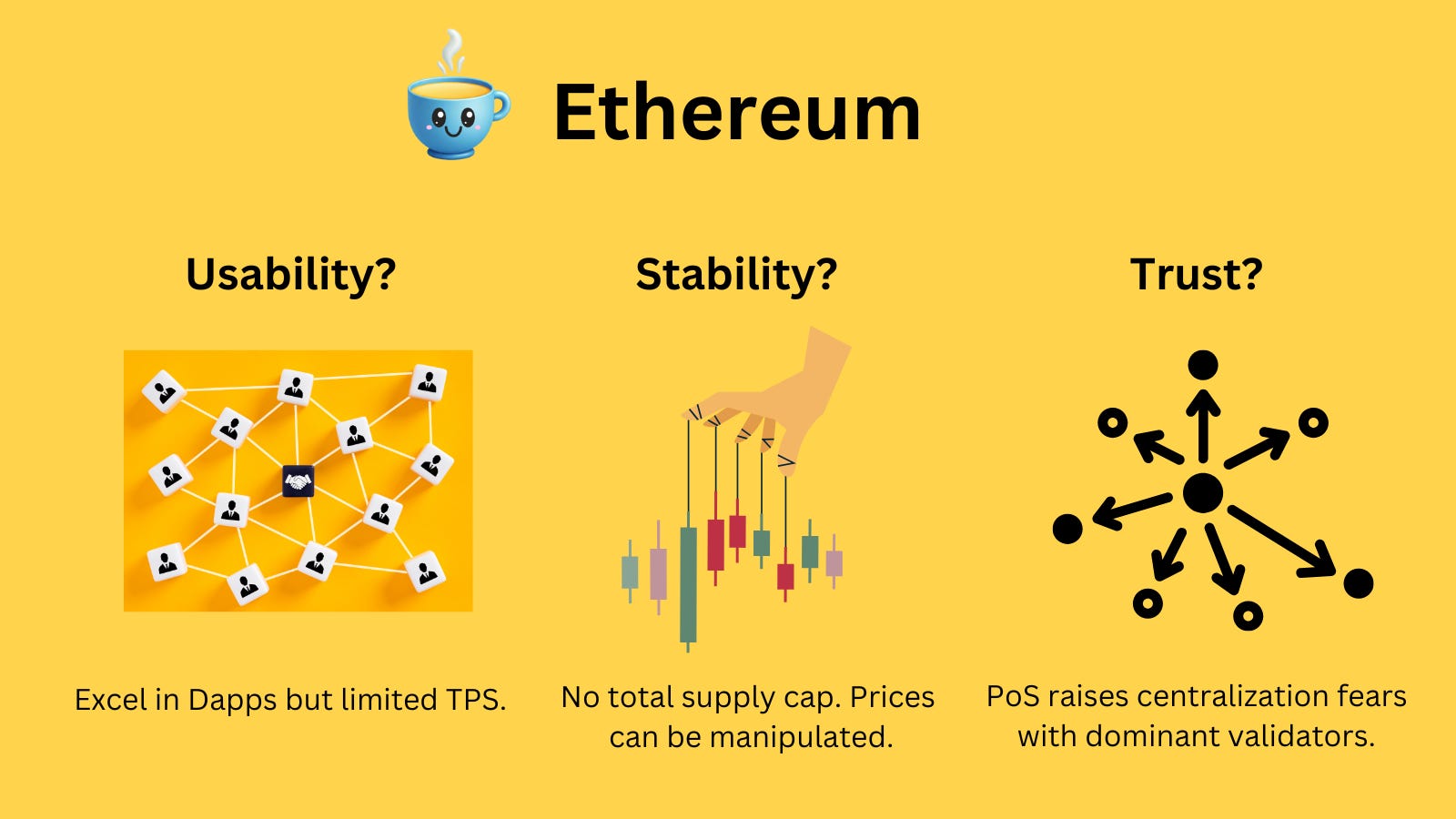
Usability: Mixed
Pros
Dominant DeFi Ecosystem: Smart contract leader in DeFi, NFTs, and dApps: As of March 12, 2025, Ethereum hosts over 4,900 decentralized applications (dApps) and countless NFTs traded through OpenSea and other marketplaces.
Major platforms like Twitch, Shopify, and Pacaso accept Ethereum as payment, either directly or indirectly.
Cons
Limited Throughput: the network processes only 15-30 transactions per second (TPS), causing congestion and delays
Stability: Mixed
Price Volatility and Centralization:
Ethereum’s price movements correlate strongly with Bitcoin, raising manipulation concerns
Large holders ("whales") can manipulate market volatility through tactics like "spoofing" – placing misleading sell orders to trigger panic selling and acquire assets at lower prices
No Fixed Maximum Cap:
Unlike Bitcoin, Ethereum has no fixed supply cap—its supply is determined by network dynamics, meaning the amount of Ethereum in circulation can fluctuate over time.
Trust: Mixed
Ethereum switched from proof-of-work (PoW) to proof-of-stake (PoS) on September 15, 2022, in "The Merge." This transition has raised centralization concerns, particularly regarding the outsized influence of major validators.
Stake Concentration:
Large entities like Lido (33% stake) and Coinbase (15% stake) dominate Ethereum's validator landscape, raising concerns about excessive network control
Barriers to Entry:
Running a validator node requires substantial bandwidth, hardware, and technical expertise, making it difficult for average households to participate.
Manipulation Risks:
Research has revealed vulnerabilities in Ethereum's Distributed Randomness Beacon (RANDAO), allowing large validators to potentially collude and manipulate leader selection for lucrative slots
Solana
P.S. This is solely about Solana as in the coin SOL. Solana-related memecoins will be discussed in the following week. Stay tuned :D
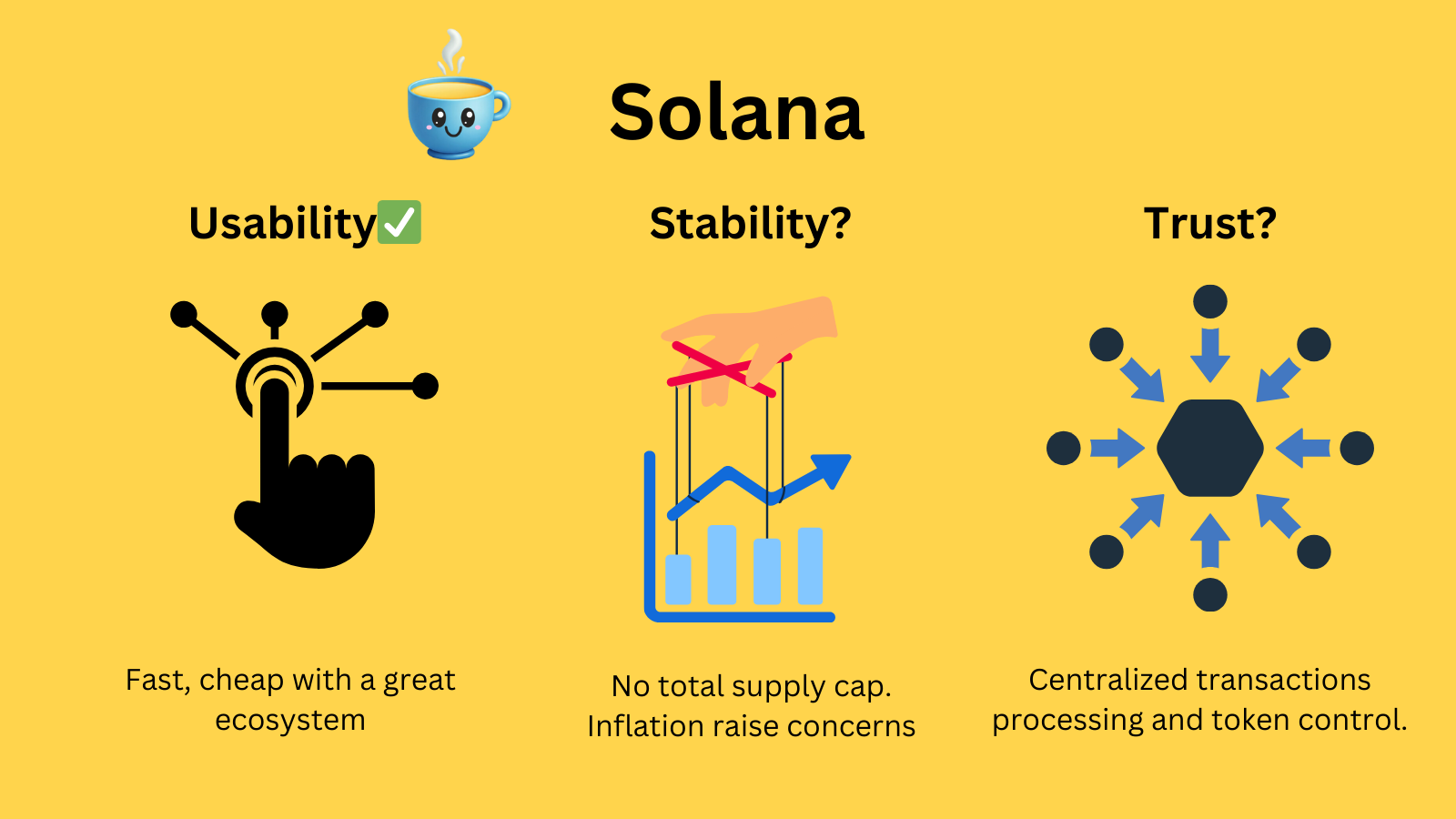
Usability: Yes
Fast and Cheap Transactions:
Solana combines its unique Proof-of-History (PoH) mechanism with Proof-of-Stake (PoS) to achieve rapid transaction processing, which enables transaction finality with theoretical speeds of up to 65,000 TPS and minimal costs averaging $0.00025 per transaction
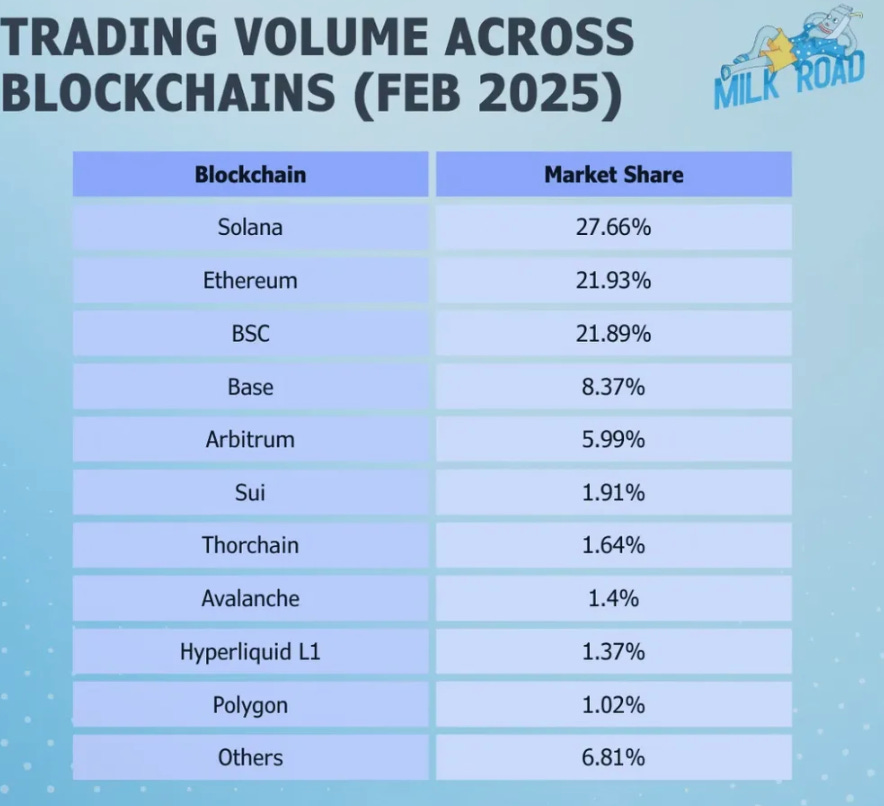
Rich Ecosystem:
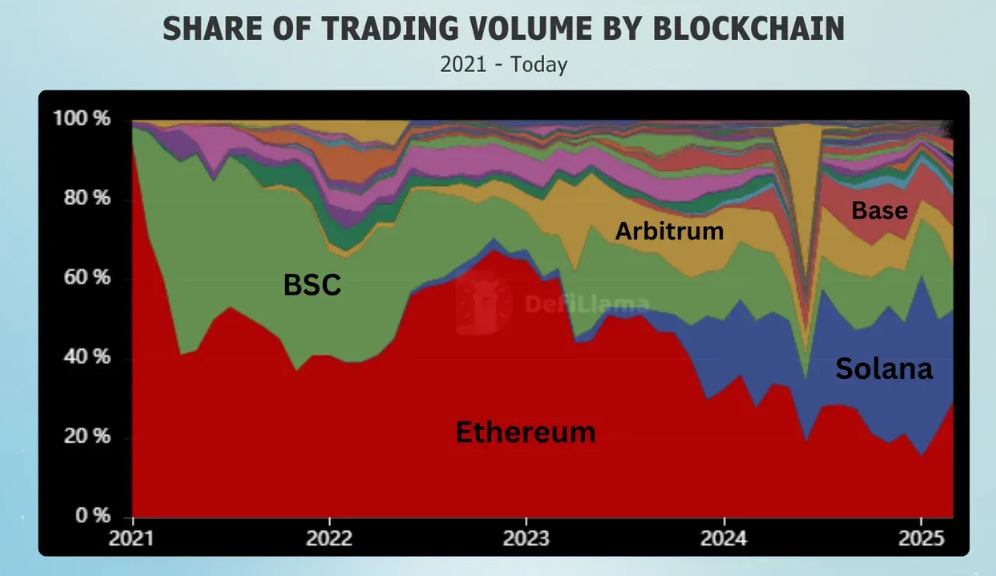
Solana platform supports numerous dApps, NFT marketplaces, DeFi protocols, and launchpads like Pump.fun, making crypto projects easily accessible.
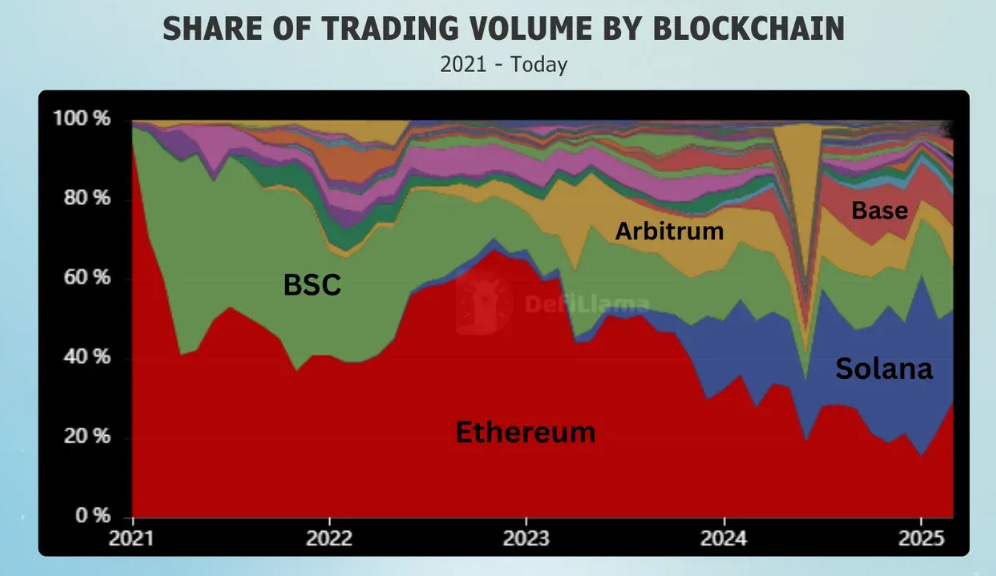
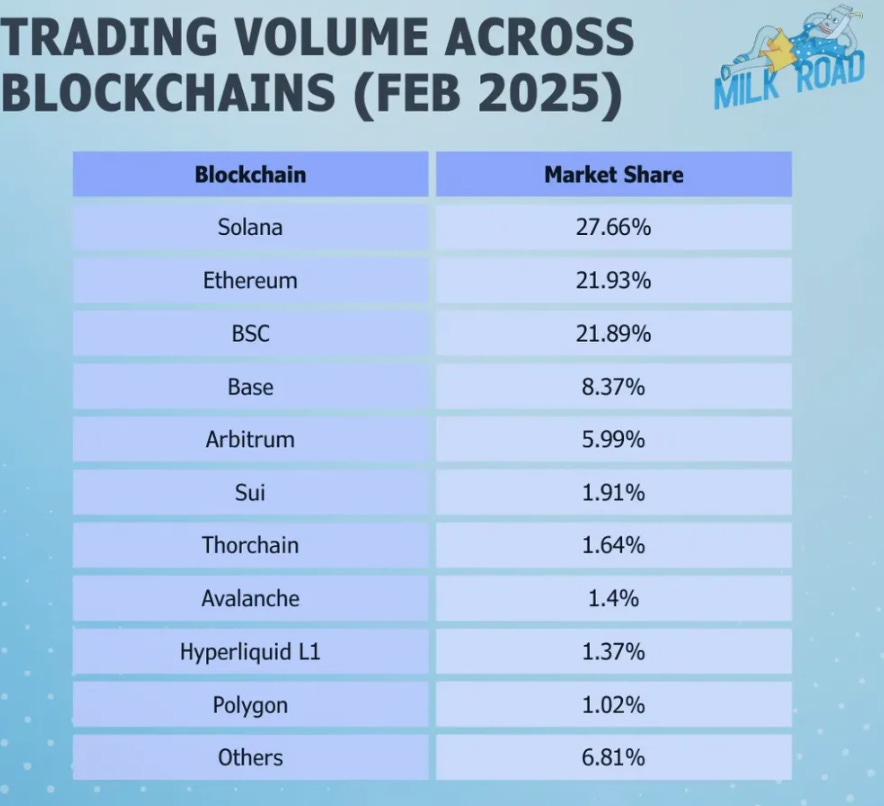
Institutional Adoption:
The introduction of Solana Futures ETFs and increased institutional interest demonstrates its growing mainstream usability.
Stability: Mixed
Unstable Network:
Despite significant improvements in operational stability over recent years, previous network outages have created lasting concerns about reliability.
No Fix Maximum Supply:
Its inflationary model creates new tokens annually with no cap on total SOL minting, making prices vulnerable to instability and manipulation.
Trust: NO
Centralization Risks:
Transaction processing is concentrated among a small group of validators, with approximately 30 validators handling most operations.
Token Distribution:
Insiders and the Solana Foundation control a substantial portion of SOL tokens.
Another look at Crypto’s Trilemma
When I first started writing this article three weeks ago (oh, the curse of procrastination!), I planned to analyze all coins using the trilemma framework. I assumed the principle still held true—that no cryptocurrency could meet all three criteria. However, as I dug deeper, I realized the trilemma primarily addresses technical challenges, and with recent upgrades, both scalability and security have become achievable. We're seeing more Layer 1 chains develop, with increasing throughput and decreasing gas fees.
The real challenge now lies with decentralization. It's no longer a technical hurdle but rather a legal and structural one. Consider Solana: 30 validators handle most operations. Simply put, the more money you have, the more validators you can control. If one entity controls 95% of validators, can we really call it a distributed ledger? It's essentially distributed among entities controlled by a single group.
To sum up, since security and scalability can now be achieved through technical upgrades, and decentralization has evolved into a legal and structural constraint, I'd argue the blockchain trilemma is obsolete. The core challenge for crypto now is establishing legal structures and protocols that ensure truly distributed validator networks, preventing single-entity control. It's similar to multi-sig wallets, where you need at least two out of three keys to sign a transaction, preventing unilateral control. (Distributed Validator Technology (DVT) seems to be in the making to address validator centralization issues.)
But fundamental questions remain: Can a cryptocurrency be truly decentralized? How do we define decentralization? After all, every project must originate from some person, entity, or organization, right?
Earlier articles in the series Denationalized Currency in the Age of Blockchain and AI
#1 You Don't Need to Be a Government to Create Money